
AI Content vs. Human: How to Distinguish Between Real and AI-Generated Content?
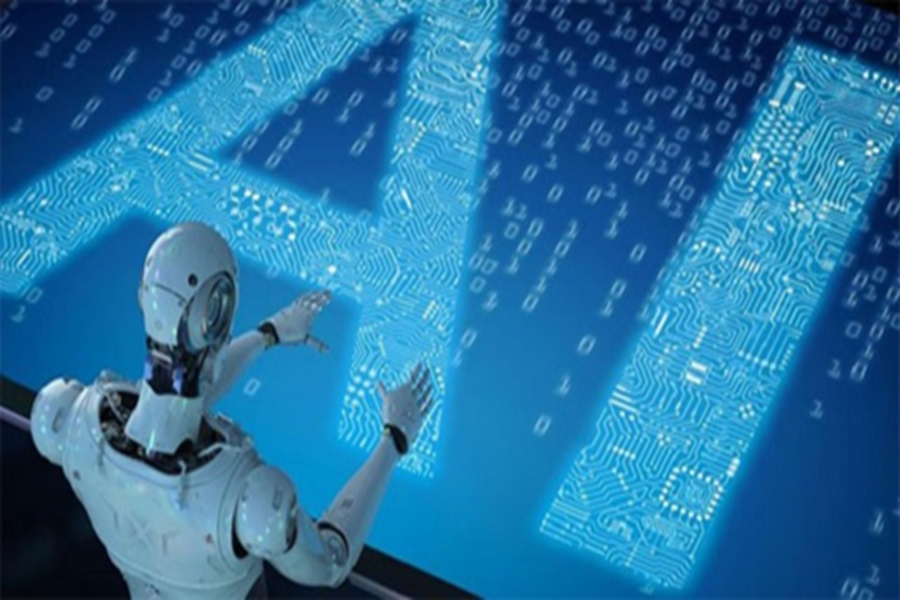
The history of human creativity is replete with masterpieces of fine art, paintings, architectural designs, timeless music, and literary works. Undoubtedly, these are unique; yet today, no such creation lies beyond the imaginative scope of a machine mind (AI). While AI may not yet have reached the stage of producing something truly singular or unprecedented, it has certainly arrived at a point where it is capable of producing something remarkably similar. This is precisely why questions regarding AI's creativity have begun to surface.
The fundamental question remains: whenever AI creates something, who is its true originator? Debates concerning this issue are currently unfolding in numerous courts across the globe. Drawing an analogy between copyright and property rights, a U.S. court has deemed a machine's inherent inability to own property as tantamount to its ineligibility to qualify as an "author."
Taking cognizance of legal provisions pertaining to succession, signatures, intent, and nationality, the court maintains that an "inanimate machine" cannot fulfill these requirements. For the time being, AI is transforming the creative process; it is not only generating extensive and complex text but is also producing high-quality images and videos within a matter of minutes. It is even proving invaluable as a research tool within artistic production, helping to shape the very contours of our creative thinking.
**How Far Behind Human Creativity Are Machines?**
AI is now generating content of such sophistication that the average user can no longer distinguish between what is real and what is fake. The digital landscape is awash with fabricated photos and videos that appear startlingly authentic. Furthermore, AI has significantly accelerated both the speed and volume of idea generation. The resulting benefit is that humans can now devote greater priority to creative conceptualization, critical evaluation, and contextual relevance.
If viewed not as a threat to human artists but rather as a creative collaborator, this technology is nothing short of magic. Given the rapid pace at which AI tools are being democratized—and the increasing ease with which they can be used—benefits will undoubtedly accrue; however, disputes concerning intellectual property rights, issues of homogeneity, and the proliferation of fake content are also bound to escalate, primarily because machines do not perceive the world in the same way humans do. The machine mind possesses inherent limitations; the path lying beyond these boundaries is fraught with countless errors.
**How AI Tools Can Prove Useful**
AI can be leveraged to enhance efficiency, foster innovation, and streamline operations on a large scale. AI-powered tools can automatically generate SEO-friendly metadata and offer suggestions for content improvement based on user engagement analytics. Furthermore, they can accelerate the pace of work with minimal human intervention. Reports on AI content trends indicate that AI tools are also playing a pivotal role in refining video scripts and enhancing interactive web experiences.
**The Misuse and Challenges of AI Content**
AI has exacerbated the problems of information overload and the illusion of quality. AI's extraordinary proficiency in generating voluminous content can create an overwhelming deluge of information, blurring the lines between narratives and objective reality. Consequently, the average user has begun to face significant difficulties in locating useful and reliable information. As people find themselves entangled in a web of superfluous content, they have started experiencing "digital fatigue."
Content generated by AI often lacks the authenticity that stems exclusively from genuine human experience and emotional depth. This is precisely why AI-generated content frequently appears superficial or disconnected from the nuances of the real world. This leaves users—who are seeking both useful information and a sense of personal connection—feeling disappointed. When users repeatedly encounter low-quality content, they begin to feel a compelling need to seek out authentic sources that lie beyond the realm of AI.
**How Useful Are Content Verification Tools?**
Numerous online tools claim to be capable of distinguishing between authentic content and that which has been generated by AI, by analyzing hidden watermarks, structural anomalies, and various other digital cues.
You can conduct a self-check using these methods:
Key terms from the assignment prompt will appear to be used repeatedly.
Upon cross-checking, certain factual inaccuracies may come to light.
Often, the sentences in the AI's response do not sound natural.
When asked for clarification, it provides generic and repetitive answers.
The AI's writing style does not resemble one's own usual manner of writing.
Disclaimer: This content has been sourced and edited from Dainik Jagran. While we have made modifications for clarity and presentation, the original content belongs to its respective authors and website. We do not claim ownership of the content.
