
AC Tips: What Does Each AC Error Code Mean? Do Not Ignore Them—Not Even by Mistake..
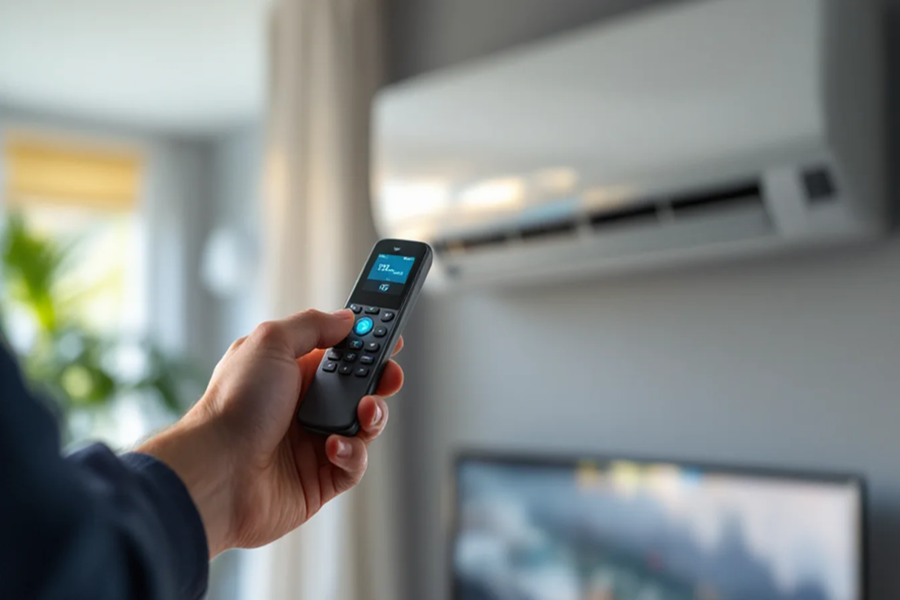
The summer season has arrived, and in such weather, if your AC suddenly shuts down and its display begins showing codes like E1, P2, F5, or something similar, you would undoubtedly feel distressed. In such situations, some people simply turn the AC off and then back on; however, ignoring these codes can prove to be a costly mistake.
Indeed, these codes serve as indicators of a technical malfunction. Simply put, through these codes, the AC communicates exactly what internal issues it is experiencing. Many people call a mechanic immediately without even attempting to understand the meaning of these codes.
Consequently, mechanics sometimes exploit the situation by exaggerating the severity of a minor fault to charge higher fees. However, if you were familiar with these basic error codes, you could—to a significant extent—diagnose the problem yourself. Today, we will explain in detail what these error codes appearing on your AC actually signify.
**Meaning of Codes like E1, E2, F1, and F2**
Codes such as E1, E2, F1, and F2—which are among the most frequently encountered on AC units—typically indicate a fault related to the sensors. In simple terms, this suggests that the AC's temperature sensor may not be functioning correctly, or its wiring may have become loose. Under these conditions, the AC is unable to accurately read the ambient temperature, which subsequently compromises its cooling performance.
**Meaning of Codes like E3, E4, E6, or C1**
Conversely, if your AC displays codes such as E3, E4, E6, or C1, it indicates a communication failure between the indoor and outdoor units. This issue may stem from faulty wiring, irregularities in the power supply, or a problem with the PCB (Printed Circuit Board). If this problem persists for an extended period, it could potentially cause the AC to shut down completely.
**Meaning of Codes like P1, P2, or F5**
Occasionally, codes such as P1, P2, or F5 may appear on the AC display. These codes signal issues related to voltage fluctuations. In such a situation, you should switch off the AC as soon as possible. Additionally, you should have the AC, as well as the stabilizer and wiring, inspected. Continuous voltage fluctuations can damage the AC's components.
Disclaimer: This content has been sourced and edited from Dainik Jagran. While we have made modifications for clarity and presentation, the original content belongs to its respective authors and website. We do not claim ownership of the content.
