
AC Tips: Stop running your AC at 18°C during the monsoon! This setting will provide relief from room humidity and stickiness..
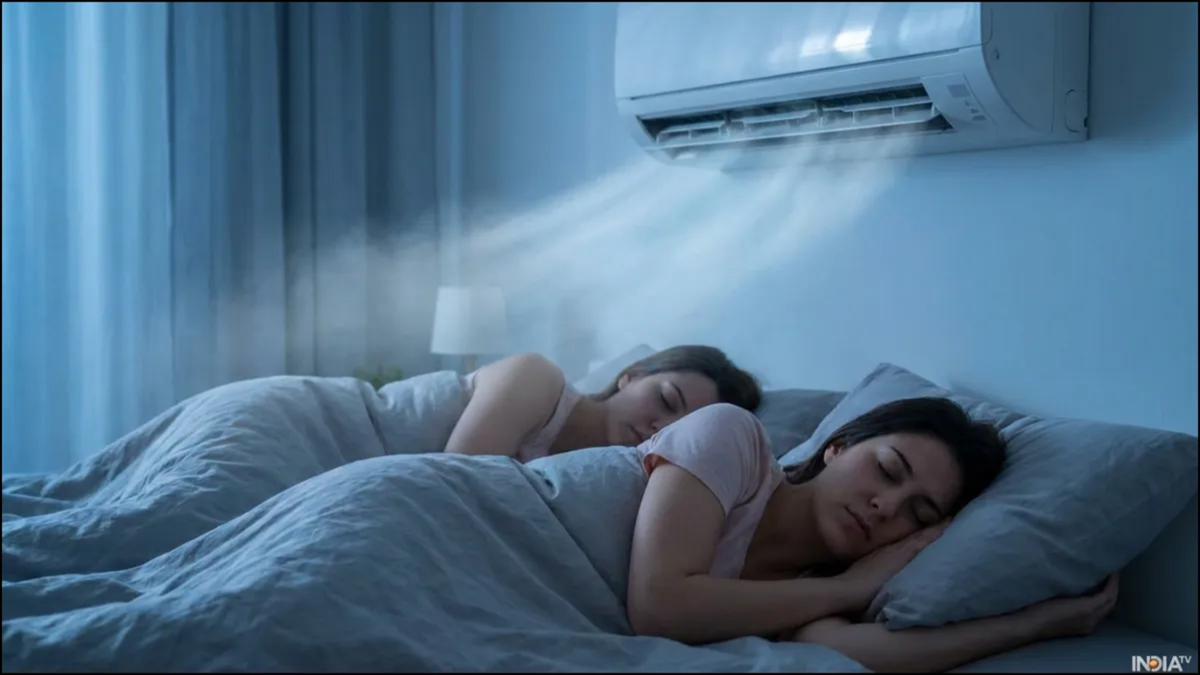
Although temperatures drop during the rainy season compared to summer, increased humidity in the air can make the room feel sticky and stuffy. While an air conditioner offers relief, improper use or a lack of maintenance can lead to issues like reduced cooling, unpleasant odors, and water leakage. To ensure your AC runs efficiently during the monsoon, it is important to keep a few simple tips in mind.
**Humidity is more bothersome than heat during the monsoon**
Humidity levels rise significantly during the rainy season. Sweat does not evaporate easily from the body, making it feel hotter even at moderate temperatures. An AC not only cools the room's air but also removes some of its moisture. Therefore, during the monsoon, the AC's role is not just to lower the temperature but also to balance the room's humidity levels.
**Use the ‘Dry Mode’ if your AC has it**
If your AC features a 'Dry Mode,' it can be very useful during the rainy season. Its primary function is to reduce excess moisture from the air. You can use Dry Mode when the room isn't excessively hot but feels sticky or damp. It is also helpful when humidity spikes after a rainfall. However, if the room is genuinely hot, the standard cooling mode is a better choice.
**No need to run the AC at 18 degrees**
There is no need to set the AC to 18 or 20 degrees during the monsoon; a temperature between 24 and 26 degrees is usually comfortable. Setting the temperature too low does not cool the room any faster; instead, the AC may have to run for a longer period, leading to higher electricity consumption. Therefore, during the rainy season, it is better to focus on maintaining a comfortable temperature and managing humidity rather than aiming for extreme cold.
**A dirty filter can also cause problems**
If your AC isn't cooling as effectively as before, the first thing you should check is the filter. Dust, hair, and other particles tend to accumulate in the filter during prolonged use. A dirty filter restricts airflow and forces the AC to work harder. In humid weather, a dirty filter can also cause unpleasant odors. If the filter is washable, clean it according to the manufacturer's instructions and dry it thoroughly; do not reinstall a wet filter in the AC.
**Do not ignore unpleasant odors from the AC**
During the rainy season, a musty or stale odor coming from the AC is a common issue. Simply masking the smell with room freshener is not the right solution. Underlying causes could include a dirty filter, moisture accumulation on the internal coils, a dirty condensate tray, or a blocked drainage pipe. Start by cleaning the filter. If the odor persists, it is best to seek professional help for an internal cleaning of the AC.
**Use the ‘Self-Cleaning’ feature if available**
Many modern ACs come with features like self-cleaning or coil drying. These functions help reduce residual moisture inside the unit after it is turned off. If your AC has this feature, use it according to the manufacturer's guidelines to minimize long-term moisture retention. Avoid spraying perfumes, disinfectants, or household chemicals inside the AC yourself.
**Address water dripping from the AC immediately**
Water formation is a normal part of AC operation, but it must drain out properly. Do not ignore it if water drips into the room from the indoor unit. Causes can include a clogged drainage pipe, debris in the drain tray, incorrect pipe positioning, ice formation on the coils, or restricted airflow. If there is significant dripping, it is best to turn off the AC and have it inspected by a professional.
**Keep the outdoor unit clean as well**
The outdoor unit of a split AC is designed to withstand rain, but the accumulation of leaves, plastic, dirt, or debris around it can obstruct airflow. Therefore, periodically check the exterior unit and clear away any accumulated debris. Keep in mind that covering the outdoor unit with plastic while the AC is running is not advisable; it requires adequate airflow to expel hot air.
Keep doors and windows closed while the AC is running.
During the monsoon season, the outside air has high humidity. If windows or doors remain open while the AC is on, humid air will continuously enter the room. This forces the AC to remove excess moisture in addition to cooling the room. Hence, it is best to keep doors and windows closed during operation. If ventilation is necessary, turn off the AC and allow fresh air to enter the room at an appropriate time.
Do not dry wet clothes in an air-conditioned room.
Drying clothes during the rainy season is a common challenge. However, drying multiple wet clothes in a closed room releases moisture into the air. This can increase humidity levels, forcing the AC to work harder to remove the excess moisture. Whenever possible, dry clothes in a well-ventilated area and avoid keeping wet clothes in small, enclosed rooms for extended periods.
Dehumidifiers are helpful when humidity is high.
If the room remains humid even after the AC is running, a separate dehumidifier can be used. This is particularly useful in rooms with poor airflow or where humidity issues frequently occur. However, if the moisture is caused by water seeping through walls, ceilings, windows, or pipes, a dehumidifier alone will not solve the problem; the root cause must be addressed.
Get your AC serviced before the rains.
If your AC hasn't been cleaned in a long time, it is advisable to have it inspected and serviced before the monsoon season begins. You should check the condition of the filters, internal coils, fan, and the drainage system. The frequency of cleaning depends on usage, the amount of dust in the home, and the manufacturer's recommendations.
Check these things first if the AC isn't cooling.
If the AC is running but the room isn't cooling, first check if it is set to the correct mode. Next, verify that the filters are clean, doors and windows are closed, and there are no obstructions around the outdoor unit. If the problem persists, consult a professional. Insufficient cooling does not always mean the AC is low on gas; a dirty filter, a faulty fan, sensor or coil issues, or other technical malfunctions could also be the cause.
Is it safe to run the AC during the rain?
There is no need to turn off the AC simply because it is raining. A properly installed split AC can be operated during normal rainfall. However, if you notice a burning smell, sparks, frequent power fluctuations or outages, heavy internal water leakage, or any electrical issues, turn off the AC immediately and have it inspected by a professional.
Running a fan alongside the AC can also be beneficial.
Using a fan with the AC helps circulate cool air more effectively throughout the room. There is no need to run the fan at high speed; even a moderate speed can improve airflow.
Tips for using the AC during the monsoon:
Keep the filters clean, use 'Dry Mode' when necessary, maintain the temperature between 24°C and 26°C, keep doors and windows closed, and do not ignore issues like water dripping or persistent unpleasant odors.
