
AC Tips: Planning to Buy a New AC? Which Is Best for You—3-Star or 5-Star? Here’s the Complete Breakdown..
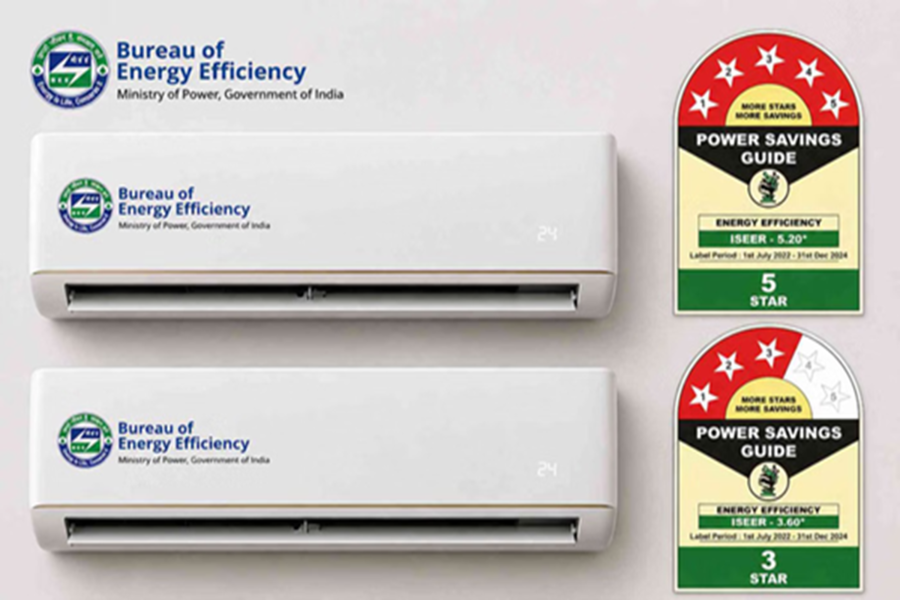
AC Star Rating Guide: In an air conditioner, the star rating serves as a metric for its energy efficiency. This rating is assigned by the Bureau of Energy Efficiency (BEE). It indicates how much electricity a specific AC unit consumes. Generally, a 5-star AC offers significant electricity savings, though its upfront cost is higher. Conversely, a 3-star AC is more affordable to purchase but may result in slightly higher electricity bills over the long term. The right choice for you depends on your intended duration of usage.
Electricity Consumption of a 1.5-Ton AC: How Star Ratings Work
When you see a star sticker on an AC unit, it is not merely a decorative design; it represents a standard established by the BEE. In the case of air conditioners, the rating is based on the EER (Energy Efficiency Ratio) or the ISEER (Indian Seasonal Energy Efficiency Ratio).
Best Energy-Efficient ACs: What is the Connection Between EER and Star Ratings?
An AC's star rating is determined by its Energy Efficiency Ratio (EER)—that is, the amount of cooling the unit provides relative to the amount of electricity it consumes to do so. In this context, a higher EER signifies greater cooling output with lower electricity consumption, whereas a lower EER implies higher electricity consumption. Consequently, an AC with a higher EER receives a higher star rating and consumes less electricity. This is precisely why 5-star ACs are considered to be the most energy-efficient.
BEE Star Rating Benefits: 3-Star vs. 5-Star—What is the Difference in Electricity Consumption?
If you compare a 3-star AC and a 5-star AC of the same tonnage, the difference becomes clearly evident:
1.5-Ton 3-Star AC: Approximately 1100+ Watts
1.5-Ton 5-Star AC: Approximately 840 Watts
This means that a 5-star AC can save approximately 25–30 percent on electricity. Over the long term, this translates into a significant difference in your electricity bills. Understand through the table below...
Star Rating | 0.75 Ton | 1.0 Ton | 1.5 Ton | 2.0 Ton
3-Star AC | 542 Watts | 747 Watts | 1104 Watts | 1448 Watts
5-Star AC | 450 Watts | 554 Watts | 840 Watts | 1113 Watts
3-Star vs. 5-Star AC: Find Out Which AC—3-Star or 5-Star—Is Best for You
Difference between 3-Star and 5-Star ACs – Photo: AI-generated
**The Great Benefits of a 5-Star AC**
If you are considering purchasing a 5-star AC, it offers several advantages, such as:
**Significant Reduction in Electricity Bills:** If your AC runs for 8–10 hours a day, a 5-star AC can save you thousands of rupees over the course of a single season.
**Superior Cooling Technology:** 5-star ACs (especially inverter models) cool a room much faster. They utilize high-quality condensers and compressors.
**Lower Noise Levels:** These models manage power fluctuations more effectively and operate with very minimal noise.
However, a 5-star rated AC does come with a higher upfront cost. In some instances, the price point may even exceed the budget of a middle-class family.
**When Should You Buy a 3-Star AC?**
While a 5-star AC may appear to be the superior choice, a 3-star AC also offers its own distinct advantages—particularly for middle-class families...
**Budget-Friendly:** First and foremost, it fits comfortably within most people's budgets. The price of a 3-star AC can be approximately ₹5,000 to ₹10,000 lower than that of a 5-star model.
**Infrequent Usage:** If you use your AC for only 2–3 hours at night, or exclusively during just two months of the year (May and June), it would take you many years to recoup the additional money spent on a 5-star AC. In such a scenario, opting for a 3-star AC might be the sensible choice.
Which AC is right for you?
The decision of which AC to buy depends entirely on your usage patterns.
If you run your AC for several hours every day—
Or if you live in a hot region, or simply wish to save on electricity bills in the long run, then an AC with a 3-star rating could prove to be the better option for you.
However, if you have a limited budget—
or if you intend to use the AC for only short durations—
or if you use it strictly on a seasonal basis, then a 3-star AC can still be a perfectly suitable choice.
Disclaimer: This content has been sourced and edited from Amar Ujala. While we have made modifications for clarity and presentation, the original content belongs to its respective authors and website. We do not claim ownership of the content.
