
AC Tips: Is your AC leaking water? These 6 reasons could lead to major trouble—get it fixed immediately..
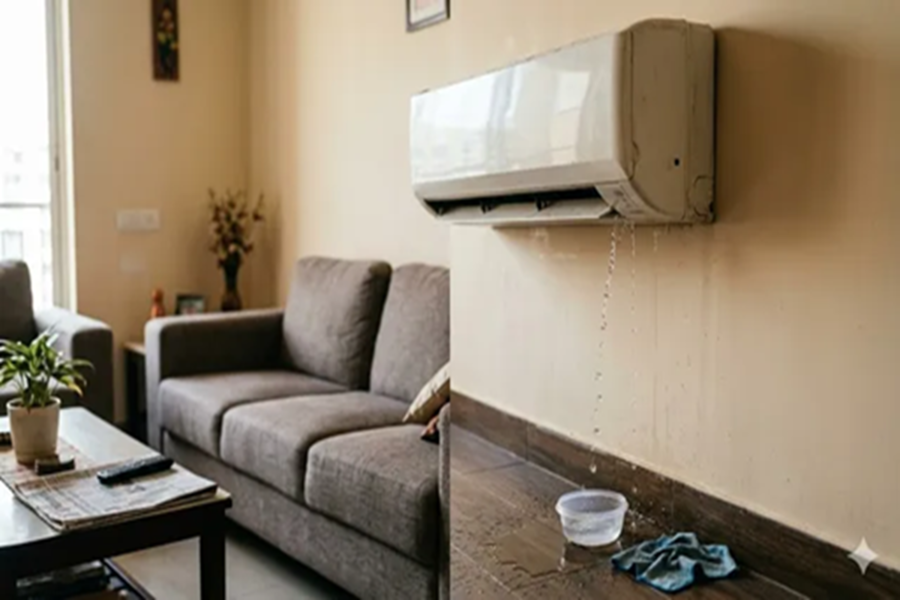
ACs are no longer merely luxury items; in many households, they have become an everyday necessity. Whether it is scorching heat or a humid day, most people rely on their ACs for comfort. However, with frequent use, these machines inevitably begin to develop faults over time. Water leaking from an AC is one of the most common issues people encounter. Seeing water dripping indoors or pooling on the floor can be quite distressing. In most cases, this serves as a warning sign that your AC requires cleaning, maintenance, or repair before the problem escalates. Listed below are some reasons that will help you understand why your AC is leaking water.
**Dirty Air Filters**
Clogged air filters are often at the root of many AC-related problems. Over time, dust and dirt accumulate on the filters, obstructing airflow. This makes it difficult for the system to operate efficiently and can cause the evaporator coils to freeze over. When these frozen coils thaw, water begins to drip from the unit. Regularly cleaning your filters can prevent this issue and improve cooling performance.
**Improper Installation**
If your AC begins leaking water shortly after installation, it is possible that it was not set up correctly. Even a slight tilt or misalignment can lead to water leakage. It is advisable to have the unit inspected by a professional and have the installation corrected.
**Accumulation of Mold or Fungi**
The interior of an AC unit creates a humid environment, which can foster the growth of mold or fungi. This buildup of grime can obstruct airflow passages or clog the drainage system. When water is unable to drain properly, it may begin to leak from other parts of the unit.
Beyond causing leaks, mold can also compromise indoor air quality and trigger allergies or respiratory issues. This can be resolved by having the unit thoroughly cleaned by an experienced technician.
**Rusted or Damaged Drain Pan**
The function of the drain pan is to collect water from the AC unit and channel it outdoors through a pipe. Over time—particularly in older units—this pan may rust or crack. When this occurs, water begins to leak rather than draining away properly. This also serves as an indication that your AC unit is aging. Replacing the drain pan and keeping it clean can effectively prevent such leaks.
**Disconnected Drain Line**
The drain line carries water away from the AC unit. If this pipe becomes loose, clogged, or dislodged from its position, the water has nowhere to go. Consequently, the water begins to leak into your home. A technician can reconnect or replace the pipe to restore proper drainage.
**Refrigerant Leak**
In some instances, what appears to be a water leak may actually be a refrigerant (gas) leak. This is often accompanied by reduced cooling capacity or the AC unit blowing warm air. Refrigerant is essential for the cooling process; therefore, any leak will negatively impact the unit's performance. Unlike a water leak, ignoring a refrigerant issue can be dangerous. It is imperative to call a professional immediately to have the problem resolved safely. Under no circumstances should you attempt to fix this yourself.
Disclaimer: This content has been sourced and edited from TV9. While we have made modifications for clarity and presentation, the original content belongs to its respective authors and website. We do not claim ownership of the content.
