
AC Tips: How to Detect an AC Gas Leak? Learn These 5 Easy Tips and Tricks..
AC Service: As the summer season arrives, the pace of life itself undergoes a transformation. During the day, intense sunlight, gusts of scorching hot wind, and humid air leave people feeling utterly miserable. The situation becomes such that, come nightfall, even falling asleep without an AC or an air cooler becomes a challenge. Even with a fan running, one finds no respite, and everyone remains in constant search of cool air.
In such a scenario, an AC is no longer merely a luxury; it has evolved into the ultimate lifeline for comfort and a peaceful night's sleep during the summer months. While an AC certainly provides relief from the heat, its maintenance can sometimes prove to be a bit tricky. People frequently encounter issues such as the AC running out of refrigerant gas or developing a leak. However, there are several simple methods to detect whether your AC is losing gas or has a leak. Let us guide you on how to identify if your AC is leaking gas.
5 Easy Tips to Detect an AC Gas Leak:
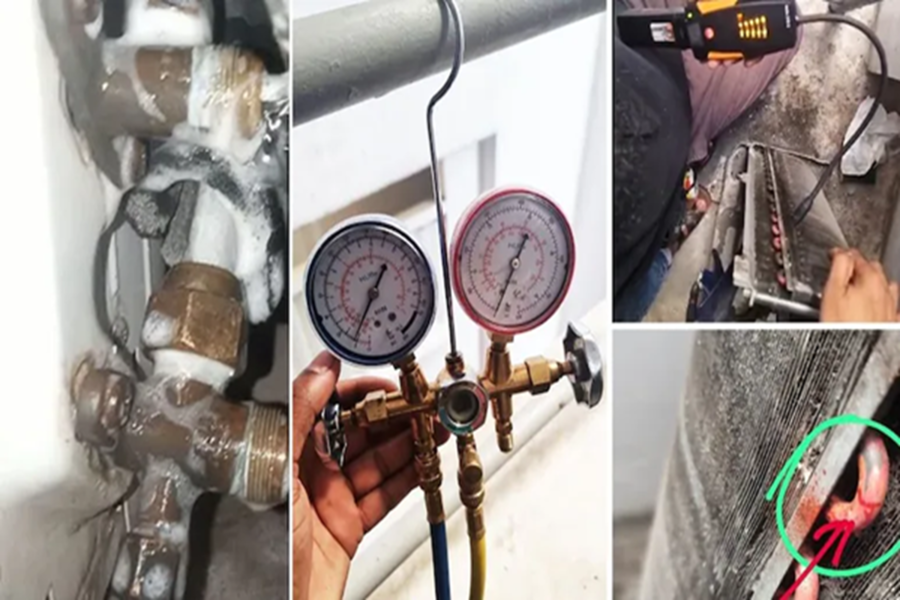
Ice Formation on Pipes: If you notice ice accumulating on the AC's copper pipes or on the outdoor unit, it is a clear indication of a gas leak. Essentially, when the refrigerant level drops, the internal pressure becomes unbalanced, causing the pipes to freeze over.
The Soap Suds Test: Mix liquid soap with water to create a soapy lather. Apply this mixture to the joints and connections of the pipes. If bubbles begin to form, it confirms that there is a gas leak at that specific spot.
Oil Stains: Refrigerant gas circulates through the system accompanied by a small amount of oil. If you observe sticky oil residue or dark, dust-caked stains on the joints or coils of the outdoor unit, it signifies the presence of a leak.
Unusual Noises: If, while the AC is running, you hear hissing sounds or noises resembling bubbling coming from either the indoor or outdoor unit, it is a symptom of escaping refrigerant gas.
Reduced Cooling and High Electricity Bills: If your AC is providing significantly less cooling than usual, the compressor is running continuously without cycling off, and your electricity bill has suddenly skyrocketed, these factors may also serve as indicators of a refrigerant leak.
Disclaimer: This content has been sourced and edited from NDTV India. While we have made modifications for clarity and presentation, the original content belongs to its respective authors and website. We do not claim ownership of the content.
