
AC Cooling Tips: Is your AC providing less cooling during the rainy season? Here are four major reasons why—find out..
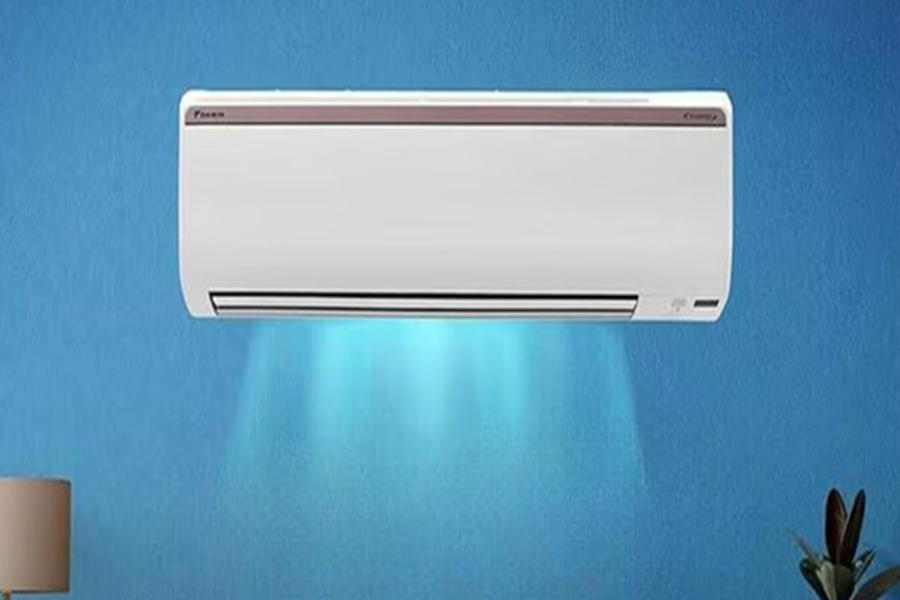
As soon as the monsoon arrives, the level of water vapor—or humidity—in the air rises. This humidity directly impacts your AC's operating system and its cooling efficiency. Consequently, even if it is cool outside, the room remains clammy, and you do not feel the cooling effect even when the AC is running. If your home AC is failing to cool effectively during the monsoon season, there could be four reasons for this. Let’s find out what they are...
Four main reasons why ACs fail to cool during the monsoon
1. Selecting the wrong mode
Most people run their ACs exclusively in 'Cooling Mode'; however, you should know that cooling mode is most effective when the outside air is dry and extremely hot (such as during the scorching heat of May and June). During the rainy season, the biggest issue—beyond the temperature—is atmospheric humidity. In this weather, cooling mode fails to dehumidify the air; this causes the room to remain muggy, creating the impression that the AC isn't working.
2. Ice formation on the evaporator coil
During the rainy season, air conditioners must extract large amounts of moisture from the air. If your AC's air filter hasn't been cleaned for a long time or is clogged with dust, internal airflow slows down. Reduced airflow causes the internal evaporator coil to become excessively cold, turning the accumulated moisture into ice. Once a layer of ice forms on the coil, the flow of cool air into the room stops completely.
3. Outdoor unit getting trapped in mud or water
The placement of the AC's outdoor unit is crucial. If the unit installed outside your home is not positioned correctly or elevated, continuous rain can lead to the accumulation of water, mud, leaves, or soil around it. When the outdoor unit is surrounded by such debris, it becomes unable to effectively release the heat from inside the room to the outside. ...causing the entire system to overheat and preventing cool air from reaching the room.
4. Voltage fluctuations and internal damage
Power outages and voltage fluctuations become frequent during rainy and stormy weather. If you haven't installed a good stabilizer with your expensive AC, a sudden high-power surge can cause internal damage to delicate components like the compressor, capacitor, or outdoor fan. Consequently, the AC might turn on, but cooling stops because the compressor fails to operate.
How can you keep your AC in good condition during the rainy season?
If you want your AC to provide excellent, uninterrupted cooling even in this humid weather, keep these four tips in mind...
Use the 'Dry Mode' button: As soon as it starts raining, switch the AC from 'Cooling Mode' to 'Dry Mode' (often indicated by a water droplet icon) using the remote. This mode acts like a dehumidifier, absorbing sticky humidity from the room and draining it out as water, making the room comfortable.
Cleaning the filter is essential: To ensure proper airflow and prevent ice from forming on the coils, open the AC's front panel weekly, wash the air filters thoroughly with water, and dry them completely before reinstalling.
Keep the outdoor unit safe: Periodically check the area around the outdoor unit to ensure there is no water accumulation or logging. Always have it installed in a clean, elevated spot so it can ventilate properly and dissipate heat effectively.
Stabilizer protection: Use a high-quality voltage stabilizer to protect the compressor and capacitor from electrical surges during heavy rain. This helps avoid unnecessary repair costs and internal damage.
Disclaimer: This content has been sourced and edited from Amar Ujala. While we have made modifications for clarity and presentation, the original content belongs to its respective authors and website. We do not claim ownership of the content.
