
Aadhaar Verification to Go Fully Digital: No More Photocopies at Hotels, Airports and Other Checkpoints
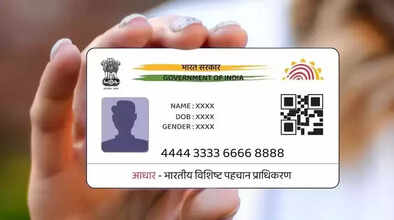
Aadhaar Verification to Go Digital: No More Photocopies Required at Hotels, Airports and Other Places
The government is preparing to roll out a major policy update aimed at strengthening data security and reducing fraud linked to Aadhaar misuse. Under the upcoming rule, hotels, event organisers and various other establishments will no longer be allowed to collect or store photocopies of Aadhaar cards. Instead, they will be required to use a secure digital verification system approved by the Unique Identification Authority of India (UIDAI).
This move is designed to eliminate the risks associated with photocopy misuse, improve privacy protection and bring uniformity to the verification process across sectors.
Why Aadhaar Photocopies Will No Longer Be Used
As per the Aadhaar Act, keeping someone’s Aadhaar copy without a valid reason is not permitted. Despite this, many businesses continue to store photocopies for verification purposes. This practice increases the risk of data leaks and identity fraud.
To address these issues, UIDAI plans to shift to a fully digital verification mechanism that ensures that businesses authenticate identities without physically storing any document.
UIDAI CEO Bhushan Kumar, in a statement to PTI, confirmed that establishments performing Aadhaar-based verification will now need to register for offline authentication. The new system will work through QR code scanning or through an updated Aadhaar mobile application.
“The purpose of this rule is to end paper-based verification entirely,” he said.
UIDAI Testing a New App for Seamless Verification
UIDAI is currently testing a new mobile application that will allow Aadhaar verification without requiring a real-time connection to the central database. This will enable quick, secure and completely offline verification.
The system will be particularly useful at high-traffic locations such as airports, hotels, commercial centres and retail outlets. Instead of collecting photocopies, these establishments will be able to verify identities using a one-time digital process.
To make this possible, organisations opting for offline verification will receive an API (Application Programming Interface) that can be integrated into their existing software. This eliminates server-related interruptions and makes the verification process faster and more reliable.
Kumar further added that the app will also allow users to update their address and even link family members who do not have access to mobile phones.
Boost to User Privacy and Data Protection
The new verification method has been developed in alignment with the Digital Personal Data Protection Act. With digital verification, users will no longer have to hand over photocopies of their Aadhaar card at multiple locations—greatly reducing the risk of misuse.
By eliminating physical documents, the entire system becomes safer. Digital checks ensure that only necessary information is shared and none of the data is stored by third parties.
UIDAI expects this new framework to be fully implemented across the country within the next 18 months.
A Major Step Toward Strengthening Digital Security
The transition to secure digital authentication is expected to provide several benefits:
-
No more need to carry Aadhaar photocopies everywhere
-
Reduced chances of data theft and identity fraud
-
Faster verification at hotels, events and airports
-
Greater user control over personal information
-
Improved compliance with national data protection standards
This initiative also supports the broader vision of a digitally empowered India by simplifying everyday processes and ensuring safer interactions between citizens and businesses.
As the new system gets implemented, Aadhaar verification will become smoother, faster and significantly more secure—marking a major shift towards stronger digital governance and better privacy protection for all.
