
Aadhaar Card Alert 2026: UIDAI Warns Users Not to Share OTP or Personal Details, Follow These Safety Tips
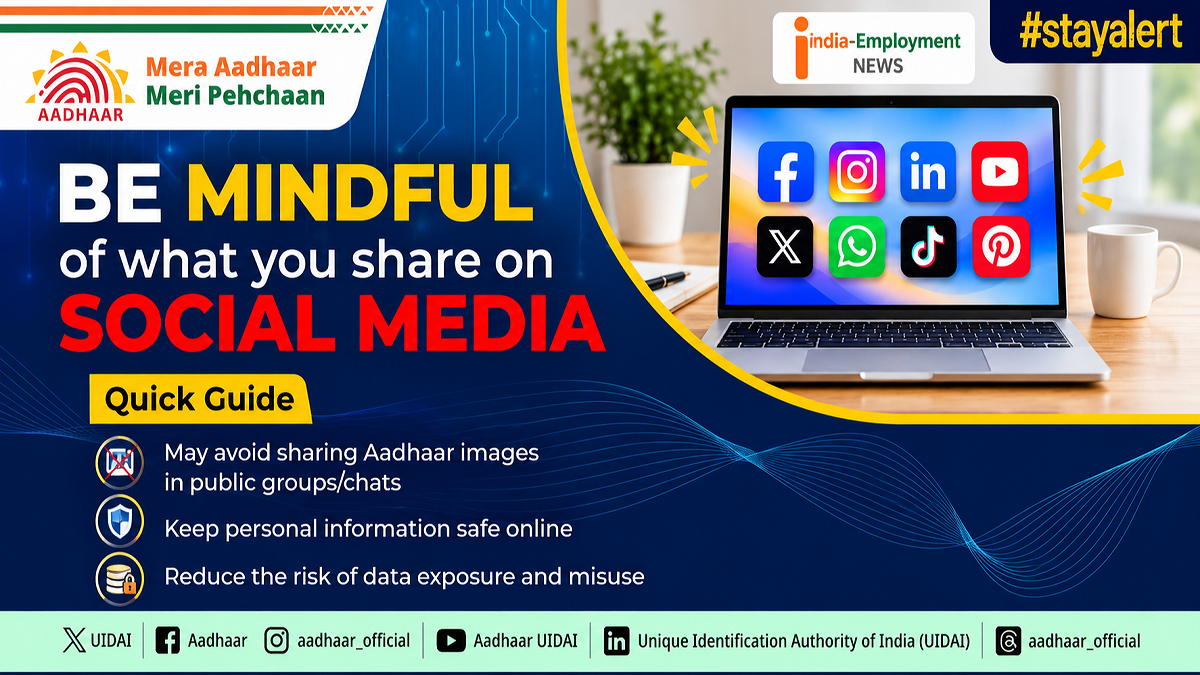
Aadhaar Card Latest News 2026: The Unique Identification Authority of India (UIDAI) has issued an important cybersecurity reminder for Aadhaar holders. The authority has advised people not to share their One-Time Passwords (OTPs), Aadhaar details or other sensitive personal information with unauthorised individuals.
The warning was shared through UIDAI's official social media account on October 30, 2026. It highlights the importance of protecting identity-related information from fraudsters who may attempt to misuse personal data.
Aadhaar is widely used for identity verification, banking-related services, government schemes and other authorised activities. Therefore, protecting Aadhaar information is an important part of digital security.
The latest UIDAI advisory does not announce any change in Aadhaar rules. Instead, it reminds users to remain cautious when someone requests confidential information.
UIDAI Issues Important Warning for Aadhaar Holders
According to the latest UIDAI communication, users should never disclose OTPs, Aadhaar details or sensitive information to unauthorised persons.
This warning is particularly relevant because cybercriminals sometimes impersonate officials from government departments, banks or service providers.
They may contact individuals through phone calls, text messages, WhatsApp or social media.
Some fraudulent communications may claim that an Aadhaar card requires urgent verification or that a government benefit will be stopped unless the recipient provides personal details.
Such claims should always be independently verified through official channels.
People should not assume that a caller is genuine simply because they know the recipient's name, phone number or partial Aadhaar details.
Aadhaar Security Alert 2026: Important Information
| Particulars |
Details |
|---|---|
| Issuing authority |
UIDAI |
| Advisory date |
October 30, 2026 |
| Main warning |
Do not share OTPs or sensitive details with unauthorised persons |
| Information to protect |
Aadhaar details, OTPs and personal information |
| Official website |
uidai.gov.in |
| Aadhaar assistance helpline |
1947 |
| Cybercrime helpline |
1930 |
| Cybercrime reporting portal |
cybercrime.gov.in |
Why Should You Never Share an Aadhaar OTP?
An OTP is a temporary verification code used to authenticate certain digital activities.
When a person initiates an Aadhaar-related service that requires OTP verification, the code may be sent to the registered mobile number.
This helps verify that the person completing the process has access to the relevant registered number.
However, if an OTP is shared with an unauthorised individual, it may enable misuse of an authentication process.
The exact risk depends on the service involved and any additional security controls.
For this reason, users should enter OTPs only when they have personally initiated a legitimate request through an authorised service.
If an unexpected Aadhaar OTP arrives, do not share it with anyone.
Beware of Fake Aadhaar Verification Calls
Fraudsters may attempt to create a sense of urgency by claiming that an Aadhaar card has been blocked or will soon become invalid.
They may ask the recipient to provide an OTP or personal details to complete a supposed verification.
In other cases, scammers may claim that a government subsidy, pension or financial benefit is pending.
They may then ask for sensitive information to process the payment.
Users should be suspicious of unsolicited calls that demand confidential information.
A genuine identity verification process should be completed through an authorised channel, not by disclosing OTPs to an unknown caller.
What Aadhaar Information Should You Protect?
UIDAI's reminder covers OTPs, Aadhaar details and other sensitive information.
People should be careful when sharing the following:
-
Aadhaar number and copies of identity documents.
-
OTPs received for authentication.
-
Passwords and account login credentials.
-
Bank account information when there is no legitimate requirement.
-
UPI PINs, ATM PINs and card security details.
-
Personal documents requested through suspicious links.
This does not mean an Aadhaar number can never be shared. Aadhaar details may be required for legitimate services under applicable rules.
The important precaution is to verify the identity and authority of the organisation requesting the information.
How to Protect Your Aadhaar Details Online
Aadhaar holders can take several practical steps to improve their digital security.
Use official websites: Access Aadhaar-related services through UIDAI's authorised platforms.
Avoid suspicious links: Do not click unfamiliar links promising Aadhaar updates, financial rewards or government benefits.
Protect authentication codes: Never reveal OTPs to callers, even if they claim to represent a government department.
Verify service requests: Check whether a requested update or verification is genuinely required.
Limit document sharing: Avoid sending Aadhaar copies through unverified messaging channels.
Keep devices secure: Update your phone and use a strong screen lock.
These precautions can reduce the risk of identity-related scams, although no single security measure can eliminate every cyber threat.
What Is Masked Aadhaar?
Masked Aadhaar is a version of the Aadhaar document in which the first eight digits of the 12-digit number are hidden.
Only the final four digits remain visible.
For example, a masked number may appear in the format XXXX XXXX 1234.
This can reduce unnecessary exposure of the complete Aadhaar number when a masked document is suitable for the intended service.
Users can access authorised Aadhaar document services through the official myAadhaar portal.
However, some services may require a different form of identity verification.
Official website: myAadhaar Portal.
Can You Lock Aadhaar Biometrics?
UIDAI provides a biometric locking facility for Aadhaar holders who want additional control over biometric authentication.
When biometrics are locked, biometric-based Aadhaar authentication is restricted until the appropriate unlocking process is completed.
This can provide an additional safeguard against unauthorised biometric authentication attempts.
However, users should understand that biometric locking may temporarily prevent them from using legitimate services that require biometric verification.
The facility should be managed through official UIDAI channels.
What Should You Do if Someone Asks for Your Aadhaar OTP?
If an unknown person asks for your Aadhaar OTP, do not disclose it.
End the conversation if the caller pressures you or threatens that your services will be suspended.
Avoid opening any link provided by the caller.
Instead, visit the relevant official website directly or contact the organisation using a verified customer support number.
If you receive an unexpected authentication message, review whether you recently initiated any Aadhaar-related activity.
You can also contact UIDAI for guidance if you suspect misuse of your Aadhaar information.
What if You Have Already Shared Your OTP?
If you have accidentally shared an OTP with a suspicious person, act promptly.
First, stop communicating with the individual.
If the OTP was connected to a bank or financial service, contact the relevant institution immediately.
Secure any accounts that may have been exposed and change affected passwords through official channels.
If financial fraud has occurred, report the incident to the national cybercrime helpline at 1930.
You can also submit a complaint through the government's cybercrime reporting website.
For Aadhaar-related concerns, contact UIDAI's helpline at 1947.
Prompt reporting may help authorities respond to suspected misuse, although it does not guarantee recovery of lost funds.
Does UIDAI's Warning Mean Aadhaar Cards Are Being Cancelled?
No. The supplied UIDAI advisory does not announce Aadhaar card cancellation or any new compulsory verification deadline.
It is a cybersecurity reminder focused on preventing the unauthorised disclosure of personal information.
Users should not believe messages claiming that their Aadhaar will be cancelled unless they immediately provide an OTP.
Any genuine change in Aadhaar procedures should be verified through official UIDAI communications.
Aadhaar Card Security Update 2026: Final Details
UIDAI has urged Aadhaar holders to protect their OTPs, Aadhaar details and other sensitive information.
The advisory reminds users to remain cautious when interacting with unknown individuals who request identity-related data.
The key takeaway: Never share your Aadhaar OTP or confidential personal information with unauthorised persons. Use official UIDAI services for verification and report suspicious activity through appropriate government channels.
Source Credit: Unique Identification Authority of India (UIDAI), official social media advisory dated October 30, 2026. Read the official UIDAI warning.
