
Aadhaar Alert 2026: UIDAI Warns Users About Fake Calls, Messages and Links, Follow These Safety Tips
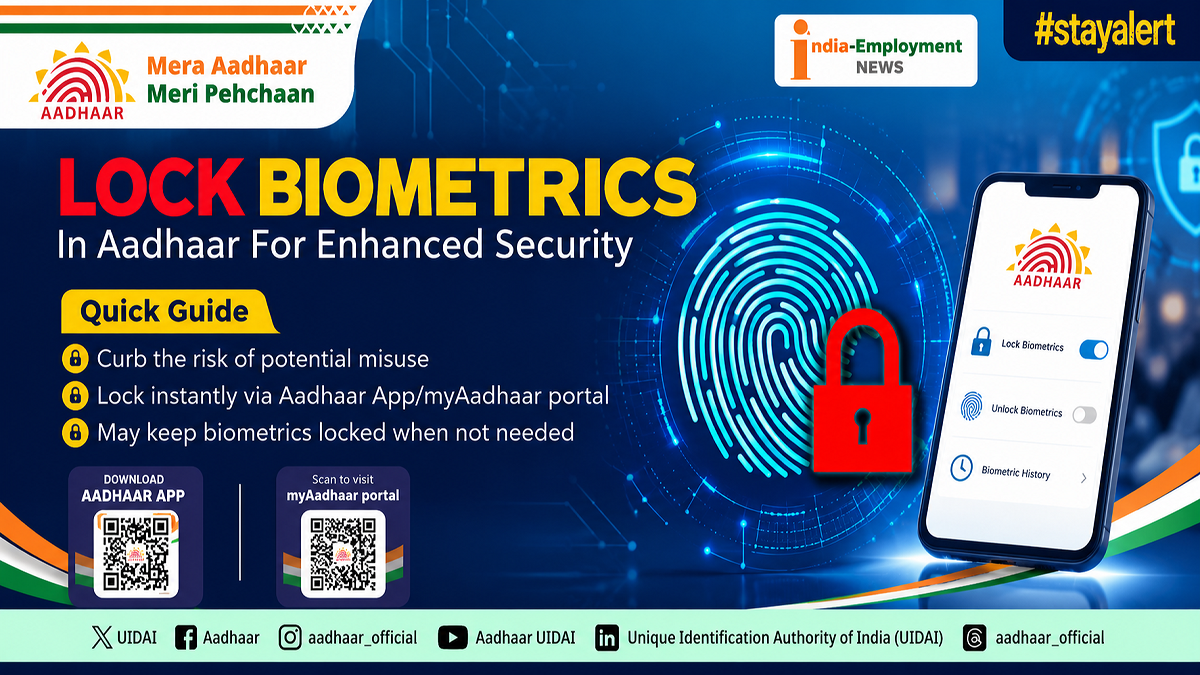
Aadhaar Card Latest Update 2026: The Unique Identification Authority of India (UIDAI) has issued an important cybersecurity awareness message, urging Aadhaar users to remain cautious about suspicious phone calls, messages and unfamiliar website links. The authority has reminded people that protecting their personal information is essential to avoiding online fraud and identity-related scams.
In an official social media post shared on October 30, 2026, UIDAI encouraged citizens to stay alert and adopt safer digital habits.
The advisory comes as cybercriminals continue to use deceptive communication methods to trick people into revealing confidential information.
Fraudsters may impersonate government officials, banks or customer support representatives to make their messages appear genuine.
However, UIDAI's latest post is a general cybersecurity awareness message. It does not announce any new Aadhaar rule, mandatory update deadline or suspension of Aadhaar services.
UIDAI Issues Cybersecurity Warning for Aadhaar Users
UIDAI has advised people to be careful when receiving unexpected calls, messages or links.
The authority's message focuses on improving public awareness of potential cyber threats.
Aadhaar is widely used for identity verification across government services, financial institutions and other authorised systems.
As a result, criminals may attempt to misuse Aadhaar-related terminology to gain people's trust.
For example, a fraudulent message may claim that a person's Aadhaar has been blocked or that immediate verification is required.
Such messages can create a sense of urgency and pressure recipients into clicking unfamiliar links.
Users should independently verify these claims rather than respond immediately.
Aadhaar Cybersecurity Alert 2026: Key Details
| Particulars |
Information |
|---|---|
| Issuing authority |
UIDAI |
| Advisory date |
October 30, 2026 |
| Main warning |
Suspicious calls, messages and links |
| Primary objective |
Cybersecurity awareness |
| People concerned |
Aadhaar users |
| Official Aadhaar website |
uidai.gov.in |
| Aadhaar assistance number |
1947 |
| Cybercrime reporting helpline |
1930 |
| Cybercrime reporting website |
cybercrime.gov.in |
Beware of Fake Aadhaar Update Messages
One common method used in online scams involves sending messages that appear to be official Aadhaar notifications.
A message may claim that the recipient must update their Aadhaar immediately to avoid losing access to banking or government services.
It may include a link directing the user to a website designed to resemble an official portal.
If the person enters personal information or authentication details on such a website, the information could be misused.
Not every message about Aadhaar is fraudulent, but unexpected communications should be checked carefully.
Users should access Aadhaar services directly through UIDAI's official website instead of relying on links from unknown senders.
Never Share Aadhaar OTP With Unknown Callers
An OTP, or One-Time Password, is often used to authenticate online transactions and identity-related requests.
Fraudsters may call people pretending to be government representatives and ask them to share an OTP.
They may claim that the code is necessary for Aadhaar verification, account activation or benefit continuation.
Users should never disclose authentication OTPs to an unknown caller.
An OTP should only be entered when the person has personally initiated a legitimate process through an authorised service.
If an unexpected OTP arrives, do not share it or approve a transaction that you did not request.
How to Identify Suspicious Aadhaar-Related Calls
Fraudulent callers may use different techniques to pressure people into revealing information.
Some may threaten that an Aadhaar number will be deactivated unless the recipient immediately completes verification.
Others may promise government benefits or financial rewards in exchange for personal information.
Warning signs include demands for urgent action, requests for passwords or OTPs, unfamiliar links and instructions to install remote-access applications.
Users should also be cautious when a caller asks for bank account credentials or UPI PINs.
Aadhaar-related identity verification does not require people to disclose their banking passwords to an unsolicited caller.
7 Important Cyber Safety Tips for Aadhaar Users
Here are practical precautions that can help reduce the risk of identity-related fraud.
1. Use official websites: Access Aadhaar services through UIDAI or the authorised myAadhaar portal.
2. Avoid unknown links: Do not open suspicious URLs received through SMS, WhatsApp, email or social media.
3. Protect OTPs: Never share authentication codes with strangers or people claiming to be customer support representatives.
4. Verify unexpected claims: Check Aadhaar-related notices independently before taking action.
5. Keep devices updated: Install operating system and application security updates.
6. Avoid unnecessary sharing: Do not disclose your full Aadhaar number or copies of identity documents unless there is a legitimate requirement.
7. Report suspected fraud: Contact the appropriate official helpline or cybercrime reporting service if you suspect misuse.
These are general cybersecurity precautions consistent with UIDAI's warning. The supplied social media text does not provide the detailed contents of the accompanying awareness slides.
What Is Masked Aadhaar and How Can It Help?
Masked Aadhaar is an Aadhaar document format in which the first eight digits of the Aadhaar number are concealed.
Only the last four digits remain visible.
This can help reduce unnecessary exposure of the complete Aadhaar number when a masked version is appropriate for the intended purpose.
However, some authorised services may require other forms of verification.
Users should check the recipient's legitimate requirements before sharing an identity document.
A masked Aadhaar should not be treated as a guarantee against fraud, but it can support better data-sharing practices.
Can You Lock Aadhaar Biometrics?
UIDAI provides a biometric locking facility that allows Aadhaar holders to restrict the use of their biometric information for Aadhaar authentication.
This can be useful for people who want an additional layer of control over biometric authentication.
The facility can be accessed through authorised UIDAI services, subject to applicable requirements.
Users should understand that locking biometrics may affect services that require biometric authentication until the lock is temporarily or permanently disabled through the permitted process.
Official portal: myAadhaar.
What Should You Do if You Click a Suspicious Link?
If you accidentally open an unfamiliar link, avoid entering personal or financial information.
Close the suspicious page and do not download files or applications offered through it.
If you have already shared sensitive information, take immediate steps appropriate to the type of data exposed.
For example, change affected account passwords through official services and contact your bank if financial credentials may have been compromised.
If money has been transferred fraudulently, report the incident promptly through the national cybercrime helpline 1930 or the official reporting portal.
Early reporting can be important in financial fraud cases, although recovery is not guaranteed.
How to Report Aadhaar-Related Problems
People who need clarification about Aadhaar services can contact UIDAI through its official support channels.
The Aadhaar helpline number is 1947.
For suspected online financial fraud, the national cybercrime helpline is 1930.
Complaints can also be submitted through National Cyber Crime Reporting Portal.
These services serve different purposes: UIDAI handles Aadhaar-related assistance, while the cybercrime reporting system deals with suspected cyber offences.
Does This UIDAI Alert Mean Aadhaar Cards Are Being Blocked?
No such announcement appears in the supplied UIDAI post.
The latest message focuses on protecting users against suspicious communications and potential cyber threats.
It does not announce mass Aadhaar deactivation, a new compulsory e-KYC deadline or a change in Aadhaar eligibility.
Users should be especially cautious of viral messages that falsely connect cybersecurity warnings with threats of immediate Aadhaar cancellation.
Any genuine policy change should be verified through an official government notification.
Aadhaar Security Alert 2026: Final Update
UIDAI has reminded Aadhaar holders to stay cautious about suspicious calls, messages and links.
The advisory encourages people to adopt safer digital practices and avoid sharing confidential information with unverified individuals.
The key takeaway: Never share an Aadhaar authentication OTP with an unknown caller, avoid unfamiliar links and use official UIDAI services for identity-related requests. If you suspect cyber fraud, report it through the appropriate government channels.
Source Credit: Unique Identification Authority of India (UIDAI), official cybersecurity awareness post dated October 30, 2026. Read UIDAI's official cybersecurity alert.
