
A Scientific Breakthrough! This Electronic Skin Heals Itself—Learn About the Technology
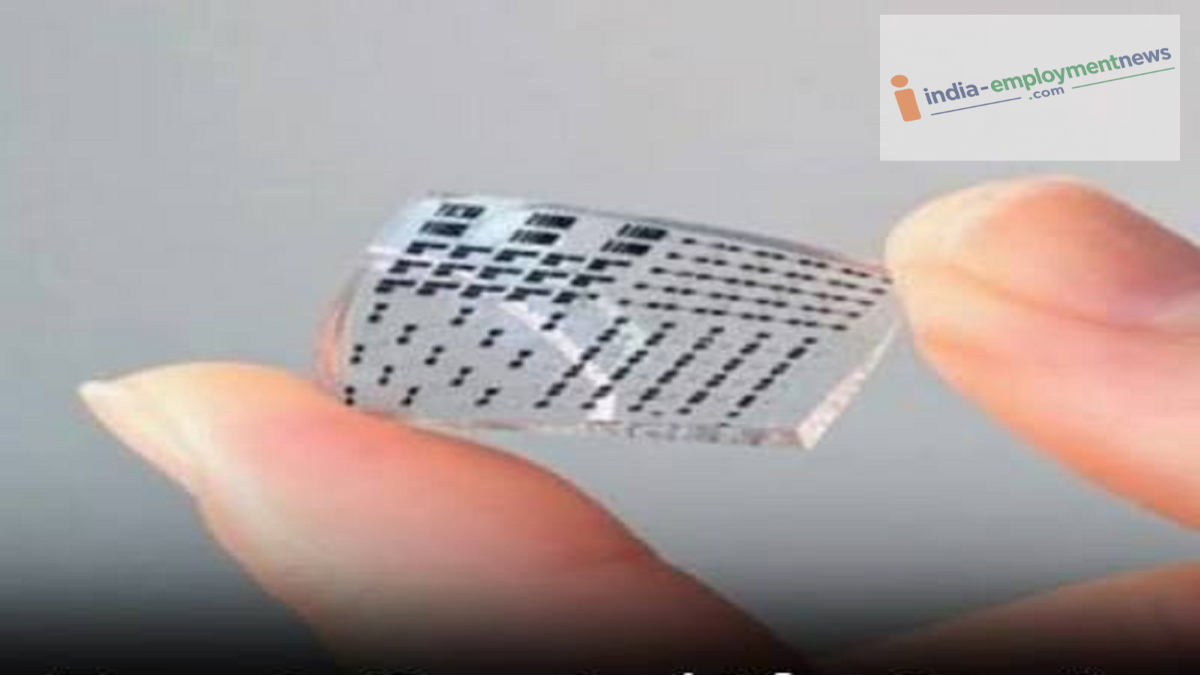
Electronic Skin: Scientists have developed a new material called Intrinsically Dynamic Biosubstrate (IDBS).
Electronic Skin: The world of technology offers many advanced devices that are widely used today. But have you ever imagined a smartwatch or a virtual reality glove that could automatically heal itself if its surface got scratched? Scientists have created an electronic skin that repairs itself and can be recycled after use. Let’s explore the technology behind it.
What is Electronic Skin?
According to media reports, scientists at the National University of Singapore (NUS) have developed a soft, flexible device capable of self-repairing after damage. A key feature is its ability to securely hold electronic components while also being recyclable after use. The findings of this research have been published in the journal Nature Sustainability.
Solving Multiple Problems at Once
Addressing these challenges, scientists developed a new material known as Intrinsically Dynamic Biosubstrate (IDBS). The goal was to create a base that is both flexible and durable, capable of self-repair when damaged, and reusable later.
To create this material, scientists utilized two natural substances: lipoic acid, found in living cells, and phytic acid, which occurs naturally in seeds and grains.
A unique network was formed by heating these two materials together, without the need for hazardous solvents or external chemical catalysts. The resulting structure contains various types of chemical bonds, each contributing specific properties to the material.
A Major Challenge for Wearable Electronics
Fitness trackers, smart health sensors, electronic skins, and other wearable devices are rapidly gaining popularity among the public. These gadgets must bend and stretch along with body movements; therefore, they are made using soft and flexible materials.
However, constant bending, stretching, and pressure can cause the ultra-thin metal circuits inside them to detach. Even a minor cut or crack can render the sensor inoperable. Many flexible electronic materials are made from petroleum-based plastics, which are difficult to recycle after use.
Self-heals after being cut
Notably, the most remarkable feature of this new material is its self-healing capability. When the material is damaged, some of its bonds break, but they spontaneously reform. Through this process, the material regains a significant portion of its original strength.
In lab tests, a version of the material was stretched to more than eight times its original length. Despite being severely damaged, it recovered over 80 percent of its strength within approximately six hours at room temperature.
Even more interestingly, the material regained over 90 percent of its strength even after the damage-and-recovery cycle was repeated five times.
Metal circuits remain securely attached.
It is worth noting that flexibility alone is not enough for wearable electronics; the metal conductors that transmit electrical signals must also remain firmly bonded to the base material.
According to scientists, IDBS forms a stronger bond with metal compared to some commonly used flexible materials. This reduces the risk of electronic circuits detaching despite repeated bending or stretching.
The team has also developed several prototypes using this material. These included an “electronic skin” capable of measuring temperature, moisture from breath, and body activity. Additionally, they created electrodes capable of recording heart and muscle activity.
