
Qualifications for the PMO: What educational background is required for PM Modi’s core team, and how does one get a job there?
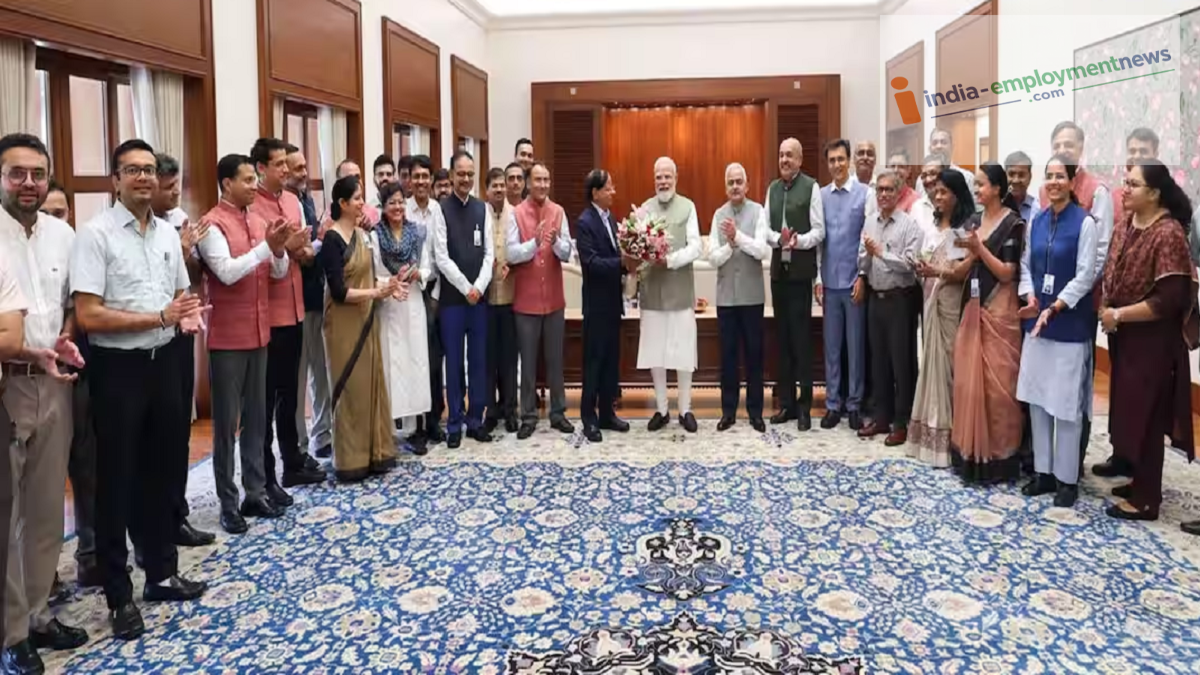
If you dream of working with the Prime Minister, learn about the positions available in the Prime Minister’s Office (PMO), the required educational qualifications, and how an ordinary young person can secure a job there.
Working alongside the Prime Minister and contributing to major government decisions is a dream for many young people—especially those aspiring to build a career in administration, politics, economics, law, or policy-making. But is it mandatory to be an IAS or IPS officer to join Prime Minister Narendra Modi’s core team?
Many wonder whether an ordinary graduate can also secure a position in the Prime Minister’s Office (PMO). In reality, the Prime Minister’s team includes a diverse range of personnel—from administrative officers to subject-matter experts—each with specific educational requirements and selection processes. Here is a look at the educational qualifications needed to be part of the PM’s core team.
Experts from various fields work here
The Prime Minister’s Office (PMO) is a vital administrative office of the central government. Its functions include providing secretarial assistance to the Prime Minister, coordinating between government departments, and supplying essential information on critical matters. According to the organizational details available on the official PMO website, the office comprises 122 gazetted and 281 non-gazetted posts. The PMO employs a mix of administrative officers and experts from various specialized fields.
No single fixed educational qualification
There is no single, universal educational qualification required for a job in the PMO; it depends entirely on the specific position for which you are applying. If you wish to work as an administrative officer, the primary route is through the UPSC Civil Services Examination, which leads to selection into the IAS, IPS, or other central services. For this, a graduation degree from a recognized university is mandatory. Depending on their experience and administrative responsibilities, selected officers may get the opportunity to work on deputation across various central government departments or within the Prime Minister’s Office (PMO). Furthermore, if you have an interest in fields such as economics, law, technology, data analysis, or research, you may find opportunities for specialized roles based on your higher education and relevant experience.
Opportunities for Non-IAS Candidates
There are also openings for non-IAS candidates within institutions associated with the Prime Minister and organizations involved in government policy-making. These include roles such as 'Young Professional' and 'Consultant.' For instance, the Economic Advisory Council to the Prime Minister (EAC-PM)—which advises the Prime Minister on economic matters—appoints individuals to these positions. Candidates for these roles are expected to possess relevant academic qualifications and work experience. A Master’s degree or a specific professional degree in a relevant field is required for the 'Young Professional' position, along with at least one year of work experience; the upper age limit is 32 years. (Note: These criteria apply to positions within NITI Aayog, rather than direct recruitment by the PMO.)
Fields of Study That Can Open Doors
If you aspire to work with the government in the future, gaining expertise in certain subjects can be advantageous. These include Political Science, Economics, Law, Public Administration, Engineering and Technology, as well as Journalism and Mass Communication. However, a degree alone is not sufficient; it is equally essential to possess relevant field experience, research capabilities, strong communication skills, and a solid understanding of current affairs.
How to Apply
There are various pathways to securing a position within government offices. While selection for the civil services occurs through the UPSC, individual departments often issue separate vacancy notifications for specialized and advisory roles. Candidates should regularly check the official websites of the PMO, UPSC, NITI Aayog, and the EAC-PM for such opportunities. The selection process typically involves evaluating a candidate’s academic record, professional experience, performance in interviews, and other prescribed procedures. Before the appointment of non-government personnel in the PMO, the verification of their documents and character is also mandatory.
