
Earth’s Rotation Day 2026: What If the Earth Suddenly Stopped Rotating? Shocking Scientific Facts
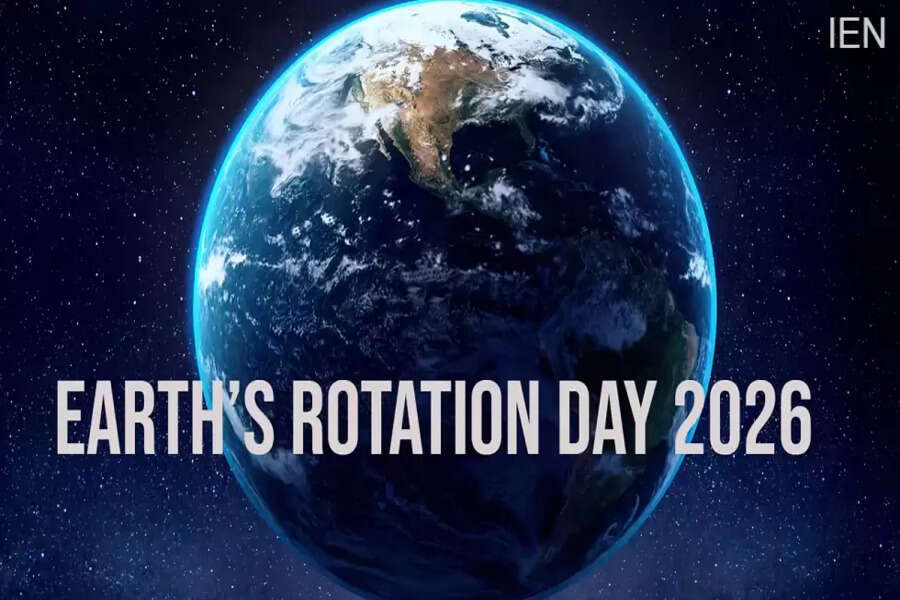
Every single day, we watch the Sun rise in the east and set in the west. Morning turns into evening, night fades into a new day, and life moves on smoothly. This daily cycle feels so normal that we rarely stop to question what makes it possible. The real reason behind this rhythm is Earth’s rotation on its axis.
Observed every year on January 8, Earth’s Rotation Day 2026 reminds us of this invisible yet powerful motion that shapes time, climate, and life itself. It is not just a scientific phenomenon—it is the foundation of how our planet functions.
Why Earth’s Rotation Matters
The Earth completes one full rotation on its axis approximately every 24 hours, creating the cycle of day and night. This rotation influences:
-
The length of a day
-
Global climate patterns
-
Wind directions
-
Ocean currents
-
The balance of ecosystems
Without rotation, the planet as we know it would be unrecognizable.
When People Didn’t Believe the Earth Moves
For centuries, humans believed that Earth was stationary and that the Sun, Moon, and stars revolved around it. Ancient Greek thinkers were among the first to suggest that Earth might be moving, but they lacked the tools to prove it.
This idea remained controversial for hundreds of years. Even as astronomy advanced, the concept of a rotating Earth was hard for people to accept—until science finally delivered undeniable evidence.
The Experiment That Changed Human Understanding
On January 8, 1851, French physicist Léon Foucault demonstrated Earth’s rotation using a large pendulum, now known as the Foucault Pendulum. The experiment visually showed that while the pendulum swung in a fixed plane, the Earth beneath it rotated.
This simple yet powerful demonstration became one of the strongest proofs that Earth spins on its axis and transformed scientific understanding forever.
Earth’s Rotation: More Than Just Day and Night
Earth’s rotation does much more than separate day from night:
-
It creates the Coriolis effect, which determines wind directions
-
It influences the rotation of cyclones and hurricanes
-
It helps regulate ocean currents
-
It plays a role in maintaining Earth’s magnetic field
These factors collectively maintain the delicate balance that supports life.
What If the Earth Stopped Rotating?
Earth’s Rotation Day 2026 also invites us to imagine a frightening scenario: What if Earth suddenly stopped spinning?
Scientists warn that:
-
One side of the planet would experience endless daylight
-
The other side would be locked in permanent darkness
-
Temperatures would reach extreme highs and lows
-
Weather systems would collapse
-
Most life forms would struggle to survive
In short, Earth’s rotation is as essential as air and water for life.
Why Earth’s Rotation Day Is Important
This day celebrates human curiosity and scientific discovery. It encourages students and young minds to ask questions, challenge assumptions, and explore the universe through logic and evidence.
Earth’s Rotation Day 2026 is not just about astronomy—it honors the spirit of inquiry that helps humanity understand its place in the cosmos.
Amazing Facts About Earth’s Rotation
-
Earth’s rotation is slowly slowing down, causing days to become slightly longer
-
Earth rotates at about 1,670 km per hour at the equator
-
The planet has been rotating for nearly 4.5 billion years
-
Earth’s magnetic field is linked to movements in its molten core
-
Around 70% of Earth’s surface is covered by water, balanced by rotation
Conclusion
Earth’s Rotation Day 2026 reminds us that although the ground beneath our feet feels still, our planet is constantly moving. This continuous motion keeps life stable, time organized, and nature in harmony. Perhaps this silent rotation teaches us the greatest lesson of all—progress comes from constant movement.
