
World Science Day: 10 Great Indian Scientists Who Changed the World
Indian scientists have always played a pivotal role in advancing science. Despite limited resources, they have achieved remarkable milestones in fields ranging from space exploration and nuclear energy to physics.
World Science Day: Every year on November 10, 'World Science Day for Peace and Development' is celebrated globally. The primary objective of this day is to highlight the significant role of science in society and to raise awareness among the general public about issues related to science. Indian scientists have consistently contributed to the advancement of science and have helped reshape the world's perspective. Even with limited resources, their achievements—spanning space exploration, nuclear energy, and physics—have brought global recognition to India. Today, let us look at 10 such great scientists whose research and vision transformed not only our nation but the entire world.
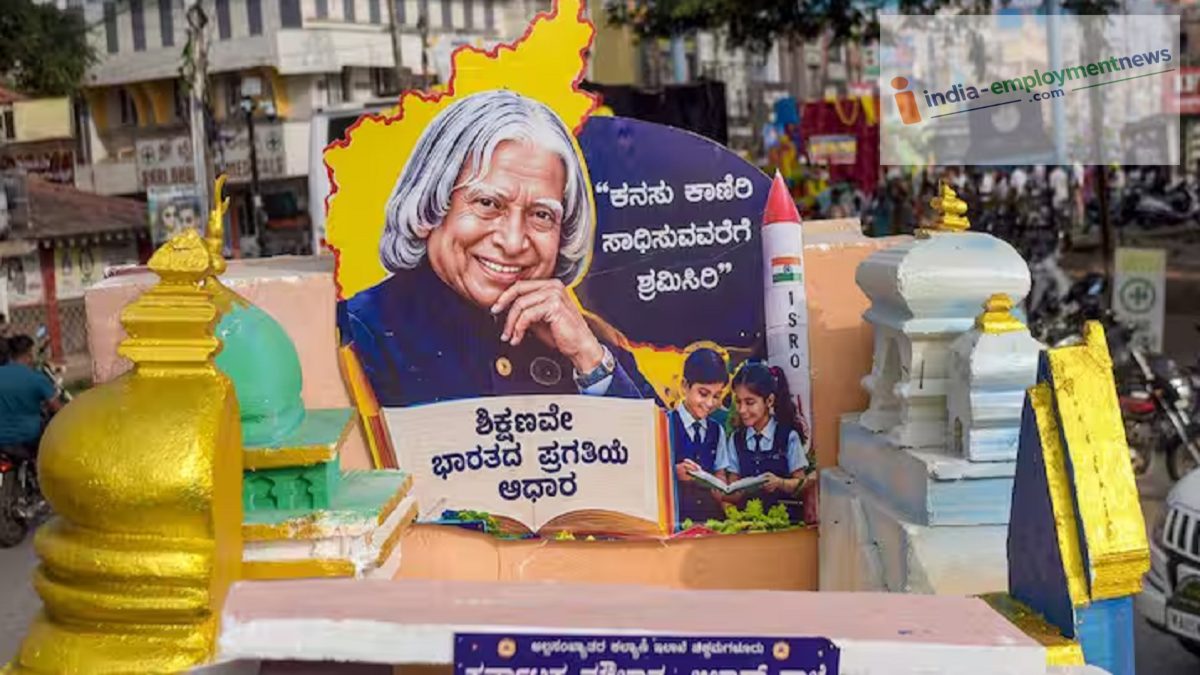
Dr. A.P.J. Abdul Kalam, a former President of India and recipient of the Bharat Ratna, is known as the 'Missile Man' of India. He became associated with the Indian space research program in 1962. Dr. Kalam is credited with leading the development of India's first indigenous satellite as its project director. In 1980, he oversaw the successful placement of the 'Rohini' satellite into Earth's orbit, which made India a member of the international space community. Furthermore, Dr. Kalam is credited with the design of indigenous missiles such as the 'Agni' and 'Prithvi'.
C.V. Raman was the first Asian scientist to receive a Nobel Prize in the field of physics. On February 28, 1928, he discovered the 'Raman Effect,' for which he was awarded the Nobel Prize in Physics in 1930 and the Bharat Ratna in 1954. His contribution to the study of light scattering remains unforgettable. Additionally, he conducted extensive research into the sounds produced by musical instruments and the wave nature of those sounds. The story of India’s nuclear energy program would be incomplete without the contributions of Dr. Homi Jehangir Bhabha, who is often called the "architect of India’s atomic energy program." Bhabha began his work in nuclear science at a time when global knowledge in the field was still quite limited. It was through his efforts and foresight that India successfully conducted its first nuclear test in 1974, establishing the nation as a nuclear-capable power.
Vikram Ambalal Sarabhai is considered the father of the Indian space program, having laid its very foundation in the country. Hailing from Ahmedabad, Gujarat, Sarabhai contributed significantly to the fields of nuclear energy and electronics, and established nearly 40 institutions across India dedicated to space research. He also played a pivotal role in the establishment of the Thumba Equatorial Rocket Launching Station.
Dr. Subrahmanyan Chandrasekhar, a nephew of the great scientist C. V. Raman, was awarded the Nobel Prize in Physics in 1983 for his remarkable contributions to astrophysics. He discovered the nature of white dwarf stars and formulated the "Chandrasekhar limit"—a critical threshold for stellar mass—which proved instrumental in unraveling the mysteries surrounding the origins of the universe and the stars.
Jayant Vishnu Narlikar, a renowned astrophysicist born in Kolhapur, Maharashtra, is known for his work on the Big Bang theory, as well as for developing the "steady-state theory" and the "Hoyle-Narlikar theory" in collaboration with Fred Hoyle. Beyond his scientific research, he made invaluable contributions to the popularization of science among the general public through his scientific literature.
Venkatraman Ramakrishnan, an Indian-origin scientist born in Chidambaram, Tamil Nadu, was awarded the Nobel Prize in Chemistry in 2009. He received this prestigious honor for his groundbreaking research on the structure and function of ribosomes—the cellular machinery responsible for protein synthesis. Dr. Jagadish Chandra Bose was an extraordinary scholar in the fields of physics, biology, botany, and archaeology. He was the world’s first scientist to conduct research on radio waves and the optics of microwaves. Furthermore, while studying plant sensitivity, he invented the 'crescograph'—an instrument that demonstrated that plants possess life and feelings. He is regarded as one of the pioneers of radio science.
The renowned physicist Satyendra Nath Bose is globally recognized for his contributions to quantum mechanics. In physics, the term 'boson'—a category of particles distinct from fermions—was named in his honor. In collaboration with Albert Einstein, he developed 'Bose-Einstein statistics,' which became a foundational pillar of modern physics.
Dr. Har Gobind Khorana, an Indian-born American scientist, was awarded the Nobel Prize in Medicine in 1968 for his research on the interpretation of the genetic code. His groundbreaking work helped medical science understand how nucleic acids—which carry the genetic code within cells—regulate protein synthesis.
