
Will schools in Delhi-NCR remain closed until November 15? 53% of parents in a survey demand a 'smog break' for children..
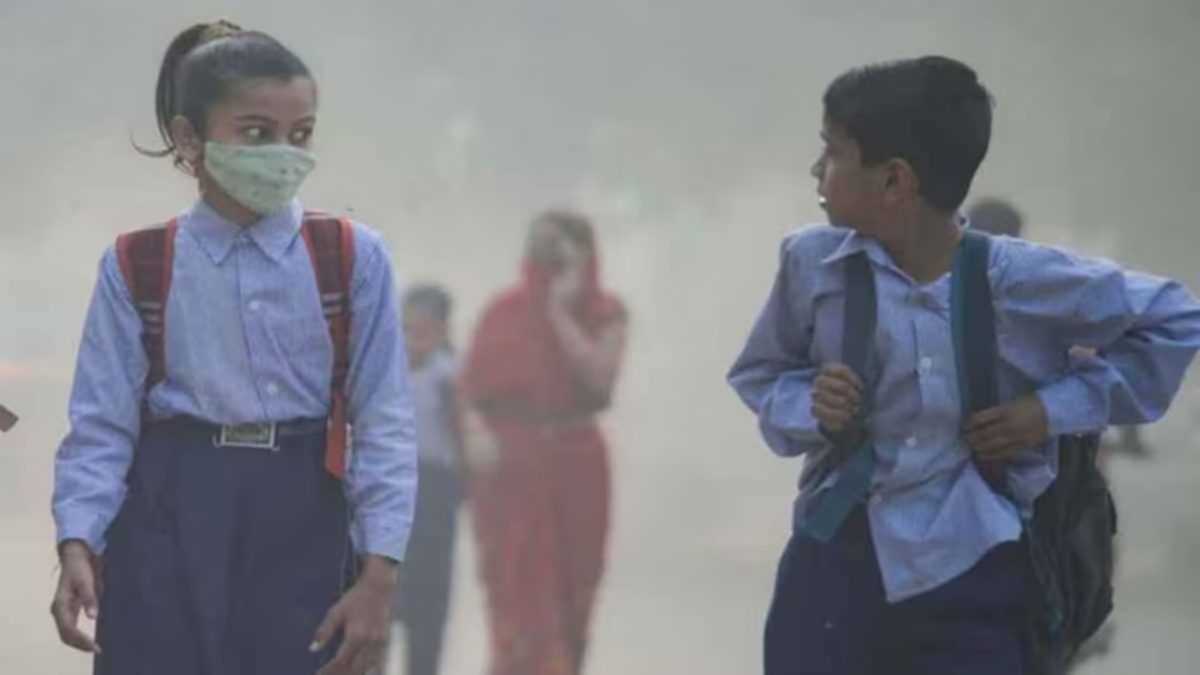
Smog Break in Delhi-NCR Schools: As Diwali approaches, the air in Delhi-NCR has become extremely toxic, making it difficult for people to breathe. This pervasive smog is taking a heavy toll on the health of both adults and young children. Children waiting for school buses in the morning or standing in school assemblies are inhaling toxic particles at levels far exceeding safe limits. Given the situation, parents’ patience is beginning to wear thin.
Air quality in Delhi-NCR has reached a life-threatening level, leading to growing demands for a "smog break" in schools across the capital and its surrounding cities. A survey by LocalCircles, which gathered opinions from over 38,000 residents across Delhi, Noida, Ghaziabad, Gurugram, and Faridabad, has yielded alarming results. 53% of parents have called for a "smog break" between November 10 and November 15, while 47% believe that school closures should be mandatory whenever air quality remains in the "severe" category.
Demand for a "Smog Break" in Delhi-NCR: 5 Key Insights from the Survey and Health Perspectives
Notably, not a single parent surveyed advocated for keeping schools open as usual. Parents have clearly stated that instead of waiting for an emergency to arise and then making last-minute, late-night decisions, the government should take proactive, concrete measures this time.
1. Children Falling Victim to Toxic Air: Dangerous Levels of PM 1 Particles
On November 4, the average Air Quality Index (AQI) in Delhi-NCR was recorded at 555—falling into the "severe" category. The concentration of PM 2.5 and even finer PM 1 particles in the air is dozens of times higher than safe limits. According to experts, these microscopic particles can pass through the lungs and enter directly into the bloodstream. Children have a higher breathing rate than adults; consequently, this has a lasting and detrimental impact on their developing lungs.
2. 49% of parents favor online classes; 25% prefer school closures
The survey asked what schools should do during a "smog break." 49% of parents suggested that physical classes should be suspended in favor of online learning, while 25% advocated for a complete closure of schools. In total, 74% of parents want to ensure that children do not visit school premises under any circumstances, thereby avoiding exposure to toxic air.
3. If adults can work from home, why the delay for children?
In light of rising pollution levels, the administration and the Commission for Air Quality Management (CAQM) have issued guidelines for a "work-from-home" arrangement for 50% of office staff. Parents are questioning why, if policies are being formulated to protect adults from this toxic air, children are still being sent to school every morning. Furthermore, given that data from the past eight years consistently shows pollution peaking during the second week of November, why has no decision been taken regarding schools?
4. Alarming study findings: 43.5% of children in Delhi have compromised lung function
Citing a study by the Central Pollution Control Board (CPCB) and the Chittaranjan National Cancer Institute, the report indicates that 43.5% of children in Delhi exhibit reduced lung function. Compared to children in rural areas, those in Delhi show a significantly higher prevalence of respiratory issues and symptoms associated with Attention Deficit Hyperactivity Disorder (ADHD). Lung damage sustained during childhood can never be fully reversed as a person ages.
5. Urgent Need for a Uniform Policy and Proactive Planning
A major flaw in the existing regulations is that decisions to close schools in Delhi, Noida, Gurugram, or Ghaziabad are taken by different authorities at different times. Parents are demanding that the CAQM and all NCR states collaborate to formulate a unified policy. Specifically, a 'smog break' should be implemented in advance for the period between November 10 and 15—a time when smoke from stubble burning and post-Diwali smog are expected to reach their peak.
Disclaimer: This content has been sourced and edited from News18 Hindi. While we have made modifications for clarity and presentation, the original content belongs to its respective authors and website. We do not claim ownership of the content.
