
Why is the NDA SSB interview considered tough? Find out what happens over the five days..
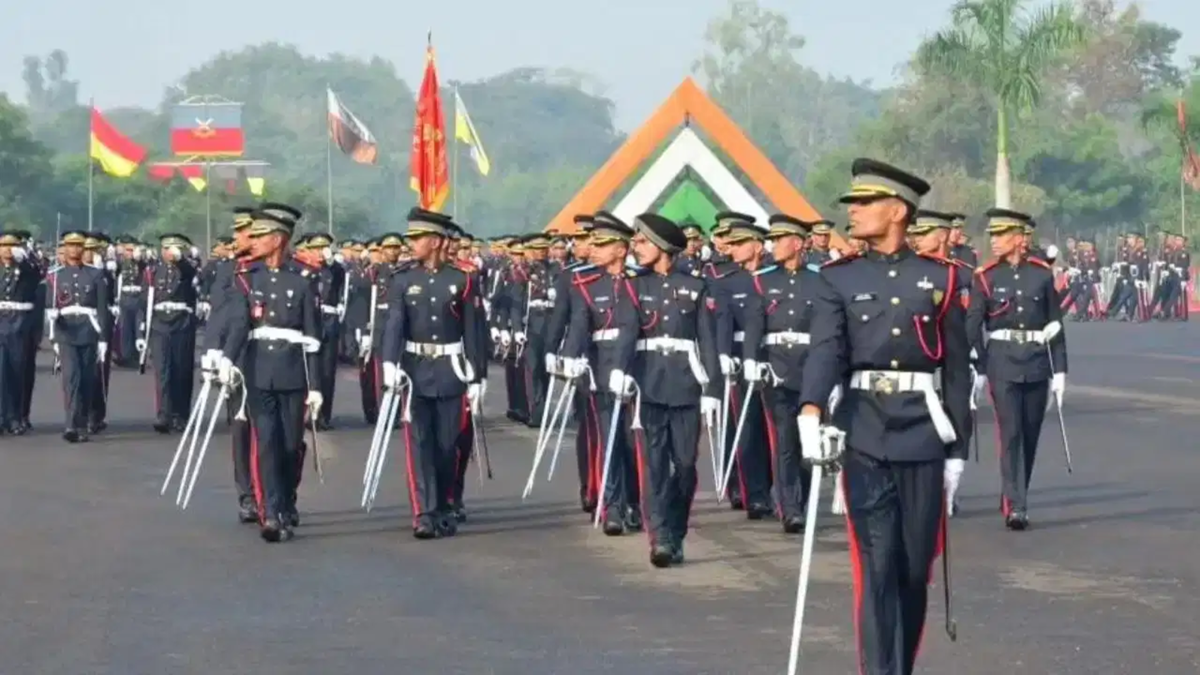
For young people aspiring to become officers in the armed forces, merely passing the written examination is not enough. After clearing exams like the NDA or CDS, candidates must undergo the rigorous selection process of the SSB (Services Selection Board). Spanning approximately five days, this process evaluates a candidate's intelligence, personality, leadership abilities, teamwork, decision-making skills, and capacity to perform under pressure. Rote learning or memorized answers do not suffice in the SSB; instead, the process seeks to understand the candidate's genuine mindset and behavior through various tests.
Why isn't bookish knowledge enough for the SSB?
The SSB should not be viewed as a standard job interview. Its primary objective is to assess the extent to which a candidate possesses the essential "Officer-Like Qualities." To this end, the Interviewing Officer (IO), Group Testing Officer (GTO), and Psychologist evaluate the candidate using distinct methods. Consequently, simply providing the "correct" answer is insufficient; the assessment focuses on how the candidate thinks and makes decisions in specific situations.
The major screening takes place on the first day
A screening test is conducted on the first day of the SSB. This primarily comprises the Officer Intelligence Rating (OIR) and the Picture Perception and Description Test (PP&DT). The OIR involves questions related to logic and intelligence. In the PP&DT, candidates must construct a story based on a displayed image and subsequently discuss it within a group. This stage evaluates not only the ability to speak but also the capacity to listen to others and articulate one's own views effectively.
Mindset and mental aptitude are tested on the second day
Candidates who succeed in the screening stage advance to Stage II. The Psychological Tests conducted on the second day aim to understand how the candidate reacts to various situations. Their mindset, approach to problem-solving, and decision-making capabilities are crucial factors. Therefore, providing natural and honest responses is considered essential, rather than relying on rehearsed answers.
Teamwork and leadership are tested in the GTO round
Group activities under the GTO (Group Testing Officer) assessment begin on the third day. Candidates are required to work together as a team to solve various tasks and problems. During this process, qualities such as leadership ability, cooperation, respect for others' views, and the ability to remain calm under pressure are assessed. It is not merely a test of physical capability.
**Personal questions asked during the interview**
The personal interview on the fourth day is a crucial stage. Questions may cover education, family, friends, interests, achievements, weaknesses, general knowledge, and future plans. Inquiries regarding the motivation to join the army and life's challenges may also be raised. Candidates must be clear and honest about the information provided in their application.
**Decision made at the conference on the fifth day**
On the final day, a conference is held where all officers—including the IO (Interviewing Officer), GTO (Group Testing Officer), and Psychologist—discuss the candidate's performance over the five days. Subsequently, a decision is made on whether or not to recommend the candidate. However, an SSB recommendation does not guarantee final appointment.
**Medical examination and merit list following recommendation**
After being recommended by the SSB, the candidate undergoes a medical examination. Once declared medically fit, an All-India merit list is prepared based on available vacancies and the candidate's scores. Only after securing a place on the merit list is the candidate sent to the respective military academy for training.
The SSB is considered a rigorous selection process because it evaluates various facets of a candidate's personality over several consecutive days. Performing well in a single test is insufficient; a balanced performance across the entire process is essential.
Disclaimer: This content has been sourced and edited from TV9. While we have made modifications for clarity and presentation, the original content belongs to its respective authors and website. We do not claim ownership of the content.
