
Why is Constitution Day celebrated on November 26th? Where is its original copy kept?
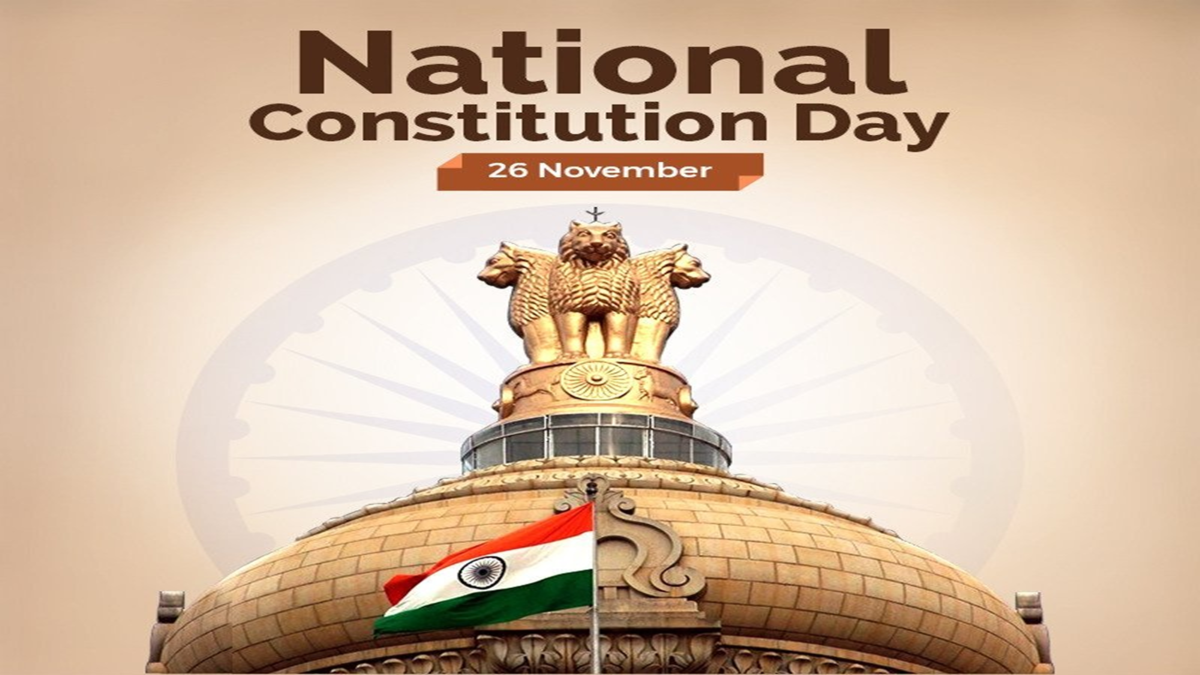
Constitution Day (November 26) Quiz: Every year, as November 26 approaches, ‘Constitution Day’ is celebrated with great enthusiasm—from social media platforms to schools and colleges. A question often arises: since the Constitution came into effect on January 26, 1950—a day we celebrate grandly as Republic Day—why do we also observe Constitution Day on November 26? Are these two days two sides of the same coin, or is there a specific historical story behind them?
The Constitution of India is more than just a thick book of laws; it serves as the ultimate guarantee of the rights and freedoms of every ordinary citizen. Its creation involved an in-depth study of the constitutions of various nations around the world, from which the best provisions were selected and tailored for India. Did you know that the original Constitution of India was not printed in a press? It was handwritten in beautiful calligraphy, and the original copy remains preserved to this day. Test your general knowledge with these 10 interesting facts about Constitution Day.
Constitution Day Special Quiz: Test Your Knowledge
On the special occasion of Constitution Day, explore some significant and fascinating facts about the Indian Constitution:
Question 1: If the Constitution came into effect on January 26, 1950, why do we celebrate Constitution Day on November 26?
Answer: It was on November 26, 1949, that the Constituent Assembly formally adopted the Constitution of India. By that date, the Constitution was complete, and certain key provisions—such as those concerning citizenship and elections—were brought into immediate effect.
Question 2: How do November 26 (Constitution Day) and January 26 (Republic Day) differ from each other?
Answer: The fundamental distinction lies between ‘adoption’ and ‘enforcement’ (coming into effect). The Constitution was adopted on November 26, 1949; hence, this date is observed as Constitution Day. Meanwhile, on January 26, 1950, the Constitution came into effect across the entire country, and India became a ‘Republic.’ That is why we celebrate Republic Day on this date.
Question 3: Why was there a wait until January 26 to implement the Constitution after it had already been prepared?
Answer: This is due to the historical significance of the year 1930. On January 26, 1930, the Indian National Congress declared ‘Purna Swaraj’ (complete independence) from British rule. The date of January 26 was chosen to commemorate that historic day and to mark the implementation of the Constitution.
Question 4: When was ‘Constitution Day’ first officially celebrated in India?
Answer: In 2015, on the occasion of the 125th birth anniversary of Dr. Bhimrao Ambedkar, the Government of India decided to officially observe November 26 as ‘Constitution Day.’ Prior to this, the day was known as ‘National Law Day.’
Question 5: The original Constitution of India was not printed by a machine; who wrote it out by hand?
Answer: The original copy of the Indian Constitution was handwritten in an italic style by the renowned calligrapher Prem Behari Narain Raizada. Notably, he did not charge any fee for his work; he only requested that he be allowed to sign his name on every page, and his grandfather’s name on the final page.
Question 6: Who created the beautiful illustrations found on the pages of the Constitution?
Answer: The task of adorning every page of the Constitution with illustrations depicting Indian culture and history was undertaken by the great artist Nandalal Bose from Shantiniketan, along with his students (most notably Rammanohar Sinha). The illustrations feature themes ranging from the Indus Valley Civilization (Mohenjo-daro) and the epics—the Ramayana and the Mahabharata—to the struggle for India’s independence.
Question 7: How much time and money did it take to prepare the world's largest written constitution?
Answer: It took a total of 2 years, 11 months, and 18 days to draft the Indian Constitution. At that time, the entire process cost approximately 6.4 million (64 lakh) rupees. The Constituent Assembly held a total of 11 sessions.
Question 8: Where and how are the original copies of the Constitution preserved today?
Answer: The original, handwritten copies of the Constitution—in both Hindi and English—are preserved in the library of the Parliament House in New Delhi. They are kept in special, transparent, helium-filled cases to prevent deterioration, ensuring the paper remains protected from moisture and insects.
Question 9: How many women were members of the Constituent Assembly and contributed to the drafting of the Constitution?
Answer: There were 15 women members in the Constituent Assembly. This group included prominent figures such as Sarojini Naidu, Sucheta Kripalani, Vijayalakshmi Pandit, Rajkumari Amrit Kaur, and Hansa Mehta. They played a crucial role in ensuring that women's rights and equality were incorporated into the Constitution.
Question 10: How many articles and schedules did the Constitution contain when it first came into effect?
Answer: When the original Constitution came into effect on January 26, 1950, it consisted of a Preamble, 395 articles (organized into 22 parts), and 8 schedules. Following various amendments made over time to meet changing needs, it now contains over 448 articles and 12 schedules.
Disclaimer: This content has been sourced and edited from News18 Hindi. While we have made modifications for clarity and presentation, the original content belongs to its respective authors and website. We do not claim ownership of the content.
