
White and Yellow Lines on Roads: Do you know the meaning of the white and yellow lines marked on roads and highways?
If you drive a bike or car daily, you have surely noticed various white and yellow lines on the road. Most people overlook them, regarding them merely as road decorations, but in reality, these lines play a crucial role in controlling traffic and preventing accidents. Understanding their true meaning is essential for every driver and passenger.
What does a broken white line mean? Broken white lines are the most common markings on Indian roads. They indicate that if no vehicle is approaching from behind and the path is completely clear, you may change lanes or overtake another vehicle. However, exercising caution while doing so is vital.
Why is a solid white line significant? A continuous straight white line indicates that you must stay within your lane. Crossing this line to overtake or suddenly changing lanes is considered unsafe. This rule applies particularly to high-speed roads and highways.
What does a double white line signify? Two parallel straight white lines indicate that you must not change lanes under any circumstances. These markings are found in areas where even a moment of negligence could lead to a serious accident; therefore, staying in your lane is the safest option when you see such lines.
What does a broken yellow line indicate? A broken yellow line usually separates traffic moving in opposite directions. You may overtake near this line if the road ahead is clearly visible and there is sufficient space. Nevertheless, drivers must exercise caution and adhere to traffic regulations.
Never ignore a solid yellow line: A continuous yellow line indicates that overtaking is strictly prohibited. Such lines are often marked in areas with a high risk of accidents, such as curves, slopes, or stretches with poor visibility.
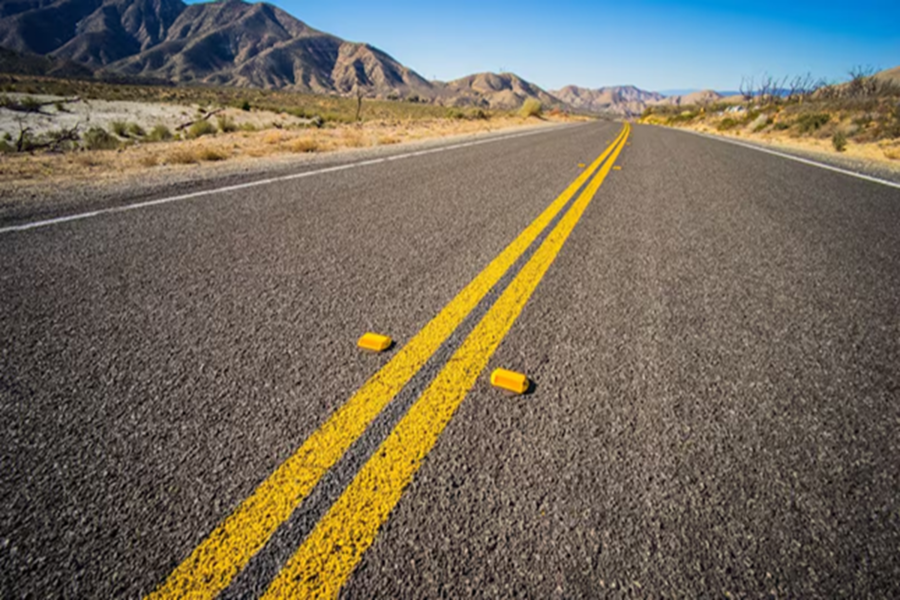
What does a double yellow line mean? It signifies a strict prohibition; two parallel yellow lines serve as the strongest possible warning. This simply means that you cannot change lanes or overtake. Such markings are placed on bridges, sharp curves, and busy intersections to ensure the safe flow of traffic.
Why are zebra crossings and stop lines important? The black-and-white striped zebra crossing on the road is meant for pedestrians; here, drivers must stop and allow people to cross. Meanwhile, the straight white stop line near a traffic signal indicates that vehicles must stop before this line when the light turns red. Adhering to this rule ensures the safety of pedestrians and other vehicles.
Disclaimer: This content has been sourced and edited from News18 Hindi. While we have made modifications for clarity and presentation, the original content belongs to its respective authors and website. We do not claim ownership of the content.
