
Where is the UP 69,000-teacher recruitment stuck, and what is the issue regarding the B.Ed. degree?
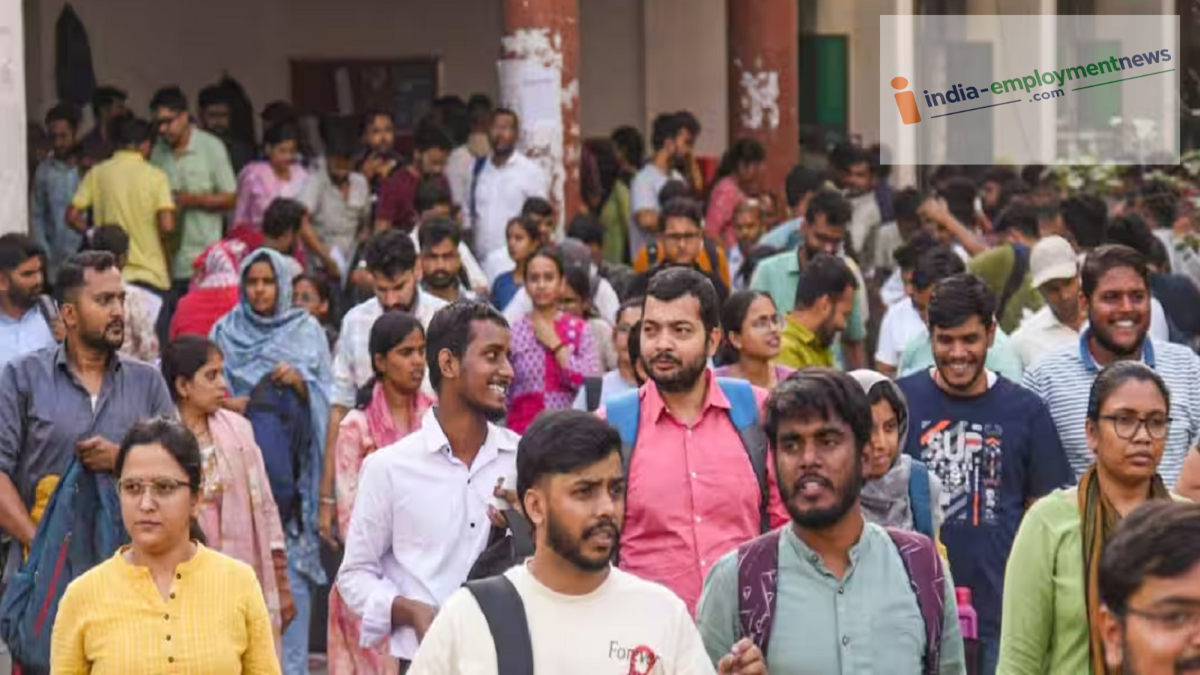
The dispute over the recruitment of 69,000 assistant teachers in Uttar Pradesh has once again reached the Supreme Court. During the recent hearing, the issue of the eligibility of B.Ed. and BTC candidates has come to the forefront.
The dispute regarding the recruitment of 69,000 assistant teachers in Uttar Pradesh has once again reached the Supreme Court. During the hearing, the eligibility of B.Ed. and BTC candidates emerged as a key issue. Questions raised by the Court clarified that the matter is not limited merely to alleged irregularities in reservation; there is also a significant dispute concerning the eligibility of B.Ed. candidates at the time of recruitment, their selection, and the rules that surfaced subsequently. On Tuesday, a bench comprising Justice S.B.N. Bhatti and Justice N.V. Anjaria heard the matter for nearly two hours. The hearing also raised questions regarding the selection of B.Ed. candidates and the status of teachers already in service.
How did the dispute over the 69,000-teacher recruitment begin?
The Uttar Pradesh government initiated the recruitment process for 69,000 assistant teacher posts in primary schools on December 4, 2018. Subsequently, the Assistant Teacher Recruitment Examination (ATRE) was conducted on January 6, 2019. Passing marks were set at 65% for general category candidates and 60% for reserved category candidates. Candidates from the reserved categories challenged these passing marks, first in the High Court and later in the Supreme Court. Appeals regarding this matter were dismissed by the High Court's division bench on May 6, 2020, and by the Supreme Court on November 18, 2020. Following this, the recruitment exam results were declared, with approximately 1.40 lakh candidates qualifying. Later, questions arose regarding adherence to reservation rules, with allegations that reserved category candidates did not receive the benefits of reservation in accordance with the prescribed quotas. This dispute eventually led the matter to the courts.
What is the B.Ed. versus BTC dispute?
At the time the recruitment process began, B.Ed. degree holders were deemed eligible. They applied, took the exam, and a large number of them were selected. Later, the issue regarding the eligibility of B.Ed. candidates for primary teacher posts arose, and demands were made to prioritize BTC candidates. This is where the dispute between B.Ed. and BTC candidates intensified. BTC candidates argue that their training qualification is specifically designed for primary-level teaching, whereas B.Ed. should not be considered equivalent to it. On the other hand, B.Ed. candidates question how their eligibility can be challenged later, given that they were deemed eligible at the time of recruitment, passed the exam, and are already working as teachers following their selection.
What did the Supreme Court ask regarding B.Ed. candidates?
During Tuesday's hearing, Senior Advocate Sanjay Hegde, representing the unreserved category, stated that if the selection list is to be reconsidered, B.Ed. candidates should be excluded and BTC candidates deemed eligible. He argued that B.Ed. candidates were eligible at the time of recruitment based on the NCTE notification, which remained in effect until it was quashed. In response, the Court asked on what grounds B.Ed. candidates should be excluded, given that they participated in the recruitment process and approximately 35,000 of them were selected and are currently working as teachers. The bench also questioned how B.Ed. candidates who scored higher marks could be excluded solely based on the BTC qualification, considering that ATRE exam scores are crucial for selection.
Conflicting arguments regarding the ATRE exam
Senior Advocate Manish Goswami, representing the reserved category, argued in court that the ATRE was merely an eligibility test, not a selection exam. According to him, passing the exam does not automatically confer a right to appointment. He presented arguments regarding reservation by citing the Uttar Pradesh Reservation Act, 1994, its associated rules, and a document dated March 23, 1994. However, during the hearing, the court also questioned the nature of the document dated March 23, 1994. The bench observed that, prima facie, it appeared to be a letter or an office order rather than a formal government order.
What are the allegations regarding the reservation dispute?
Candidates from reserved categories allege that reservation norms were not properly followed during the recruitment of 69,000 personnel. The petitioners claim that the OBC category received 3.6 percent reservation instead of 27 percent, and the SC category received 16.2 percent instead of 21 percent. On August 13, 2024, a division bench of the Lucknow High Court had quashed the selection list due to irregularities concerning reservation and directed the state government to prepare a fresh list. Subsequently, the matter reached the Supreme Court.
