
What is the difference between BSc Physics and BSc Applied Physics, and which one is best for a career?
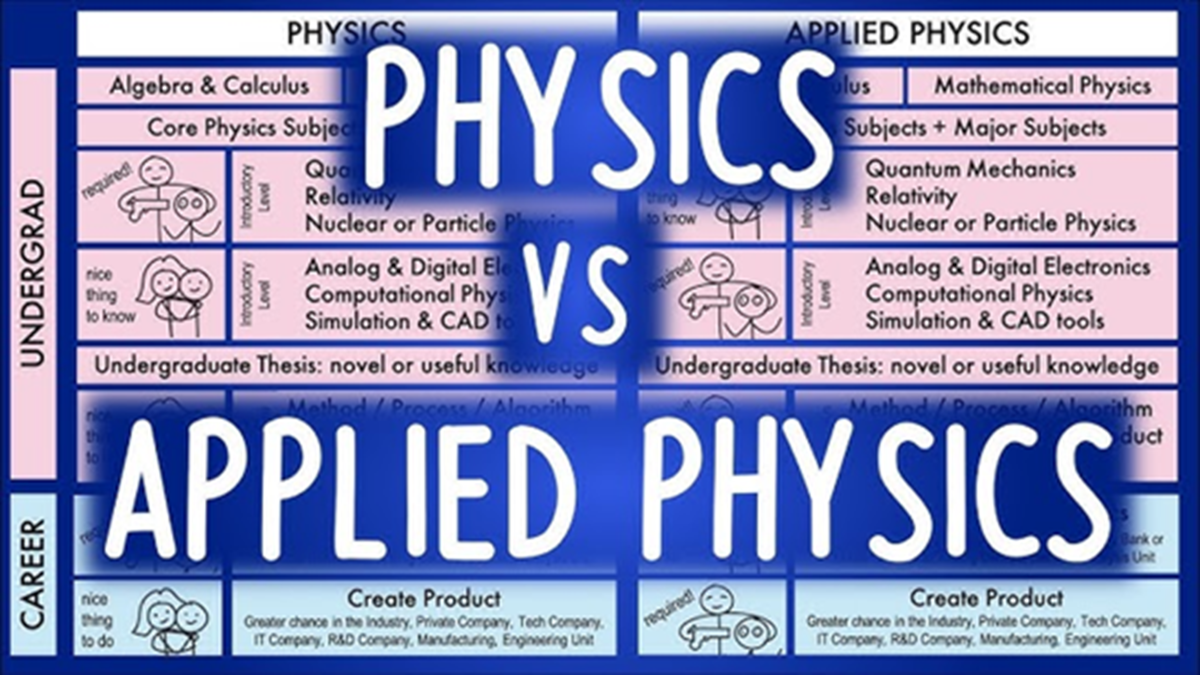
BSc Physics vs. BSc Applied Physics: After Class 12, students face a wide range of subjects and streams for their undergraduate studies. Even within the BSc program, there are various subjects and specializations available. For instance, if one wishes to pursue a BSc in Physics, there are two options: BSc Physics and BSc Applied Physics. The question arises: what is the difference between the two? Both involve physics, but what exactly does "Applied" entail?
The academic focus and career trajectories differ for both courses. Therefore, it is essential to understand the distinction before enrolling. Let us explore the differences between BSc Physics and BSc Applied Physics.
What is BSc Physics?
BSc Physics involves an in-depth study of the fundamental principles of physics and the underlying scientific concepts. The curriculum covers subjects such as mechanics, electromagnetism, thermodynamics, optics, quantum physics, nuclear physics, and electronics. The objective of this course is to provide students with a strong theoretical and experimental understanding of physics.
After completing BSc Physics, students can pursue an MSc in Physics and a PhD. Career opportunities include roles in research, teaching, and scientific institutions, as well as government jobs secured through competitive examinations.
What is BSc Applied Physics?
BSc Applied Physics places greater emphasis on applying physics principles to real-world problems and technical fields. The curriculum includes subjects such as electronics, semiconductors, optics, materials science, instrumentation, energy, and nanotechnology.
Applied Physics has a stronger connection to technology and industry. Upon completing the course, students can explore careers in sectors related to electronics, semiconductors, energy, optical instruments, instrumentation, and technology.
Which one is better?
Which is better: BSc Physics or BSc Applied Physics? There is no single definitive answer. If you are interested in the fundamental principles of physics, scientific research, scientific study, and pursuing an MSc or PhD in the future, then BSc Physics might be the better option. On the other hand, if you are interested in technology, electronics, semiconductors, sensors, materials, and the practical applications of physics, then a B.Sc. in Applied Physics could be the best choice for you.
Disclaimer: This content has been sourced and edited from Money Control. While we have made modifications for clarity and presentation, the original content belongs to its respective authors and website. We do not claim ownership of the content.
