
Want to Fly an Airplane? Here’s How to Build a Career After Class 10
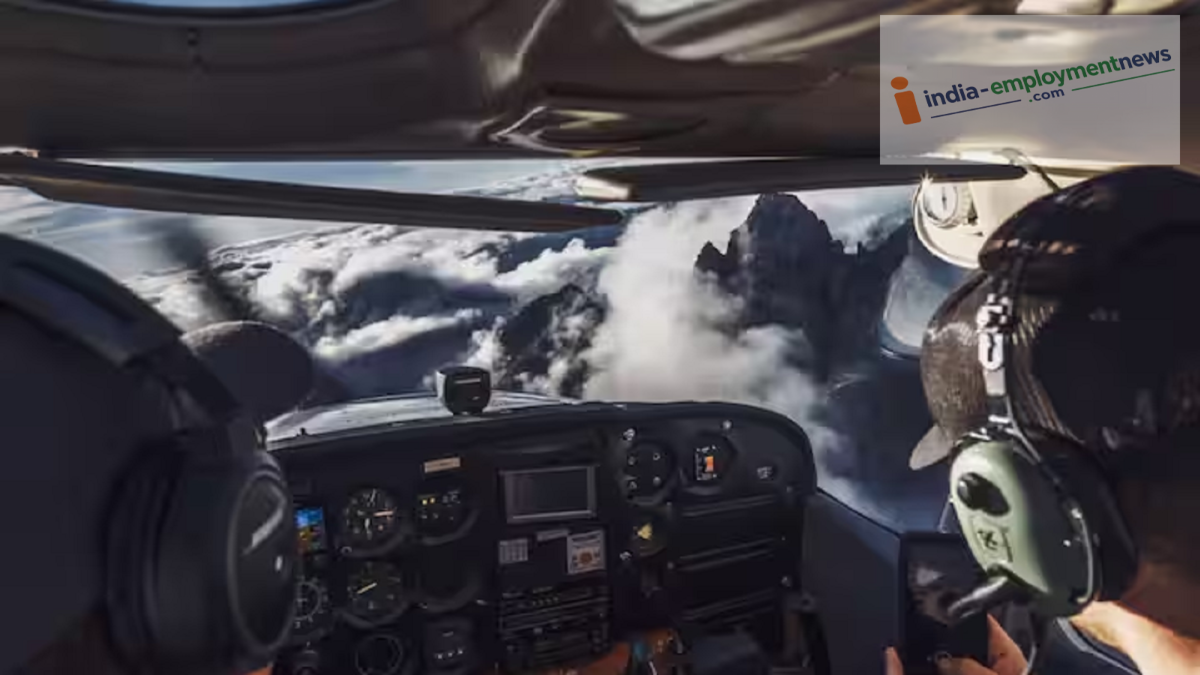
Dreaming of flying an aircraft isn't enough to enter the aviation sector. The journey involves several stages—from choosing the right subjects after Class 10 to undergoing training and obtaining a license after Class 12.
If the sight of an airplane soaring through the sky has ever made you dream of becoming a pilot, the aviation sector could be a viable career option for you. However, simply dreaming about flying isn't enough; the path involves multiple steps, ranging from selecting the right subjects after Class 10 to completing training and securing a license after Class 12. Notably, the career journey in aviation isn't the same for everyone. So, let’s explore how you can build a career as a pilot starting right after Class 10.
If your goal is to become a commercial pilot, studying Physics and Mathematics in Classes 11 and 12 is essential. After completing Class 12 and meeting the eligibility criteria set by the DGCA (Directorate General of Civil Aviation), you can pursue CPL (Commercial Pilot License) training.
To become a pilot, you must first apply for a 'Computer Number' on the eGCA portal. Subsequently, you are required to clear Class 2 and Class 1 medical examinations. After passing the mandatory DGCA theory exams and the RTR(A) test, candidates must undergo flying training at a DGCA-approved Flying Training Organization.
The minimum age requirement for a CPL is 17 years, and having Physics and Mathematics in Class 12 is mandatory. Therefore, any student currently in Class 10 who aspires to be a pilot should focus on Physics and Math starting from Class 11. However, it is worth noting that a Science stream background is not required for every career in aviation. Students from Commerce and Arts streams can also pursue careers in fields such as aviation management, airport operations, aviation hospitality, and cabin crew.
Students who decide to become pilots later but did not study Physics and Mathematics in Class 12 can complete these two subjects separately through NIOS. Once the necessary educational prerequisites are met, they can proceed with pilot training.
After passing the DGCA examination, students undergo practical flying training, which involves completing the flying hours mandated for a Commercial Pilot License (CPL). During training, students learn aircraft handling, navigation, emergency procedures, and other operational skills. However, merely completing training is not enough to become a pilot; candidates must also clear required examinations, meet flying requirements, and pass skill tests before qualifying for the Commercial Pilot License.
Upon obtaining the commercial license, a student does not immediately become an airline captain; they typically start in a junior role. Each airline has its own specific requirements and training processes. After being selected by an airline, pilots must undergo further training and complete mandatory checks specific to the aircraft type they will fly. Subsequently, they begin flying as a First Officer. As they gain experience and accumulate flying hours, they can progress to the roles of Senior First Officer and eventually Captain.
Pilot earnings vary significantly, depending on factors such as the airline, aircraft type, rank, flying hours, and allowances. In many airlines, a Junior First Officer earns between ₹1 lakh and ₹1.5 lakh per month. At the First Officer level, this figure rises to approximately ₹2 lakh, and salaries increase further with promotions.
Pilot training is also known to be an expensive career option. In India, the cost of CPL training typically ranges from approximately ₹25 lakh to ₹35 lakh. However, the total expense varies depending on factors such as the specific training program, flying hours, the institute, and subsequent airline training. Therefore, before enrolling, it is essential to understand the institute's fees, fee structure, and the facilities included in the training.
