
UPSSSC PET Syllabus 2026: UP PET Syllabus and Exam Pattern – Check which subjects will be covered in the exam..
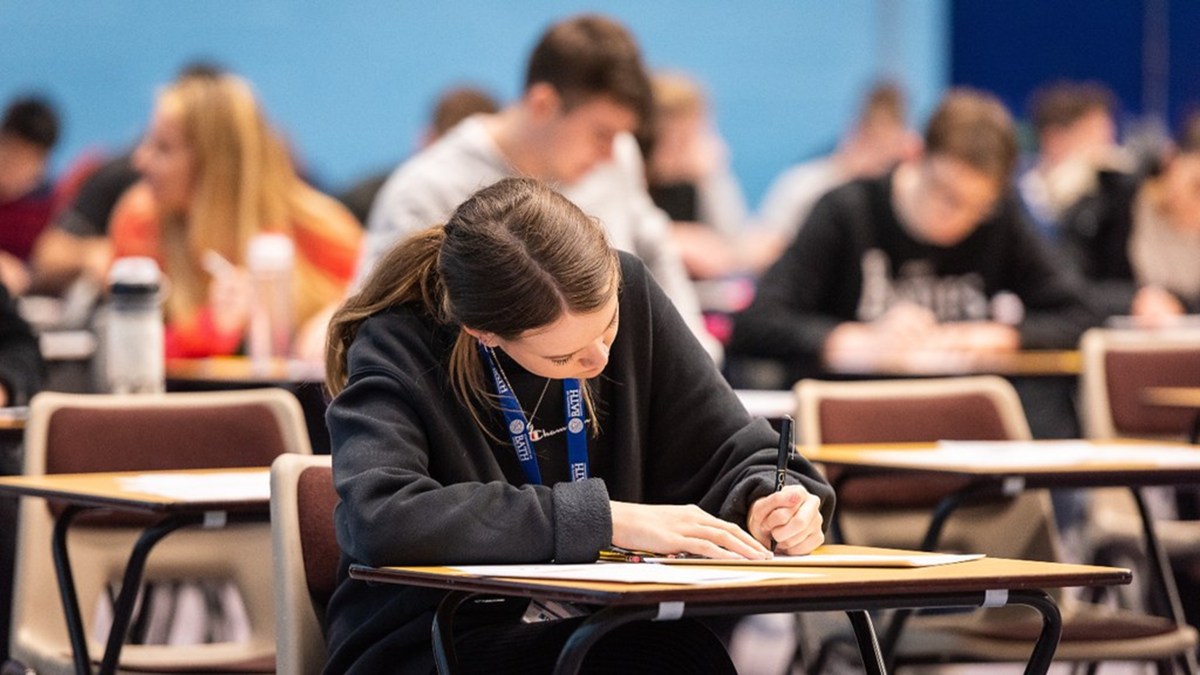
The UP Preliminary Eligibility Test (UPSSSC PET) 2026 will be conducted at designated examination centers across the state on October 25, October 30, and November 1, 2026. With very little time remaining, candidates should intensify their preparations to ensure they can pass the exam successfully.
Candidates appearing for the examination are advised to focus their final-day preparations on the exam pattern and syllabus. This will help avoid studying irrelevant material, allowing you to utilize your time more effectively on other important topics. You can review the complete syllabus on this page and also download the syllabus PDF.
UPSSSC PET Exam Pattern and Syllabus: Check the UP PET Syllabus and Exam Pattern
In the UP PET 2026 examination, candidates will face a total of 100 multiple-choice questions. Each correct answer will earn the candidate 1 mark. Please note that there is negative marking; for every incorrect answer, 1/4 of a mark will be deducted. Therefore, it is best to avoid guessing if you do not know the correct answer.
UP PET Syllabus 2026 PDF: Complete Subject-wise and Topic-wise Syllabus
The UP PET examination will feature questions based on various topics across different subjects. A specific number of marks is assigned to each subject. The entire paper will cover 15 subjects. You can view the full details regarding these subjects and the specific topics covered under each one here.
1- Indian History
Questions worth 5 marks will be asked from this subject. Topics covered under this subject:
Indus Valley Civilization
Buddhism: Gautama Buddha (Life and Teachings)
Jainism: Mahavira (Life and Teachings)
Mauryan Dynasty: Emperor Ashoka
Gupta Dynasty: Samudragupta, Chandragupta II
Harshavardhana
Rajput Period
Sultanate Period
Mughal Empire
Marathas
Rise of British Rule and the First War of Independence
Socio-economic Impact of British Rule
2- Indian National Movement
Questions worth 5 marks will be asked from this topic.
Early Years of the Freedom Movement
Swadeshi and Civil Disobedience Movements: Role of Mahatma Gandhi and other leaders
Revolutionary Movements and the Rise of Militant Nationalism
Legislative Reforms and the Government of India Act, 1935
Quit India Movement, Azad Hind Fauj (Indian National Army), and Netaji Subhas Chandra Bose
3- Geography
5 questions will be asked from the topics covered under Geography.
Physical Geography of India and the World
Rivers and River Valleys
Groundwater Resources
Mountains, Hills, and Glaciers
Deserts and Arid Regions
Forests
Mineral Resources (especially in India)
Political Geography of India and the World
Climate and Weather
Time Zones
Demographic Changes and Migration
4- Indian Economy
Questions worth 5 marks will be asked from topics related to the Indian Economy. Indian Economy (1947 to 1991): Planning Commission and Five-Year Plans; development of a mixed economy (private and public sectors); Green Revolution;
Dairy development and Operation Flood; nationalization and reforms of banks.
Economic reforms in 1991 and the economy thereafter.
Economic reforms post-2014: Agricultural reforms, structural reforms, labor reforms, economic reforms, and GST.
5- Indian Constitution & Public Administration
Questions worth 5 marks will be asked from this subject. The topics are as follows:
Indian Constitution: Salient features of the Indian Constitution, Directive Principles of State Policy, Fundamental Rights and Duties, parliamentary system, federal system, Union and Union Territories, Centre-State relations, judicial structure (Supreme Court, High Courts).
District Administration.
Local bodies and Panchayati Raj institutions.
6- General Science
Questions worth 5 marks from this subject will also be included in the question paper. See the topics below:
Elementary Physics.
Elementary Chemistry.
Elementary Biology.
7- Elementary Arithmetic
Questions worth 5 marks from this subject will also be included in the paper:
Whole numbers, fractions, and decimals.
Percentage.
Simple arithmetic equations.
Squares and square roots.
Exponents and powers.
Average.
8- General Hindi
There will be questions worth 5 marks from the subject of Hindi.
Sandhi (Combination of letters/words).
Antonyms.
Synonyms.
One-word substitutes for phrases.
Gender.
Words that are similar in sound but different in meaning (homophones/paronyms).
Idioms and proverbs.
Common errors.
Authors and their works (prose and poetry).
9- General English
Questions worth 5 marks will be asked from English. English Grammar
Questions based on an unseen passage
10- Logic & Reasoning
Questions worth 5 marks will be asked from this section in the examination.
Greater and Lesser (Comparison)
Sequence and Ranking
Relationships
Odd One Out (Identifying the item that does not belong to a group)
Calendar and Clock
Cause and Effect
Coding-Decoding (Numbers and Letters)
Deductive Reasoning / Statement Analysis and Decision-Making
11- Current Affairs
Questions worth 10 marks will be asked from the subject of Current Affairs. The topics are as follows:
Indian and Global
12- General Awareness
The General Awareness section will carry 10 marks in the question paper.
India’s neighboring countries
Countries, capitals, and currencies
States and Union Territories of India
Indian Parliament, Rajya Sabha, Lok Sabha, Legislative Assemblies, and Legislative Councils
National and international days
Global organizations and their headquarters
Tourist destinations in India
Art and culture of India
Sports in India and the world
Indian research organizations
Famous books and authors
Awards and recipients
Climate change and the environment
13- Comprehension and analysis of unseen Hindi passages – 2 passages (5 questions each). This topic will carry 10 marks in the question paper.
14- Interpretation and analysis of graphs – 2 graphs (5 questions each). This topic will also carry 10 marks.
15- Interpretation and analysis of tables – 2 tables (5 questions each). This topic will carry 10 marks.
Disclaimer: This content has been sourced and edited from Dainik Jagran. While we have made modifications for clarity and presentation, the original content belongs to its respective authors and website. We do not claim ownership of the content.
