
UPSC CSE Mains 2026 Application Window Opens; Qualified Candidates Must Submit DAF by June 28
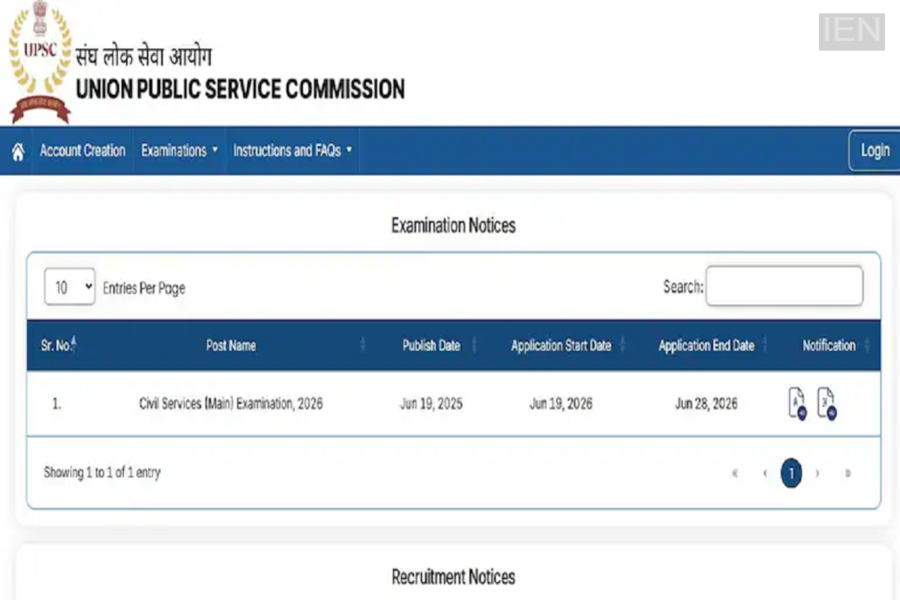
The Union Public Service Commission (UPSC) has officially opened the application window for the Civil Services Examination (CSE) Mains 2026. Candidates who successfully cleared the Preliminary Examination can now submit their Detailed Application Form (DAF), a mandatory step for appearing in the next stage of the country's most prestigious recruitment examination.
The application process is being conducted online, and eligible candidates must complete and submit their forms before the deadline. According to the official schedule, the DAF submission window will remain open until 6:00 PM on June 28, 2026.
Candidates are advised to complete the process well in advance to avoid last-minute technical issues and ensure their eligibility for the Mains examination.
More Than 13,000 Candidates Qualified for Mains
UPSC recently announced the results of the Civil Services Preliminary Examination 2026, which was conducted on May 24, 2026.
A total of 13,343 candidates have been declared qualified for the next stage of the recruitment process. These candidates will now compete for 1,016 notified vacancies across various civil services.
Only candidates who successfully submit the Detailed Application Form within the prescribed timeline will be permitted to appear in the Mains examination.
Who Can Submit the DAF?
The Detailed Application Form can be filled only by candidates who have qualified in the UPSC Civil Services Preliminary Examination 2026.
Eligible applicants can access the application portal and complete the required formalities between June 19 and June 28, 2026.
Candidates are required to verify, update, and confirm information that was provided during the preliminary application process.
Application Fee Details
Applicants must pay the prescribed examination fee to complete the submission process.
The application fee for UPSC CSE Mains 2026 is ₹200 for eligible candidates.
Failure to complete the payment and submission process within the stipulated period may result in disqualification from the Mains examination stage.
Why the DAF Is Important
The Detailed Application Form is one of the most critical components of the Civil Services Examination process.
The information submitted through the DAF is used during multiple stages of recruitment, including document verification and personality assessment.
Candidates are expected to provide accurate information related to:
-
Personal details
-
Educational qualifications
-
Category and reservation status
-
Service preferences
-
Communication details
-
Other eligibility-related information
Incorrect or incomplete information may lead to complications during later stages of the selection process.
Steps to Complete the UPSC CSE Mains 2026 DAF
Candidates can follow these steps to complete their application:
Step 1: Visit the Official Portal
Log in to the UPSC online application portal using registered credentials.
Step 2: Access the DAF Link
Locate the Detailed Application Form link for Civil Services Examination (Mains) 2026.
Step 3: Verify Personal Information
Review all personal and contact details carefully and make corrections if necessary.
Step 4: Update Category Details
Candidates claiming reservation benefits should ensure that category-related information is accurate and supported by valid documentation.
Step 5: Fill Service Preferences
Applicants must carefully indicate their preferred services and cadres, as these choices may play an important role during final allocation.
Step 6: Provide Special Assistance Information
Candidates requiring scribes or assistive devices should furnish the necessary details during the application process.
Step 7: Pay the Examination Fee
Complete the fee payment process through the available online modes.
Step 8: Review and Submit
Carefully review all information before final submission.
Step 9: Save Confirmation
Download and retain a copy of the confirmation page for future reference.
UPSC Advises Candidates to Recheck Their Details
The Commission has advised candidates to thoroughly review and update their application information wherever necessary.
The DAF contains crucial details that will be used throughout the recruitment process. Therefore, candidates should ensure that all entries are accurate and consistent with supporting documents.
Particular attention should be given to educational qualifications, reservation claims, communication details, and service preferences.
UPSC CSE Mains 2026 to Begin in August
The Civil Services Main Examination 2026 is scheduled to commence on August 21, 2026.
Candidates who successfully complete the DAF submission process will become eligible to appear for the written examination, which represents the second stage of the three-tier selection process.
Understanding the UPSC Civil Services Selection Process
The Civil Services Examination consists of three stages:
Preliminary Examination
A screening examination used to shortlist candidates for the next stage.
Main Examination
A comprehensive written examination designed to assess candidates' knowledge, analytical ability, and decision-making skills.
Personality Test (Interview)
Candidates who qualify in the written examination are called for a personality assessment conducted by UPSC.
The examination serves as the gateway for recruitment into prestigious services such as:
-
Indian Administrative Service (IAS)
-
Indian Police Service (IPS)
-
Indian Foreign Service (IFS)
-
Various Group A and Group B Central Services
Final Advice for Candidates
Candidates should avoid waiting until the final day to submit their applications. Completing the DAF early allows sufficient time to verify information, resolve technical issues, and ensure a smooth application process.
UPSC aspirants are also advised to regularly monitor official notifications for any updates related to the examination schedule, admit cards, and subsequent stages of the recruitment process.
Disclaimer: Candidates should refer to official UPSC notifications and instructions for the most accurate and updated information regarding eligibility, examination procedures, and deadlines.
