
UNESCO Report: In India's villages, only 59 girls pass Class 12 for every 100 boys—what is the biggest reason?
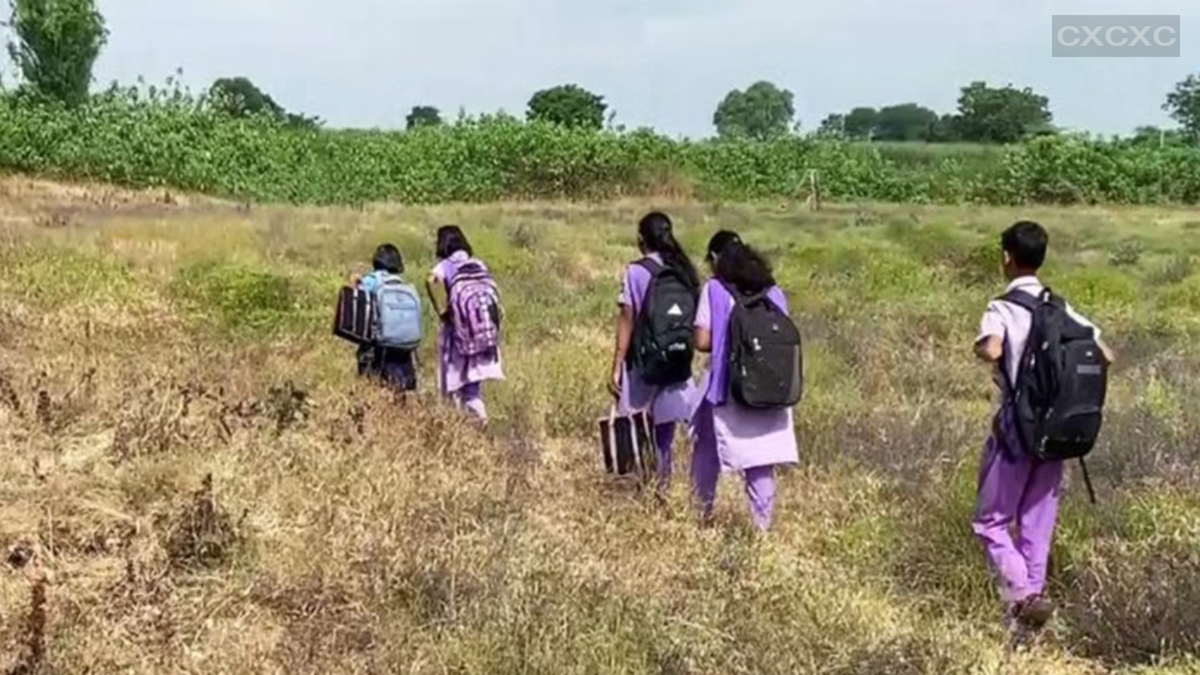
A major concern regarding India has emerged in a report on gender equality in education released by UNESCO. According to the report, while urban areas in India have achieved near-total parity in terms of boys and girls completing their education, the situation regarding access and equality in rural India is deeply worrying.
In rural India, at the higher secondary level (Classes 11 and 12), only 59 girls complete their schooling for every 100 boys. Poverty and a lack of social security are the primary reasons for this disparity in rural areas. UNESCO released the report, titled *Gender Equality in Access to Education*, in Paris on Friday. It indicates that when considering the national average (combining rural and urban areas), the Adjusted Gender Parity Index for completing higher secondary education stands at 0.89. This means that, at the national level, 89 girls pass Class 12 for every 100 boys.
Overlooking early childhood... 51% of five-year-olds entering primary school directly
According to UNESCO’s Global Education Monitoring (GEM) report, more than half (51%) of five-year-old children in India are enrolling directly in Class 1 (primary school) instead of attending pre-school (Anganwadi or nursery/KG). Expressing deep concern, UNESCO noted that children are entering the school system before the recommended age of six, which is detrimental to their mental and academic development.
Bridging the gap: 65% reduction in initial disparities over 25 years—UNESCO has categorized India among countries making "fast progress" in bridging the gap in school education. This is because, in 2000, India was among the 47 countries worldwide where girls were most likely to drop out of school compared to boys. Over the past 25 years, India has reduced its initial disparities by more than 65%—or two-thirds. Globally, less than one in ten countries specifically prioritizes marginalized sections within their education budgets; India, too, needs to do significant work in this area.
Karnataka's scholarship model has garnered praise. In some Indian states, enrollment levels for five-year-olds in pre-primary institutions (such as *Bal Vatika* or Kindergarten) exceed 90%. This indicates that children in these states are receiving proper pre-schooling rather than entering Class 1 directly. UNESCO has specifically commended the scholarship model implemented in rural Karnataka. States like Gujarat, Maharashtra, Kerala, and Nagaland also show positive trends.
While the global average for primary school enrollment among five-year-olds stands at 27%, this figure is significantly boosted by India's rate of 51%. Under India's National Education Policy (NEP) 2020, the minimum age for admission to Class 1 has been set at six years.
Disclaimer: This content has been sourced and edited from Amar Ujala. While we modified it for clarity and presentation, the original content belongs to its respective authors and website. We do not claim ownership of the content.
