
UGC's equality rules: What are the opinions of students and professors on the UGC's equality rules? Find out..
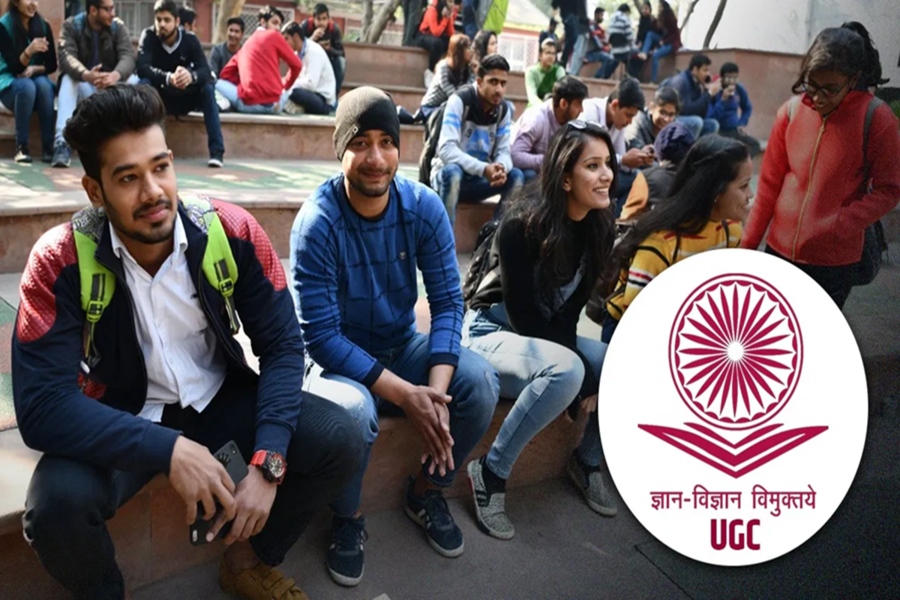
UGC Equality Rule 2026: The Supreme Court heard a petition challenging the UGC's new rules on Thursday. During the hearing, the court dealt a blow to the UGC by staying the implementation of the new rules. The court adopted a strict stance during the hearing and made important observations. The court stated that even after 75 years of independence, caste discrimination remains a serious issue in the country, which is a matter of concern. The court also said that the situation should not be allowed to deteriorate to the point where a situation similar to that in the United States arises. It is worth noting that there had already been protests against these new rules. Several questions and objections were raised regarding the UGC's new rules. Some believe that these rules are one-sided and undermine the principle of equal justice for all sections of society.
We spoke to students and professors from different categories on this issue. Let's find out what all these people had to say about the UGC Promotion of Equity Regulations, 2026, in higher education institutions.
What arguments did the students present?
Ashutosh Rai, a research scholar at the Central University of Punjab, says that he is a student of a central university and may be directly or indirectly affected by this rule. The shortcomings being pointed out are relevant only to a very limited extent. Students in universities generally focus on their studies and careers, and there are no unnecessary accusations or counter-accusations. Assuming that granting rights to weaker sections will lead to injustice against any other group is wrong. Instances of caste-based discrimination exist at the institutional level, so the need for rights against it should be understood. However, the rules should ensure that no injustice is done to any group and that hasty action is not taken against general category students under pressure.
This rule seems less like a setback and more like a political move. Including OBCs is part of divisive politics. If the government is truly benevolent, it should take concrete steps on issues like employment, interview panels, and institutional discrimination. It is important to prevent the university from becoming a battleground for caste conflicts.
“UGC's Equity Rules: A Necessary Step Towards Social Justice”
Mahendra Kumar Yadav, a research scholar in Political Science at Lucknow University, said about the new UGC rules: I fully support the new UGC equity rules and demand that they be implemented in a time-bound manner with strict monitoring, and not just remain on paper. These rules strengthen the constitutional spirit of equality, representation, and social justice in higher education and are a necessary step towards balancing the centuries-old dominant structure.
Every effort towards equality seems like a loss to the dominant class afflicted with Manusmriti-based thinking, while in reality, it is just a redistribution of dignity and opportunities. Including OBCs is not a setback, but an acceptance of social reality, because exploitation in educational institutions occurs based on caste.
Today, Bahujan representation is being called discrimination, while... For decades, upper-caste dominance went unchallenged. This conflict is a hallmark of social change, and further steps, such as reservations in the private sector, a caste census, and equitable distribution of resources, are also necessary.
“Nearly 118% increase in complaints of caste-based discrimination”
Anand Kumar, a research scholar in Mass Communication and Journalism at Central University of South Bihar, says it is too early to form a definitive positive or negative opinion on the new UGC regulations. Every policy is formulated with a theoretical objective, but its real impact becomes clear only when it is implemented at the ground level. Recent data provided by the UGC to the parliamentary committee and the Supreme Court shows that complaints of caste-based discrimination in universities and colleges have increased by approximately 118 percent in the last five years. This figure clearly indicates that this problem remains serious in higher education institutions today, and this new UGC policy should be seen as an attempt to address the challenge of caste-based discrimination.
However, the concerns of general category students regarding discrimination are also understandable, but it would be wrong to assume that only one group will be affected by these rules. The real question is about their implementation and transparency. Considering the concerns of general category students, these rules should be reviewed, and necessary amendments should be made to the rules, keeping in mind the interests of students from all categories. Complaint redressal committees should have representation from all communities. Maintaining a balance between taking action on false complaints and ensuring the privacy and security of the complainant is extremely important.
“Demand for the creation of an Equity Cell”
Anshumali Kumar Mishra, a research scholar at Central University of South Bihar, Gaya, stated that he disagrees with the new UGC rules. He wants the government to create an Equity Cell. This cell would be similar to the Gender Cell, which functions throughout the university. This cell would address any discrimination based on caste against people of any caste.
Disclaimer: This content has been sourced and edited from TV9. While we have made modifications for clarity and presentation, the original content belongs to its respective authors and website. We do not claim ownership of the content.
