
Study in India: Thousands of Foreign Students Are Choosing India for Higher Education Every Year—See Which Countries Lead the List
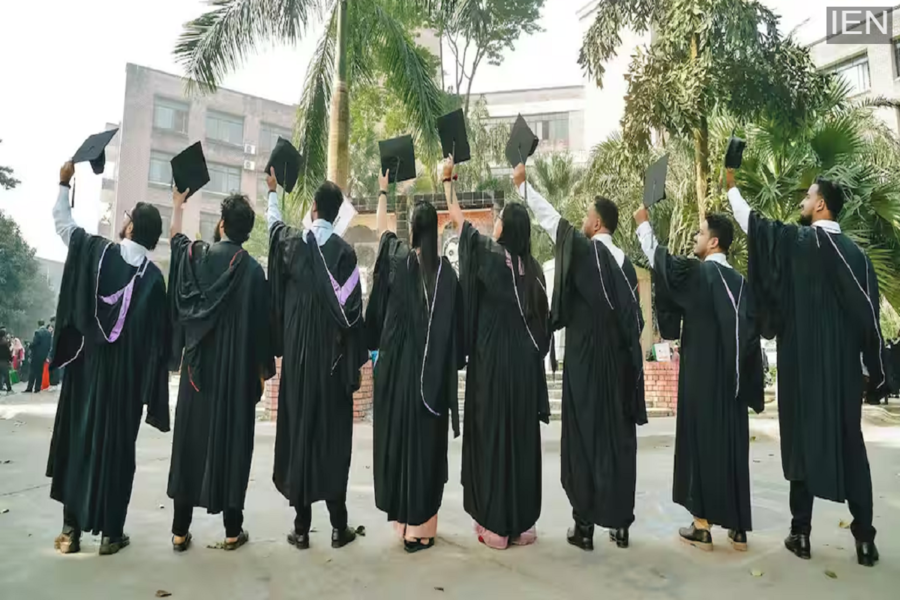
Study In India: Driven by affordable, high-quality education, modern facilities, and a vibrant environment, students from across the globe are turning their gaze toward India—even as Indian students continue to head abroad in large numbers.
Study In India: Today, India is gaining global recognition not only for its cuisine, culture, and festivals but also for the excellence of its education system. Students from Nepal, Bangladesh, Afghanistan, various African nations, and several other Asian countries are increasingly choosing to pursue their studies in India. Moreover, courses in fields such as Medicine, Engineering, Management, and IT are available in India at a high standard and at a significantly lower cost. This is precisely why thousands of international students leave their homes every year to come to India for their education. Furthermore, India’s major colleges and universities are now carving out a distinct global identity for themselves.
According to reports, over 70,000 international students arrive in India annually to pursue their studies. Government data indicates that in 2025, approximately 72,218 international students—hailing from nearly 200 different countries—were enrolled in various colleges and universities across India. The educational experience here combines modern technology with high-quality instruction and a conducive learning environment—factors that serve as a strong magnet for students.
Affordable, High-Quality Education Sets India Apart
When it comes to the cost of education, expenses in India are considerably lower compared to those in Western nations. While studying in countries like the USA, the UK, or Australia can cost hundreds of thousands of rupees, an education of equivalent quality can be obtained in India for a fraction of that amount. This makes India an increasingly attractive option for international students from low- and middle-income backgrounds. Additionally, the Government of India administers several scholarship schemes specifically designed for international students. One such initiative is the ICCR Scholarship (Indian Council for Cultural Relations), which offers over 3,000 international students the opportunity to study in India every year.
Another notable initiative is the Atal Bihari Vajpayee General Scholarship Scheme. Operating under the aegis of the ICCR, this specialized program provides scholarships to students from over 100 countries, enabling them to pursue their education in India’s colleges and universities. It is widely believed that India is becoming particularly popular as a destination for medical and technical education. Many international students remark that, alongside their studies, they find a family-like atmosphere in India. The local culture and the demeanor of the people here quickly make them feel at home.
Indian Students, Too, Are Heading Abroad in Large Numbers
While international students are arriving in India on one hand, hundreds of thousands of Indian students are heading abroad to study every year on the other. According to reports, approximately 1.335 million Indian students were pursuing their education overseas in 2024. Among these destinations, Canada, the United States, the United Kingdom, Australia, and Germany remain the top choices for Indian students. Notably, Canada hosts the largest number—approximately 427,000—of Indian students, while the United States is home to over 337,000. The desire for better job prospects, prestigious universities, and international exposure is drawing young people toward foreign shores. However, with the rapid expansion of quality colleges and modern facilities within India, this landscape could very well transform in the near future.
India Strengthens Its Global Standing Through Education
India is no longer merely a country that educates its own students; it is steadily advancing toward becoming a major global hub for education. The rising influx of international students serves as a testament to the world’s growing confidence in India’s educational system. Furthermore, the New Education Policy, digital learning initiatives, and modern infrastructure have further bolstered India’s position. In the years to come, if India continues to prioritize its colleges and research capabilities, an even greater number of students from across the globe could be drawn here to pursue their studies.
