
Smart boards in Noida schools will no longer be used at will; ‘screen time’ has been fixed..
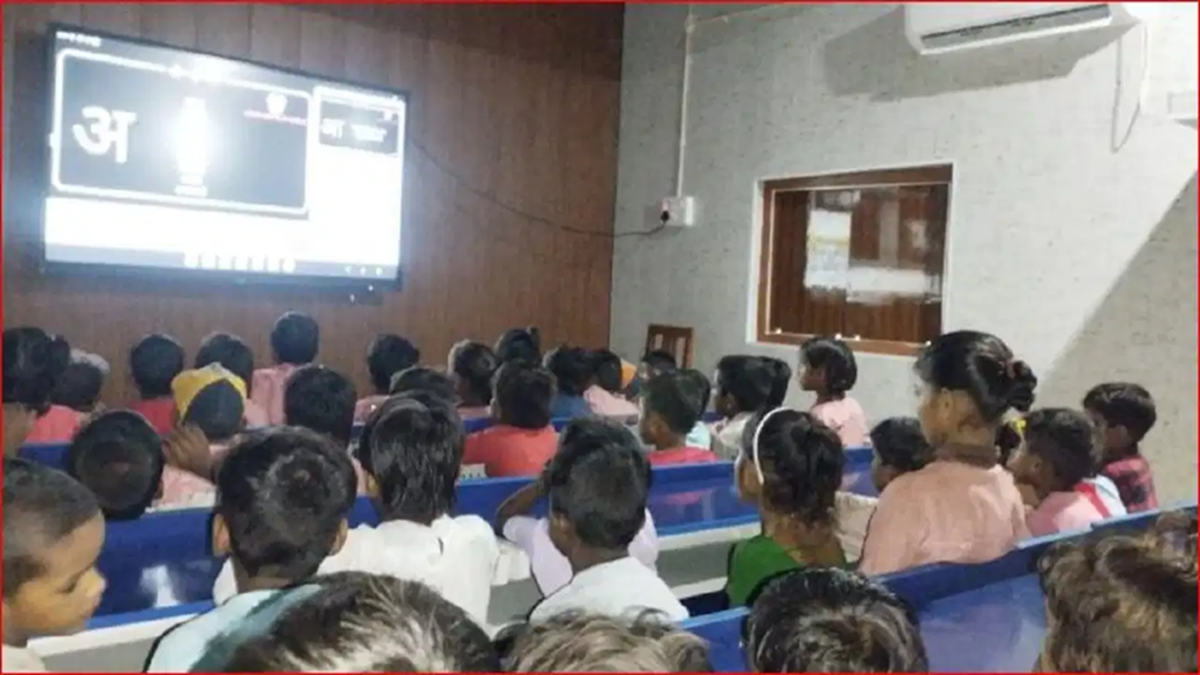
Amid the rising trend of digital education and concerns regarding the adverse effects on children's eyesight, the Gautam Buddha Nagar (Noida-Greater Noida) administration has taken a significant decision. A new order has been issued for all government, government-aided, and private schools in the district, limiting the 'screen time' associated with digital and smart boards. Under these new directives, the continuous use of smart boards in classrooms is prohibited, and the use of traditional blackboards is once again mandatory.
According to the new guidelines issued by the administration, screen time limits have been set based on class categories. For young children at the primary level, the use of smart or digital boards is restricted to a maximum of 30 minutes per day. For upper primary classes, the limit is set at a maximum of 60 minutes daily. Furthermore, during the use of digital boards, children must be given a break from the screen every 20 minutes to allow their eyes to rest.
This move follows serious complaints lodged by parents' associations. Parents alleged that many private and non-government schools were continuously using digital boards for displaying textbook content, conducting routine classwork, writing down questions and answers, and even assigning homework. Consequently, children were forced to stare at screens for 4 to 5 hours daily, leading to early-onset vision problems, headaches, and stress. The administration has clarified that magistrates and nodal officers have been assigned the responsibility of ensuring strict compliance with this order.
**Key Guidelines Issued for Schools**
Blackboards, whiteboards, or greenboards must be used for routine teaching, note-taking, and writing questions and answers. The use of smart boards is to be restricted solely to explaining complex concepts, showing educational videos, or displaying essential digital teaching materials. Textbook content must not be displayed continuously on screens. Standards regarding classroom lighting, screen brightness, and the distance between students and the screen must be strictly adhered to. Mandatory eye check-ups for children will be conducted every three months, and the reports will be shared with parents. All schools have been instructed to incorporate activities such as ‘digital-free periods’, ‘digital zero days’, and ‘digital detox’ into their schedules.
Disclaimer: This content has been sourced and edited from NDTV India. While we have made modifications for clarity and presentation, the original content belongs to its respective authors and website. We do not claim ownership of the content.
