
Play School Admission: Is 2 or 3 years the right age to send your child to play school? Learn about the advantages and disadvantages..
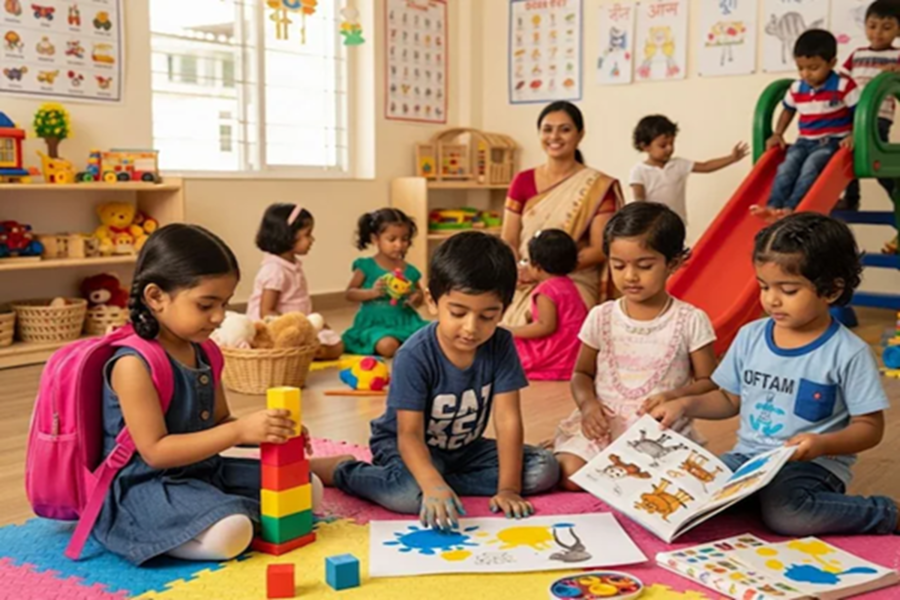
Play School Admission Guidelines: Every parent wants their child's education to begin in the best possible way. Often, as soon as a child turns two, neighbors and relatives start advising parents to send them to play school. But are calendar dates or a child's age really enough to determine if they are ready to step out of the confines of home and into a new world? Do you know the right age to send your child to play school?
Play school is the first step in a child's social and mental development. Rushing this process can hurt the child's personality. The decision to send a child to play school should not be based solely on age, but on the child's readiness. Every child is different. Some are ready to socialize at two years old, while others need their mother's company until they are three. As a parent, you should understand your child's behavior, their communication skills, and their physical needs.
Age Criteria: What do the play school admission rules say?
Generally, 2 to 3 years of age is considered the standard for preschool. According to India's New Education Policy (NEP), formal education (Class 1) should begin at the age of 6, with the three years prior (3 to 6 years) dedicated to pre-schooling. However, a child should only be sent to play school (which is even before pre-nursery) when they are at least 2.5 years old. Before this age, the child is physically and emotionally very delicate.
Is the child physically ready for play school?
For play school admission, not only age but also the child's physical independence matters. Can your child walk well without any support? Can they communicate their basic needs (like hunger or thirst) through gestures or simple words? Although many play schools assist with potty training, the child's experience at school will be much more pleasant if they can communicate their needs themselves. Social and Emotional Preparedness
Before sending your child to playschool, see if your child has overcome separation anxiety. If your child can stay with grandparents or a trusted person for a few hours in your absence, then they are ready for school. Also, do they show enthusiasm for playing with other children? If they are happy to see guests at home or children in the park, it's a good sign that they are ready for school. If not, you may need to wait.
Child's Communication Skills
Understand that your child will be among teachers and other children in playschool. If they understand simple instructions (like "sit here," "eat your food," or "stand up," etc.) and can express themselves, they will adapt to the school environment quickly. A lack of communication can sometimes make a child irritable at school because they cannot share their problems. Therefore, it is very important to consider these things before sending your child to playschool.
The Disadvantages of Rushing and the Advantages of Waiting
Sending a child to school too early (e.g., at 1.5 years old) can make them feel insecure. On the other hand, sending them at the right time increases their confidence, improves their vocabulary, and teaches them the initial lessons of discipline. The purpose of playschool is not academics, but learning through play and socialization. Playschool prepares the child for further schooling and teaches them discipline, like sitting and standing properly. This helps the child learn to interact with others.
Checklist for Parents: Is your child ready for playschool?
If most of your answers to the statements below are "yes," it means your child is ready to step into the new world of playschool!
1. Physical and Personal Abilities (Physical Readiness)
[ ] Can your child run and climb stairs without support?
[ ] Does he/she try to eat food independently with a spoon?
[ ] Can he/she communicate their needs (thirst, hunger, or toilet) through gestures or words? [ ] Can he stay active for 2-3 hours during the day without sleeping?
2. Social and Emotional Readiness
[ ] Can he remain calm for a few hours in your absence (e.g., with grandparents or a nanny)?
[ ] Does he enjoy playing with or watching other children?
[ ] Is he willing to share his things (such as toys or food) with others?
[ ] Does he get overly frightened by new places or new people?
3. Communication Skills
[ ] Can he speak in short sentences (e.g., "I want water" or "Look, Mommy")?
[ ] Does he understand and follow simple instructions (e.g., "Take off your shoes" or "Sit down")?
Disclaimer: This content has been sourced and edited from News18 Hindi. While we have made modifications for clarity and presentation, the original content belongs to its respective authors and website. We do not claim ownership of the content.
