
Opportunity to secure jobs in Japan and Germany; NSDC to provide specialized training to youth from MP..
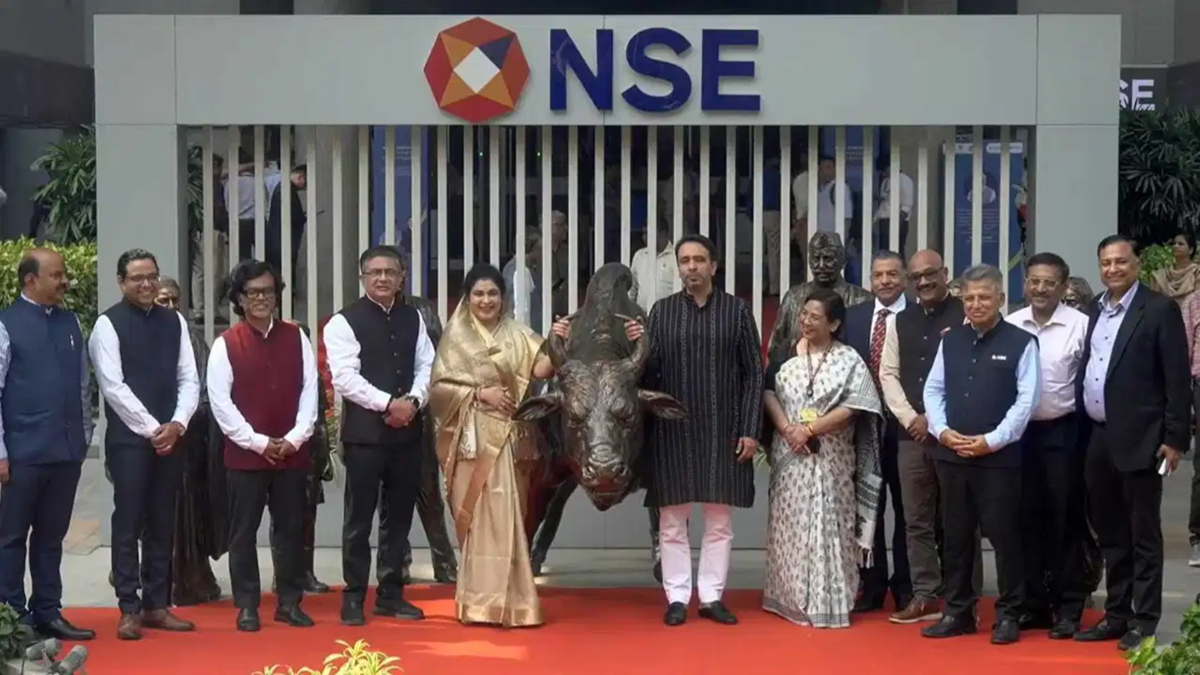
The National Skill Development Corporation (NSDC) has raised ₹4 crore from the National Bank for Agriculture and Rural Development (NABARD) by issuing a 'Zero Coupon Zero Principal' (ZCZP) instrument on the National Stock Exchange's (NSE) Social Stock Exchange (SSE). These funds will be used to provide skill training and employment opportunities to 600 youths from economically weaker Other Backward Class (OBC) families in Madhya Pradesh.
According to the Ministry of Skill Development and Entrepreneurship, the total expenditure for this program is estimated at ₹11.25 crore. Under this initiative, 600 youths will be prepared for overseas employment, with a target of securing job opportunities for 300 individuals in Japan and 300 in Germany. The program will include training in foreign languages and the development of skills necessary for securing employment. The training will focus on sectors such as elderly and needy care, hospitality, construction, and manufacturing.
Jayant Chaudhary participates in the 'bell-ringing' ceremony
Jayant Chaudhary, Union Minister of State (Independent Charge) for Skill Development and Entrepreneurship, participated in a 'bell-ringing' ceremony in Mumbai to mark the NSDC's debut on the National Stock Exchange's (SSE) platform. During the event, NABARD announced a contribution of ₹4 crore toward this initiative. Jayant Chaudhary emphasized that alongside the nation's economic progress, it is essential to invest in the skills and development of its people. He noted that the Social Stock Exchange provides a transparent platform for the government, the private sector, and other institutions to invest in social development initiatives.
Funding to be sourced from three channels
The funding for this project will be drawn from three sources: the beneficiaries will contribute 15% of the total cost, 35% will be raised through the Social Stock Exchange, and the remaining 50% will be covered by the Government of Madhya Pradesh. However, the state government will contribute its share only once candidates have successfully secured employment abroad. According to the statement, this scheme will operate under a bilateral 'Social Impact Bond' framework between the National Skill Development Corporation (NSDC) and the Government of Madhya Pradesh. Under this arrangement, government expenditure will be linked to the outcomes—specifically, the jobs secured by the youth. Furthermore, the Madhya Pradesh government will assist in mobilizing youth for the scheme, providing training centers equipped with residential facilities, and establishing language-learning laboratories.
What will the potential earnings be in Japan and Germany?
Under this scheme, the estimated monthly income for youth who secure employment abroad is expected to range from approximately ₹1 lakh to ₹1.2 lakh in Japan, and from about ₹1.1 lakh to ₹3.2 lakh in Germany. However, the exact earnings will depend on the nature of the job, the individual's qualifications, and the specific terms of employment.
These young individuals will be prepared for job opportunities in sectors such as caregiving, hospitality (including hotels), construction, and manufacturing. The training is designed to equip them with the language skills and an understanding of the work environment specific to the destination country.
What is a Social Stock Exchange?
A Social Stock Exchange is a platform that allows eligible organizations—those working toward social objectives—to raise financial resources for their programs. Through this initiative, the NSDC has, for the first time, begun raising funds using 'Zero Coupon Zero Principal' (ZCZP) instruments. Unlike traditional loans, this model carries no obligation to repay interest or the principal amount. Its purpose is to raise funds for social initiatives in a transparent manner and to track the actual benefits delivered to the people.
Through this initiative, the government and the participating institutions aim to link skill development with international employment, thereby providing youth from economically disadvantaged families with opportunities for higher earnings and sustainable livelihoods.
Disclaimer: This content has been sourced and edited from TV9. While we have made modifications for clarity and presentation, the original content belongs to its respective authors and website. We do not claim ownership of the content.
