
One in Four Commercial Pilots in India is a Woman: Learn About Qualifications, Training, and Salary
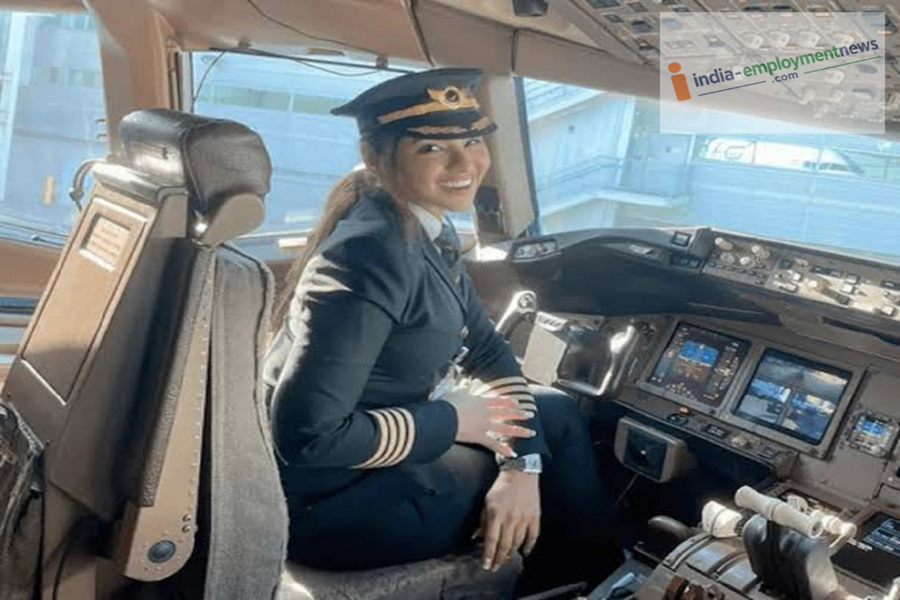
According to the Ministry of Civil Aviation, a total of 1,331 Commercial Pilot Licenses (CPLs) were issued up to June 30, 2026. Of these, 348 licenses were awarded to women, representing a share of 26.14 percent.
Commercial Pilot: India’s aviation sector is expanding rapidly, and with it, the number of young people aspiring to become commercial pilots is also rising. Data released by the Ministry of Civil Aviation in the Rajya Sabha indicates that the participation of female commercial pilots in the country is steadily increasing. Up to June 30, 2026, approximately one out of every four commercial pilot licenses issued went to a female candidate. While many students aspire to become commercial pilots, they often face confusion regarding the necessary education and training. Here, we outline the qualifications required to become a commercial pilot, the training process involved, and the starting salary one can expect.
One in Four Commercial Pilots in India is a Woman
According to the Ministry of Civil Aviation, a total of 1,331 Commercial Pilot Licenses were issued up to June 30, 2026. Of these, 348 licenses were awarded to women, representing a share of 26.14 percent. In comparison, 862 CPLs were issued in 2021, with 166 going to women. India ranks among the leading nations globally in terms of female pilot participation.
Candidates Training in India and Abroad
The government reported that among the licenses issued this year, 791 candidates received training from flying training organizations within India, while 540 candidates completed their training abroad. This means approximately 41 percent of the licensed pilots received training at foreign institutions. Currently, there are 41 DGCA-approved flying training institutes operating across 63 training centers in the country. These institutions possess a fleet of over 400 training aircraft.
Eligibility to Become a Commercial Pilot
To become a commercial pilot, a candidate must have passed Class 12 with Physics and Mathematics. Following this, one must enroll in a DGCA-recognized flying school and complete the required training. If a student did not study Physics or Mathematics in Class 12, they can still meet the eligibility criteria by passing exams in these subjects through a recognized open schooling board. Additionally, the candidate must be at least 17 years old to start training, though one must be 18 years of age to obtain the Commercial Pilot License (CPL). A DGCA medical fitness test must also be cleared before commencing training.
How is the Commercial Pilot License Obtained?
To become a commercial pilot, one must first apply for a DGCA computer number. Subsequently, ground training involves studying subjects such as Air Regulations, Air Navigation, Aviation Meteorology, and others. After securing the required marks in the DGCA written examination, flight training must be completed. A minimum of 200 hours of flight training is mandatory for the CPL. This includes training in solo flying, cross-country flying, night flying, instrument flying, and multi-engine aircraft operations. The DGCA issues the Commercial Pilot License after all stages are completed and the skill test is passed.
What is the Salary?
Upon obtaining the license, a candidate is initially appointed as a Trainee Pilot or First Officer. During this phase, the annual package ranges from ₹12 lakh to ₹25 lakh. With increasing experience, the salary can rise to between ₹25 lakh and ₹50 lakh per annum. Once promoted to Captain, the annual package at many airlines can reach ₹1 crore or even more. Senior pilots working for international airlines earn even higher amounts.
Benefits Beyond Salary
In addition to the salary, commercial pilots receive benefits such as travel allowances, hotel accommodation, overseas layover facilities, free air tickets, and other allowances. However, the cost of pilot training is also quite high. CPL training in India can typically cost between ₹40 lakh and ₹80 lakh, whereas undergoing training abroad can push the cost beyond ₹1 crore.
