
Nursery Admission: Why is nursery admission in Delhi considered a difficult task? Learn the rules related to fees, documents, and criteria..
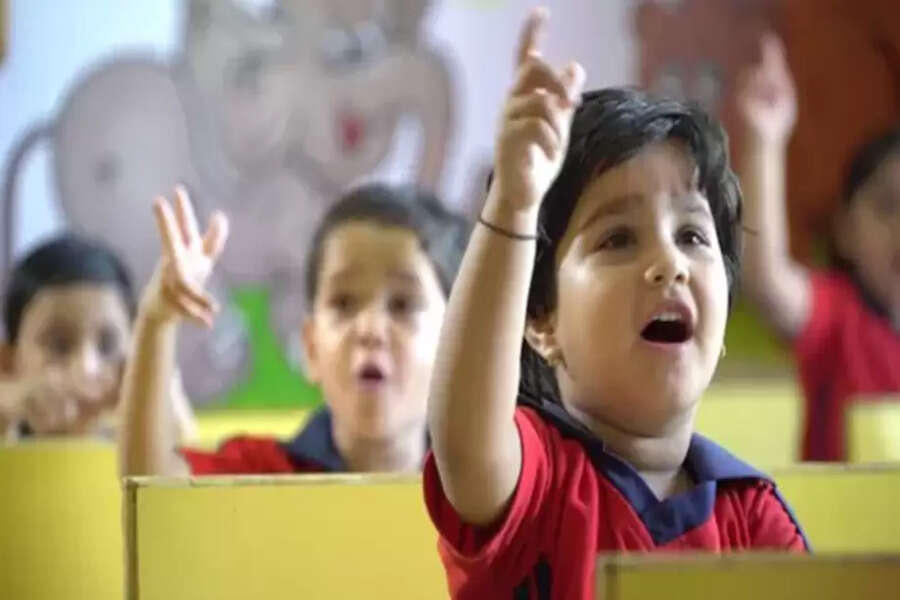
Nursery Admission: The race for nursery admissions is about to begin in the capital, Delhi. The Delhi Government's Directorate of Education has released a schedule for admissions from nursery to first grade for the 2026-27 academic year. According to the schedule, the application process for nursery admissions will begin on December 4th. In many ways, admitting children to nursery in Delhi is considered a difficult task.
Let's explore why the nursery admission process in Delhi is considered a difficult one. We will also discuss in detail all aspects of the nursery process in Delhi, including fees, admission criteria, and other rules.
Nursery Admission in Private Schools
The Delhi Government's Directorate of Education has released a schedule for nursery admissions in private schools in Delhi. In fact, there are over 1,700 private schools in the capital, offering a total of over 100,000 seats from nursery to first grade. The Directorate of Education has released a schedule to begin the admission process for these 100,000 seats.
Middle-grade admissions are difficult, with multiple applicants for one seat, and high fees are challenging.
Why is the nursery admission process in Delhi's private schools considered a complex process? The answer to this question must be understood based on the circumstances surrounding mid-grade admissions, the number of applicants for one seat, and the high fees.
Multiple applicants for one seat: The nursery admission process allows admissions from nursery to first grade in private schools in the capital, Delhi. However, private schools fill all nursery seats. Furthermore, admissions are granted only for vacant seats in KG and first grade. Overall, under the nursery admission process, any school can only offer admissions to a limited number of seats. Consequently, many applications are received for admission to a single seat, making the entire admission process challenging.
Milf-grade admissions are difficult: The admission process begins with nursery in Delhi's schools. Due to the intense competition for admission, parents choose to send their children to one school until 12th grade. In such a situation, it is extremely difficult for any child to get admission in the middle of the class.
Expensive Fees: The biggest challenge in educating children in Delhi's private schools is the fact that the fees of Delhi's private schools are very expensive. Many schools charge 1 to 3 lakh rupees (one-time) as an admission fee. Furthermore, there are monthly tuition fees of 4 to 12 thousand rupees. Fees for other items, including the bus, are separate. Consequently, parents can't change their children's schools frequently. Furthermore, the monthly tuition fee is extremely high, which is enough to disrupt parents' budgets.
Admission criteria are established on the instructions of the High Court, monitored by the Directorate.
The rules for nursery admission in Delhi's private schools, i.e., the criteria for admission in Delhi's private schools, are established on the instructions of the Delhi High Court. The admission process is monitored by the Delhi Government's Directorate of Education, while the schools themselves conduct the admission process. In fact, in the past, private schools admitted children to nursery schools based on arbitrary criteria. The issue of criteria, such as interviews with children and parents, and dietary habits, reached the High Court. Following this, the Delhi High Court established 62 criteria based on which the admission process is conducted. These criteria are monitored by the Directorate of Education.
A 100-point merit list for admission, with the highest score for distance.
Private schools prepare a 100-point merit list for nursery admissions. This merit list is based on criteria set by the High Court, with the highest score being the distance from home to school. For example, 60 to 70 points out of 100 are assigned for distance from home to school, with schools assigning 60 points for distances up to 5 km, 50 points for distances up to 10 km, 40 points for distances up to 15 km, and 30 points for distances up to 20 km. Additionally, marks are given for siblings (the child's siblings studying in the school), a single girl child, and alumni (the child's parents who are studying in the school). This creates a merit list of 100 for admission.
Merit lists are released for admission.
Private schools in Delhi release lists based on merit for nursery admission. Children whose names appear on this list can enroll in the school. According to the schedule, two lists will be released this year. Let's find out what this schedule is.
The application process for nursery admissions will be held from December 4th to 27th.
Private schools will release the list of applications received on January 9th.
On January 16th, schools will release a list of seats available and the marks obtained by the children who applied based on the criteria.
On January 23rd, the first merit-based admission list will be released, along with a waiting list.
Parents can enroll their children based on this list.
By February 3rd, schools will resolve parental complaints related to the list.
On February 9th, a second merit list will be released, along with a waiting list.
From February 10th to 16th, parents will resolve parental complaints based on this list.
Schools can release the list on March 5th, if necessary.
Be sure to know these age and class rules.
If you are going to apply for admission for your children under the Delhi Nursery Admission Process, be sure to understand the age-related rules before doing so. In fact, under the new education policy, children as young as 6 will now be admitted to first grade. Consequently, this year, children aged 3 to 4 will be admitted to nursery, 4 5 to 5 years to KG, and 5 to 6 years to first grade. The age limit will be calculated from March 31st, but this year, a child enrolled in nursery will move to LKG after passing, then UKG, and then to first grade. This way, pre-primary will have four classes, and by the time they reach first grade, they will have crossed the age of 6.
Disclaimer: This content has been sourced and edited from TV9. While we have made modifications for clarity and presentation, the original content belongs to its respective authors and website. We do not claim ownership of the content.
