
NTA May Conduct NEET Re-Exam in Hybrid Mode... Several Changes Expected; MBBS Session Likely to Face Delays..
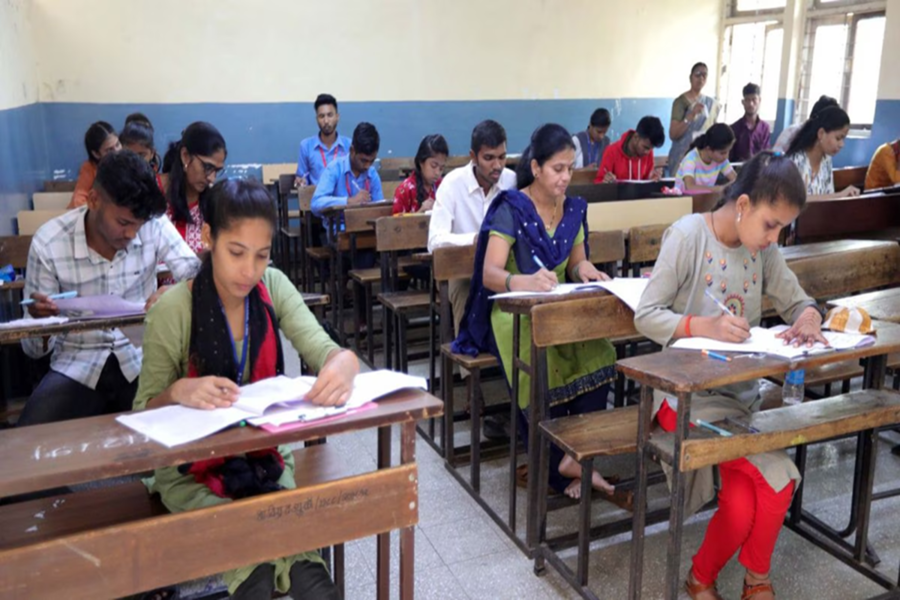
The National Testing Agency (NTA) has initiated preparations for the NEET re-examination. In this context, a series of meetings has already commenced. Following the revelation of the NEET UG 2026 paper leak scandal, the NTA is considering conducting the NEET UG re-examination in a hybrid mode. Concurrently, several other changes are also likely to be implemented. In this regard, the NTA is currently evaluating all available options. However, it is also anticipated that these changes could potentially lead to a delay in the NEET UG re-examination. Consequently, the entire academic session for various medical courses—including MBBS and BDS—could fall behind schedule.
Let us examine the specific preparations currently underway at the NTA regarding the NEET UG re-examination. Specifically, we will analyze the effective measures now being contemplated for the re-exam. Furthermore, we will discuss in detail the potential repercussions of the delay on the academic session.
**Major Changes Expected in the NEET Re-examination**
Following the NEET paper leak, preparations are underway for significant changes; as part of this initiative, the NTA has intensified its deliberations regarding a hybrid model for the re-examination. A series of meetings concerning this matter is currently ongoing. According to sources, senior officials and members of the agency—alongside the NTA Director General (DG)—are holding continuous meetings to finalize dates for upcoming examinations and to discuss modifications to the examination system. The primary focus of these discussions is the "Hybrid NEET Model," which is being viewed as a potential solution to virtually eliminate the possibility of future paper leaks.
**Need for Changes in Paper Printing and Transportation Logistics**
Many experts within the education sector believe that it is now imperative to overhaul the existing system of printing and transporting NEET question papers—a practice followed in previous years. Consequently, a new model is being considered wherein question papers would be transmitted directly to examination centers in an encrypted digital format. A formal proposal regarding this approach has also been put forward. According to this proposal, secure servers could be installed at every examination center, and the question papers would be printed on-site—within the confines of the center itself—using high-speed printers immediately prior to the commencement of the examination. It has been recommended that this entire process be conducted under strict CCTV surveillance and with the utmost confidentiality. The primary objective of the hybrid model is to eliminate the risks associated with "question paper movement"—that is, the risks involved in the transportation of examination papers.
**Consideration of Implementing the CBT Model**
Concurrently, deliberations are underway regarding the adoption of a Computer-Based Test (CBT) model. However, the most significant question remains: how practical would a CBT model be for over 2.2 million students? Every year, more than 2.2 million candidates appear for the NEET-UG examination. Conducting a CBT on such a massive scale would necessitate a robust digital infrastructure across the country. The availability of adequate computer labs, reliable electricity, and internet connectivity in rural areas and smaller towns is perceived as a major challenge. Many students argue that, for a medical entrance examination, the traditional pen-and-paper mode remains the more comfortable and equitable medium.
Conversely, experts believe that the CBT model could significantly mitigate risks associated with paper leaks, transportation, and printing. There is also speculation that a hybrid model might be implemented initially—one that involves the digital delivery of question papers followed by on-site printing at the examination centers—while the examination itself remains OMR-based for the time being. The Hybrid-NEET model could be introduced in the first phase, with a gradual transition toward a fully CBT-based NEET in subsequent stages; this approach would allow the NTA to prioritize security, transparency, and a technology-driven examination system.
**Multiple Challenges for the NTA: Delays and a Setback to the Academic Session**
The NTA's greatest challenge lies in conducting the NEET re-examination promptly. Another significant hurdle is the setting of the question paper itself; reassembling the panel of experts required for this task presents a considerable challenge. It is estimated that the experts could take anywhere from 25 to 30 days to set the paper. Once the paper is finalized, it must be sent for printing.
The printing stage is considered the most critical and challenging phase, as this is precisely when the majority of paper leaks tend to occur. The examination will take place only after the printing process is complete. By the time this entire process is concluded, it could well be July. Consequently, the examination will probably be held sometime in July. If the examination does take place in July, the results are likely to be declared in August or September. Following that, the subsequent counseling process alone is expected to take another two months. As a result, the academic session could begin in November or December.
Disclaimer: This content has been sourced and edited from TV9. While we have made modifications for clarity and presentation, the original content belongs to its respective authors and website. We do not claim ownership of the content.
