
No Escape for Paper Leakers: Proposal Includes 10-Year Prison Term and ₹10 Crore Fine
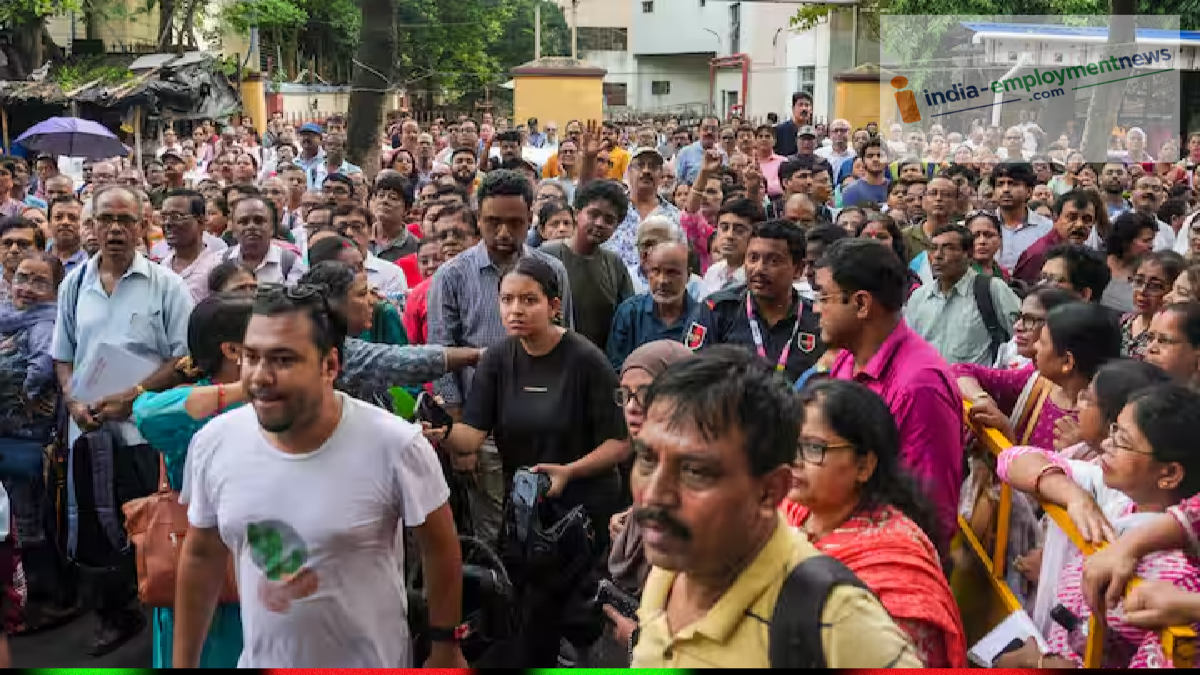
The high-level Examination Reform Committee, constituted by the Maharashtra government, has recommended stringent amendments to the 'Maharashtra Competitive Examination Act, 2024' in its second report.
Maharashtra Exam Reform: To ensure transparency in recruitment examinations and curb incidents like paper leaks, the state government is preparing for significant legal reforms. The high-level Examination Reform Committee, appointed by the Maharashtra government, has recommended strict amendments to the 'Maharashtra Competitive Examination Act, 2024' in its second report. The proposals suggest that those found guilty of orchestrating paper leaks should face 7 to 10 years of imprisonment, a minimum fine of ₹10 crore, and the confiscation of their assets.
While these recommendations are currently under consideration by the state government and have not yet been enacted into law, it is expected that an amendment bill will be introduced in the legislature during the upcoming winter session, following assurances from Chief Minister Devendra Fadnavis. This high-level committee was established after the Maharashtra Public Service Commission (MPSC) was forced to cancel an entire recruitment process—for 'Drug Inspector (Group B)' posts under the Food and Drug Administration—following allegations of a paper leak in August 2026.
The committee has advocated for two major, stringent provisions to tighten the grip on offenders. These include 7 to 10 years of imprisonment and a minimum fine of ₹10 crore for organized paper leaks. Furthermore, the recommendations propose the attachment of the perpetrators' assets to recover losses caused by the crime; 5 to 10 years of imprisonment and a fine of up to ₹50 lakh for individuals found guilty; and strict punitive action against companies—including their directors and management personnel—involved in examination irregularities.
Additionally, to prevent delays in the investigation and adjudication of paper leak cases, the committee has recommended the formation of a dedicated 'Special Task Force' and the establishment of 'fast-track courts.' Additionally, it has been suggested that investigations at the district level should be overseen by an officer of at least the rank of Additional Superintendent of Police, while in areas under a Police Commissionerate, they should be led by an officer of at least the rank of Deputy Commissioner of Police.
To protect candidates from financial loss, it has been proposed that if an examination is compromised due to irregularities, the full examination fee should be refunded to all candidates who were physically present for the test. Furthermore, if an objection raised regarding an answer key is found to be valid, the objection fee should also be returned to the candidate.
Beyond legal measures, the committee has recommended administrative and technical steps to secure the examination system. These include entrusting District Collectors with greater responsibility for monitoring examination centers and establishing a dedicated 'venue bank' consisting of centers vetted for security and suitability.
Additionally, the proposals include the creation of an integrated portal for recruitment-related requirements, the annual release of an examination calendar by October each year, and the implementation of a 'One-Time Registration' system—linked to a 'Maha ID' (or Aadhaar card) and DigiLocker—to streamline the candidate verification process.
