
NEET UG Cutoff 2026: What will the NEET 2026 cutoff be this time? Experts' predictions are bound to leave you surprised.
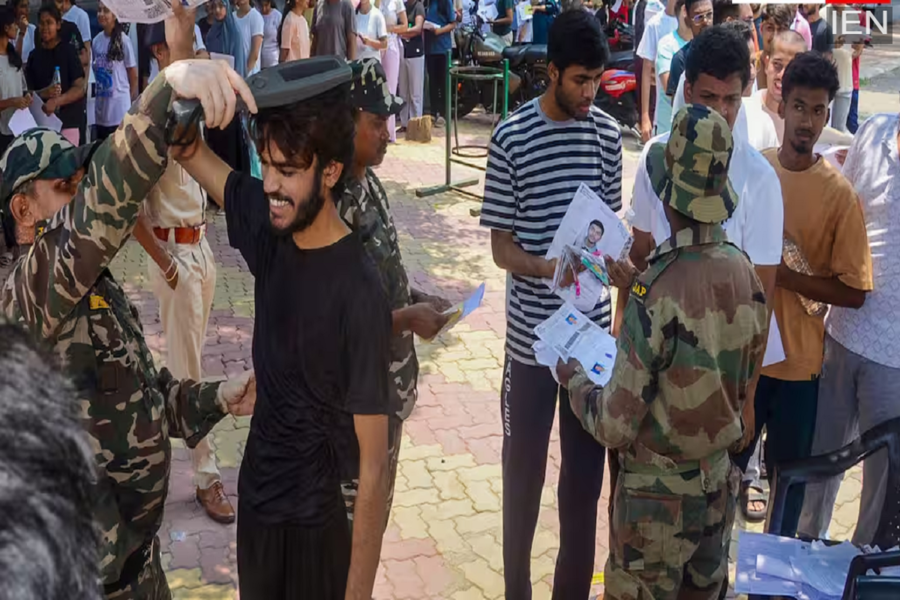
As soon as the NEET UG 2026 examination concluded, a major question regarding the cutoff emerged. There is palpable curiosity among students and parents to determine exactly how many marks will be required this time to secure admission into government medical colleges.
NEET UG Cutoff 2026: The country's largest medical entrance examination, NEET UG 2026, was conducted on a record scale this year on May 3rd, with lakhs of students participating. This time, out of approximately 22.80 lakh registered candidates, more than 22 lakh students actually appeared for the NEET UG 2026 exam. This translates to an attendance rate of over 96 percent. With such a massive number of students participating, the competition has intensified significantly compared to previous years. In terms of the difficulty level of the exam, students described it as easy and high-scoring. Now, with the examination concluded, the most pressing question revolves around the expected cutoff scores.
Students and parents are eager to find out the minimum marks required to secure admission to government medical colleges this year. Based on the opinions and insights provided by experts, it appears that the cutoff scores this year could be higher than those of previous years. Given this context, let us explore today what the expected cutoff for NEET 2026 might be.
How was the NEET 2026 paper this year?
Most students emerging from the examination hall described the paper as being of an "easy to moderate" difficulty level. The Biology section was considered particularly high-scoring, as the majority of the questions were based on the NCERT curriculum. However, the paper felt somewhat lengthy due to the inclusion of question types involving multiple statements and "match-the-column" formats. Conversely, the Physics section was perceived as the toughest; it featured a high number of numerical problems, leading to difficulties in time management for many students. The difficulty level of the Chemistry section ranged from easy to moderate. Experts opine that the paper was well-balanced and that students who had prepared thoroughly found it relatively easy to attempt.
Experts Reveal Estimated Cut-off Scores
Considering the difficulty level of the examination and the number of participating students, indications suggest that the cut-off scores are likely to rise this year. According to experts, candidates in the General Category may require a score of approximately 620 to 650 marks to secure an MBBS seat in a government medical college. Some experts have placed this range between 620 and 635, which is being considered a "safe score." Meanwhile, the cut-off for the OBC Category is estimated to hover around 590 to 630 marks. For the SC Category, the projection lies between 400 and 520 marks, while for the ST Category, it is estimated to range from 420 to 500 marks. Regarding the qualifying cut-off, it is likely to be at the 50th percentile—corresponding to a score range of approximately 686 to 144 marks—for the General and EWS categories. For the OBC, SC, and ST categories, this qualifying cut-off may fall at the 40th percentile, corresponding to a score range of approximately 143 to 113 marks.
Why Might the Cut-off Rise?
The primary reasons for the potential rise in cut-off scores this year include the relatively easier nature of the question paper and the massive number of participating students. With over 2.2 million students appearing for the exam, the level of competition has intensified significantly compared to previous years. Furthermore, improved preparation standards and access to coaching support are also expected to contribute to higher overall scores among students.
Counseling and the Subsequent Process
Eligibility for participation in the All India Quota counseling—conducted by the Medical Counselling Committee—will be determined solely based on the NEET UG scores. Additionally, individual states conduct their own separate counseling processes, through which admissions are granted to MBBS, BDS, BAMS, BHMS, and various other medical courses. Moreover, extensive use of technology was employed this time to ensure the absolute fairness and integrity of the examination. Live monitoring was conducted at several sensitive examination centers, and every activity was closely observed via CCTV surveillance. Concurrently, social media platforms were also monitored, leading to the shutdown of several channels involved in the illicit sale of fake question papers.
