
NEET UG 2026: Will the NEET exam follow a 'Digi Yatra'-like model? Karnataka submits proposal to task force
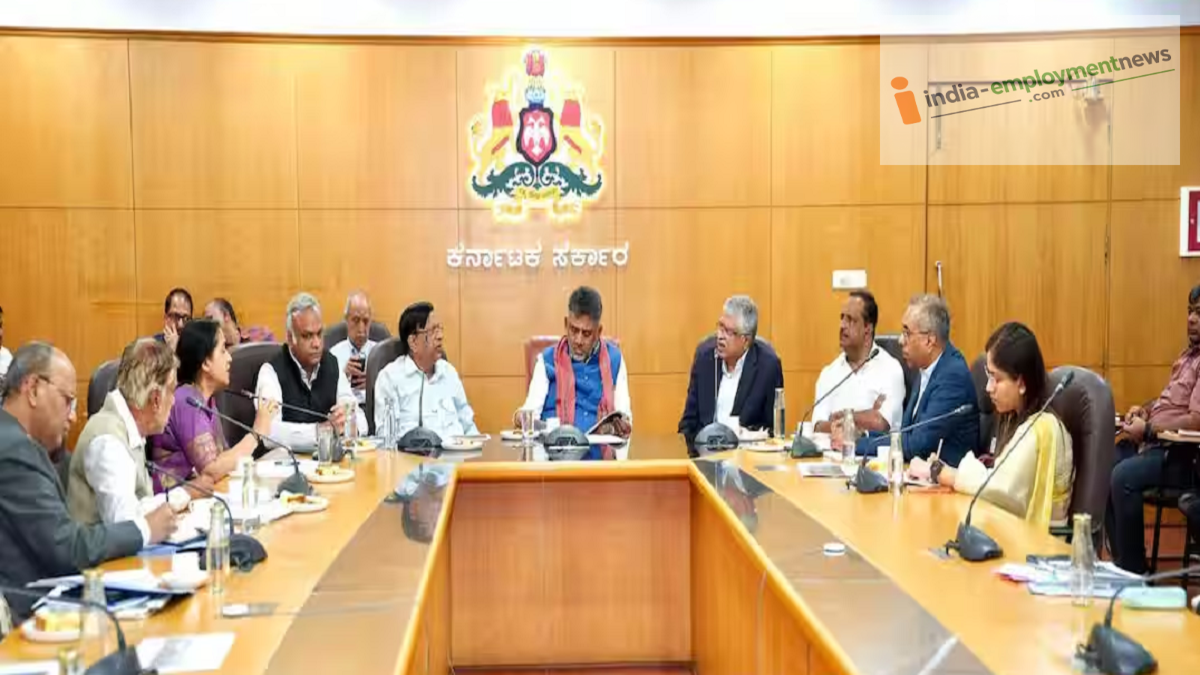
NEET UG 2026: The Karnataka Examinations Authority (KEA) has put forward a unique proposal for the NEET UG exam—the implementation of a 'Digi Exams' system, modeled after the 'Digi Yatra' initiative used at airports.
NEET UG 2026: To curb malpractice in the NEET UG medical entrance exam—such as impersonation (where someone else takes the test on behalf of a candidate)—the Karnataka Examinations Authority has proposed a 'Digi Exams' system, inspired by the 'Digi Yatra' framework used at airports. Furthermore, KEA officials have suggested that instead of selecting a private company through a tender process, the exam should be conducted as a computer-based test (CBT) by leveraging the existing infrastructure available at technical institutions across the country.
This proposal was presented by H. Prasanna, Executive Director of the KEA, during a meeting attended by Deputy Chief Minister D.K. Shivakumar, officials from the Higher Education Department, and Nandan Nilekani, the chairperson of the high-level task force on examination security. Notably, Karnataka holds the highest number of MBBS seats in the country.
Plan to utilize the network of engineering colleges
In his presentation, H. Prasanna suggested involving the All India Council for Technical Education (AICTE) to facilitate the NEET CBT, proposing the use of the infrastructure already present in engineering colleges nationwide. According to the AICTE’s Approval Process Handbook for 2024–27, there must be a minimum ratio of 1:10 between computers and students in engineering graduate and diploma programs. Based on AICTE’s state-wise data and projected student numbers for the 2025–26 academic year, this national network comprises 6,754 institutions, catering to 7.46 million (74.6 lakh) students. Based on a 1:10 ratio, these institutions have a capacity of approximately 7.40 lakh computer nodes.
In this context, it has been suggested that, prior to the implementation of a Computer-Based Test (CBT), a national survey be conducted—facilitated by the AICTE—to assess the status of available computers (functional versus non-functional), internet connectivity, power backup, and the availability of technical staff. According to an official, there is also a proposal to conduct pilot tests in select states to evaluate network infrastructure, security, technical support, and emergency protocols.
Proposal to Include Class 12 Marks
During a meeting with the Examination Reform Task Force—chaired by Nandan Nilekani—representatives from several states put forward additional reform suggestions. States have pointed out that relying exclusively on NEET-UG scores for admissions is diverting students' focus away from formal school education. Many students are opting for "dummy schools" after Class 10, where they remain enrolled—with fake attendance records—while spending their time in coaching institutes. To curb this trend and diminish the "coaching culture," it has been proposed that Class 12 marks be given weightage alongside NEET-UG scores for admissions into MBBS, BDS, and AYUSH courses. Furthermore, there is a proposal to transition from a pen-and-paper format to a Computer-Based Test (CBT) and to conduct the NEET-UG examination twice a year.
