
NEET, JEE, UPSC, or UGC NET—which exam is the toughest? Here is the full picture.
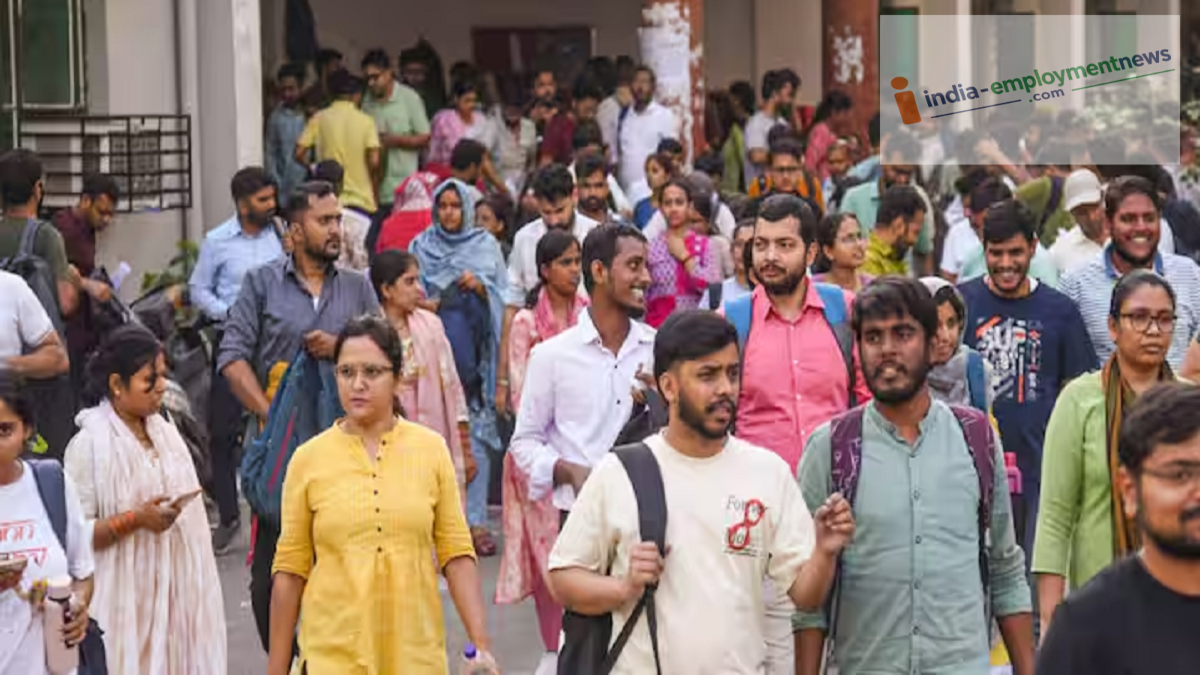
The question often arises: which is the toughest exam among NEET, JEE, UPSC, and UGC NET? In reality, the answer cannot be determined solely by the number of candidates appearing for the exam.
Every year, lakhs of students appear for the country's major competitive examinations. Some aim for admission to medical colleges, while others aspire to enter an IIT. Meanwhile, some candidates take exams to join the civil services or build a career in academia. Consequently, the question arises as to which of these exams—NEET, JEE, UPSC, or UGC NET—is the most difficult. The answer, however, cannot be gauged merely by the number of applicants. Each of these exams differs in terms of eligibility criteria, the examination process, and what it means to qualify. Nevertheless, statistics do reveal how the number of candidates dwindles at each stage.
For NEET UG 2026, approximately 2,279,743 candidates registered, while 1,999,895 actually appeared for the exam. Of these, 1,121,185 candidates qualified. However, qualifying for NEET does not, in itself, guarantee an MBBS seat.
The current NMC database lists around 1.39 lakh MBBS seats. This highlights a significant gap between the number of candidates appearing for the exam and the available MBBS seats. Admission also depends on factors such as category, state quota, All India quota, college preference, and the counseling process.
For JEE Main 2026, 1,604,854 unique candidates registered, and 1,538,468 appeared for the exam. Of these, 250,182 candidates became eligible for JEE Advanced; in other words, only about 16.3 percent of the candidates who appeared for the exam made it to the next stage. Subsequently, for JEE Advanced 2026, 1,87,389 candidates registered, and 1,79,694 appeared for the exam; of these, 56,880 qualified. However, qualifying for JEE Advanced does not guarantee a seat at an IIT; admission depends on rank, category, preferred program, and seat availability.
In contrast, the selection process for the UPSC Civil Services Examination appears extremely narrow based on the final figures. In the 2025 cycle, 9,37,876 candidates registered, and 5,76,793 took the preliminary examination. Only 13,343 of them were shortlisted for the Mains, and ultimately, 958 candidates were recommended. Thus, there is a drastic reduction in the number of candidates from the initial stage to the final selection.
Next, for UGC-NET June 2026, 7,73,806 candidates registered, and 6,07,151 appeared for the exam. Across 84 subjects, a total of 1,47,579 candidates qualified under three distinct eligibility categories. Based on the number of candidates who appeared, the overall qualification rate was approximately 24.3 percent. Here too, "qualifying" does not mean the same thing for everyone, as candidates target different eligibility categories.
These figures clearly indicate that the nature of difficulty varies across the four examinations. In NEET, a vast number of candidates compete for a limited number of medical seats. JEE Main candidates must progress through two stages: JEE Main followed by JEE Advanced. In the UPSC exam, only a limited number of candidates make it to the final list after navigating highly selective stages. Meanwhile, UGC-NET results depend on the specific eligibility category targeted by the candidate.
Consequently, if the ratio of candidates at the initial selection stage is taken as the benchmark, the final selection for the UPSC CSE appears to be the most restrictive. Among those who applied in 2025, only about 1.63 percent of candidates were shortlisted for the Mains. Therefore, it is not accurate to label any single exam as the toughest based solely on the number of applicants; the real challenge lies in understanding how many candidates actually appear for the exam, how many progress through each stage, and how many ultimately get the opportunity.
