
NDA: What are the NDA selection criteria? Redirect your preparation with these tips...
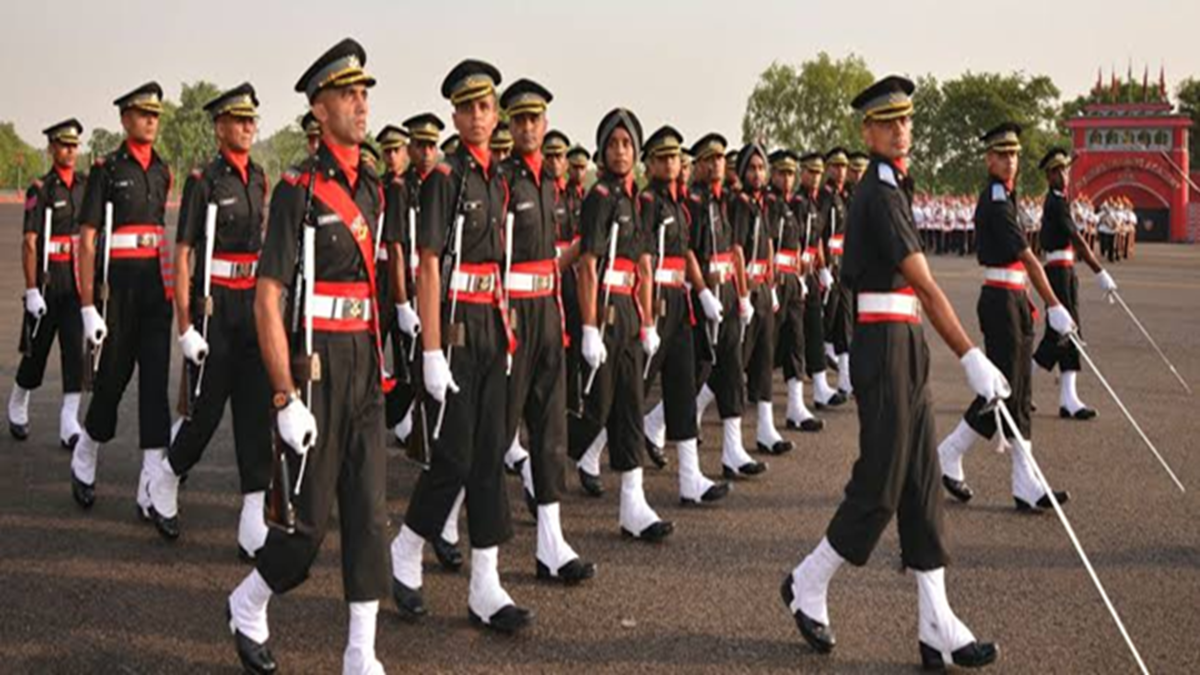
NDA Preparation Tips: Lakhs of students apply for the National Defence Academy (NDA) every year, yet very few are selected. Consequently, the NDA selection criteria are often perceived as extremely tough. However, experts believe the criteria are not inherently difficult; they simply require the right understanding. Career expert Sumit Kumar believes that grasping the NDA selection criteria can completely transform one's approach to preparation. He explains the underlying philosophy and details the NDA selection process and criteria.
Let us explore the NDA selection process in detail. We will learn about the exam pattern and the key elements of NDA preparation from career expert Sumit Kumar.
Why doesn't the Indian Army conduct the written examination itself?
Answering this, career expert Sumit Kumar explains that the military seeks young candidates who are ready to learn, capable of performing, and fully prepared for disciplined learning. He notes that military training differs significantly from school education, involving physical, leadership, and mental challenges. Thus, the NDA exam acts as a filter. However, it is not the final selection; it is merely the first step, after which the real journey begins.
What is the structure of the NDA exam?
Explaining the exam structure, career expert Sumit Kumar notes that it consists of two major papers: Paper I (Mathematics) and Paper II (General Ability Test or GAT). Regarding Paper I (Mathematics), he points out that while many students view mathematics merely as a subject of formulas and calculations, for the military, it holds a different significance. He states that mathematics evaluates a child's logical thinking, problem-solving ability, accuracy, patience, and various leadership skills—qualities that are crucial given the vital role clear thinking plays in the military profession. Consequently, mathematics is a key component of the NDA exam.
**The NDA is More Than Just a Math Exam**
Career expert Sumit Kumar notes that the NDA is not merely a mathematics exam; it also includes the General Ability Test (GAT). While many students perceive the GAT as a general knowledge paper, in reality, it encompasses much more. He explains that the GAT essentially evaluates a student's awareness, language skills, comprehension, and observational abilities.
Sumit Kumar emphasizes that an officer's role goes beyond the profession itself; they must be knowledgeable about history, geography, science, and current affairs. Therefore, the purpose of the GAT is not to test rote memorization of facts but to assess a candidate's level of awareness.
**Debunking NDA Exam Myths and Following Key Tips**
Career experts share common myths and practical tips regarding the NDA exam. They suggest that if students understand these myths and act on the associated tips, they can perform better in the exam. Many students mistakenly believe the NDA is solely a math test, overlooking the GAT component. The military seeks candidates who can strike a balance between academic proficiency and general awareness; thus, students should strive to understand society, the nation, and the world at large.
**What Happens After the NDA Written Exam?**
Career expert Sumit Kumar explains the post-written exam process in detail. He notes that while hundreds of thousands of students from across the country appear for the written exam, only about 8,000 qualify. Many students assume that clearing the written exam guarantees selection, but the reality is somewhat different. He notes that the NDA written examination is merely one stage; the actual personality assessment begins with the SSB.
**The SSB is More Than Just an Interview**
Career expert Sumit Kumar observes that while people often hear about the SSB, the question remains: what exactly is it? He explains that while SSB stands for "Services Selection Board," it would be incorrect to label it simply as an interview; rather, it is a comprehensive personality assessment system.
He points out that during the SSB, candidates are not merely listened to but also observed, understood, and evaluated. The objective of the SSB is straightforward: to determine whether a candidate has the potential to become a military officer in the future.
**A Five-Day Process**
Career expert Sumit Kumar explains that the SSB process spans five days. Throughout this period, candidates are observed in various situations. He notes that while it is difficult to fully understand a person's personality in a single day, observing them across multiple situations and scenarios allows their true personality to emerge. He emphasizes that the Indian Army is not looking for acting or artificial behavior; instead, they seek the candidate's genuine personality.
Disclaimer: This content has been sourced and edited from TV9. While we have made modifications for clarity and presentation, the original content belongs to its respective authors and website. We do not claim ownership of the content.
