
NDA vs CDS Difference: What is the difference between the NDA and CDS, and which path is the best for wearing the Army uniform?
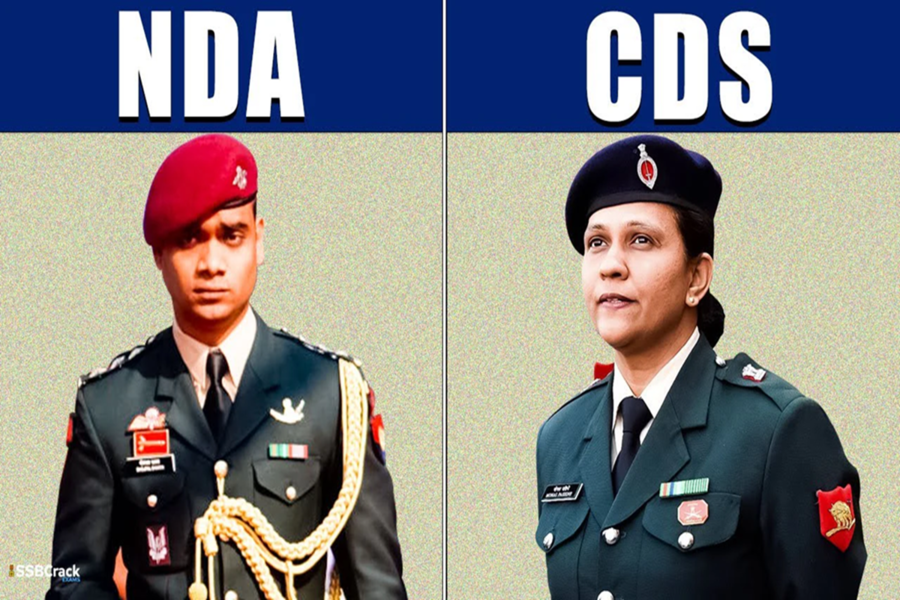
NDA vs CDS: The Difference. Millions of young Indians dream of serving their country by becoming officers in the Indian Armed Forces. During the preparation phase for this endeavor, two names are heard most frequently: NDA (National Defence Academy) and CDS (Combined Defence Services). Many young aspirants often find themselves in a dilemma regarding which path is the right one for them. Is it better to join the armed forces immediately after finishing school, or to try one's luck after completing graduation? Both of these examinations are conducted by the UPSC, and the objective of both is to provide the armed forces with courageous and capable officers. If you, too, are preparing for a career in the armed forces, it is essential to understand the distinctions between these two avenues.
The NDA represents a process designed to mold young boys and girls into individuals of steel at a tender age. Conversely, the CDS is tailored for young adults who have completed their academic studies and aspire to don the uniform with a more mature and seasoned perspective. Through the NDA, you are trained simultaneously for all three branches of the armed forces—the Army, the Navy, and the Air Force—whereas the CDS offers you the opportunity to select a specific academy based on your personal preferences and aptitude. If you, too, harbor the dream of wearing the uniform, it is crucial to determine which of these options aligns perfectly with your temperament and age.
NDA vs CDS: Two Distinct Paths to the Armed Forces Uniform
Both the NDA and the CDS serve as avenues for securing a commission in the armed forces. However, there are several key differences between the two. By familiarizing yourself with every minute detail associated with these examinations, you can significantly strengthen your preparation strategy.
Age and Eligibility: When Can You Take the Armed Forces Recruitment Exams?
The most significant distinction between the NDA and the CDS lies in their respective eligibility criteria.
NDA: This examination can be taken while you are still in the 12th grade or immediately after completing your 12th-grade studies. The age limit for this examination typically falls between 16.5 and 19.5 years. In other words, it is designed for those who wish to establish their career path at a relatively young age.
CDS: For this examination, you must hold a graduate degree (or be in the final year of your graduation). The prescribed age limit for the CDS ranges from 19 to 24 years. This is intended for young individuals who have completed their college education.
**The Training Journey: Where, How Long, and What Kind?**
**NDA:** Upon selection for the NDA, candidates proceed to Khadakwasla, Pune. Here, after three years of rigorous training, they are awarded a degree from Jawaharlal Nehru University (JNU). Subsequently, an additional year of training takes place at the respective academy (IMA/INA/AFA).
**CDS:** Upon selection for the CDS, candidates proceed directly to their respective academies—such as the Indian Military Academy (Dehradun) or the Officers Training Academy (Chennai). The duration of the training here ranges from 12 to 18 months.
**NDA vs. CDS: Exam Pattern and Difficulty Level**
Both the NDA and CDS examinations are conducted by the UPSC; however, their difficulty levels differ.
**NDA:** This examination consists of two papers: Mathematics and the General Ability Test (GAT). A strong command of mathematics is essential for this exam.
**CDS:** This examination comprises three papers: English, General Knowledge, and Elementary Mathematics. However, if you are applying specifically for the 'OTA' (Officers Training Academy), you are not required to appear for the Mathematics paper.
**Type of Service: Permanent vs. Short Service**
**NDA:** Officers graduating from the NDA are inducted into the 'Permanent Commission' (PC), meaning they are eligible to serve in the Armed Forces until their retirement.
**CDS:** Through the CDS, candidates can opt for both the Permanent Commission (via the IMA) and the 'Short Service Commission' (via the OTA). Under the Short Service Commission, officers may choose to leave the Armed Forces after serving for 10 to 14 years, or they may apply for a Permanent Commission.
**Opportunities for Women in the Armed Forces**
Pathways have now opened up for women in both the NDA and CDS examinations. After completing their 12th grade, young women can appear for the UPSC NDA examination to join any of the three branches of the Armed Forces. Additionally, after completing their graduation, they can become officers in the Indian Army through the CDS examination (specifically via the OTA).
Disclaimer: This content has been sourced and edited from TV9. While we have made modifications for clarity and presentation, the original content belongs to its respective authors and website. We do not claim ownership of the content.
