
NCERT Textbooks: Is Poor Print Quality Affecting Children's Eyesight? NCERT Launches Investigation
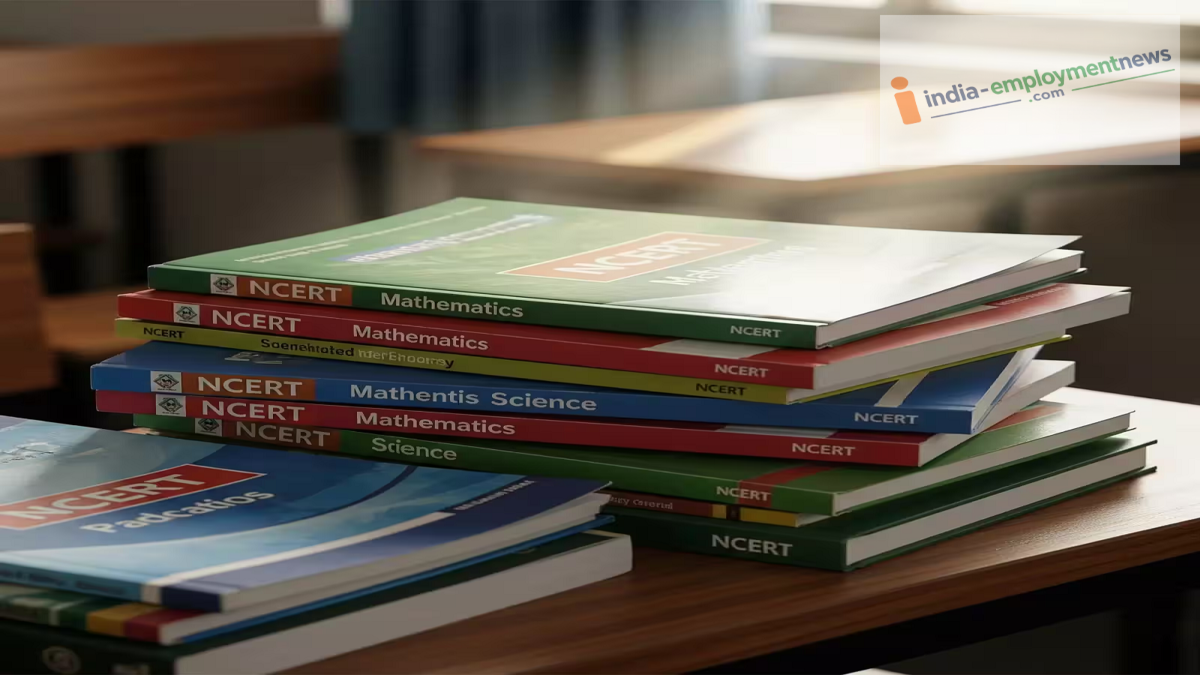
The NCERT has stated that it is treating the issue of print quality with the utmost seriousness and that strict action will be taken against any printer found responsible for these defects.
The NCERT has taken cognizance of complaints regarding the printing and quality of school textbooks. It has clarified that it is addressing the matter with high priority and that any printer found responsible for the printing flaws will face strict action. In an official statement, the NCERT affirmed its commitment to providing every child with clear, easy-to-read, and student-friendly textbooks.
What is the issue?
The matter gained attention when several parents—including Supreme Court advocate Vineet Jindal—raised concerns on the social media platform 'X' regarding the printing of Class 10 NCERT textbooks. In his post, Vineet Jindal noted that his son, a Class 10 student, has an NCERT textbook in which the text is extremely small, blurry, and poorly printed, making it difficult for students to read comfortably. He further pointed out that such substandard printing could cause unnecessary strain on children's eyes, lead to headaches, and result in other health-related issues; therefore, he urged a review of the existing printing standards.
My son is in Class X, and after going through his NCERT textbook, I am deeply concerned about the quality of printing. The text is extremely small, blurred and poorly printed, making it difficult for students to read comfortably. NCERT must understand that such poor-quality textbooks can cause unnecessary eye strain, headaches and other health concerns among schoolchildren. Education should empower young minds, not compromise their health. I urge @JoshiPralhad @EduMinOfIndia and @ncert to take immediate cognisance of this issue, review the printing standards and ensure that students receive clear, readable and student-friendly textbooks.
— Adv.Vineet Jindal Office (@VineetJindal_) November 22, 2026
Beyond parental concerns: The burden of expensive textbooks
The complaints raised by parents—both directly and on social media—highlight several issues concerning the quality of the books. Parents point out that small, blurry text, faint or incomplete words, and unclear images or tables hinder children's learning. Furthermore, prolonged study sessions using such materials can lead to eye fatigue and headaches—a concern particularly relevant for students in lower grades and those preparing for board examinations. Meanwhile, many parents have complained that the cost of textbooks in private schools is several times higher than that of NCERT books. Due to differences in printing and visual presentation, parents are often compelled to purchase these expensive books, or they face pressure from schools to buy specific books prescribed by the institutions.
Petitions regarding the use of calculators are also pending.
In the context of this issue concerning textbooks, it is also worth noting that a Public Interest Litigation (PIL) is currently pending before the Delhi High Court against the NCERT, CBSE, the Central Government, and the National Assessment Centre, regarding the use of calculators in Class 12 board examinations. Filed through advocate Nitin Mangla, the petition seeks permission to use basic, non-programmable calculators for the Class 12 Accountancy examination, and requests that an expert committee consider the possibility of allowing calculators for Mathematics as well.
The petition argues that lengthy manual calculations consume significant time, leaving students with less time to demonstrate their understanding of concepts and their practical application. It further notes that the CBSE Curriculum Committee, during its 70th meeting held on November 25–26, 2024, had approved a proposal to permit the use of basic, non-programmable calculators for the Class 12 Accountancy examination. In this matter, a division bench comprising Acting Chief Justice Nitin Vasudev Sambre and Justice Sanjay Sharma issued a notice on November 4, directing the concerned parties to file their responses within six weeks.
