
NCERT Books: Class 9 students to learn about business; a chapter on startups added to NCERT textbooks
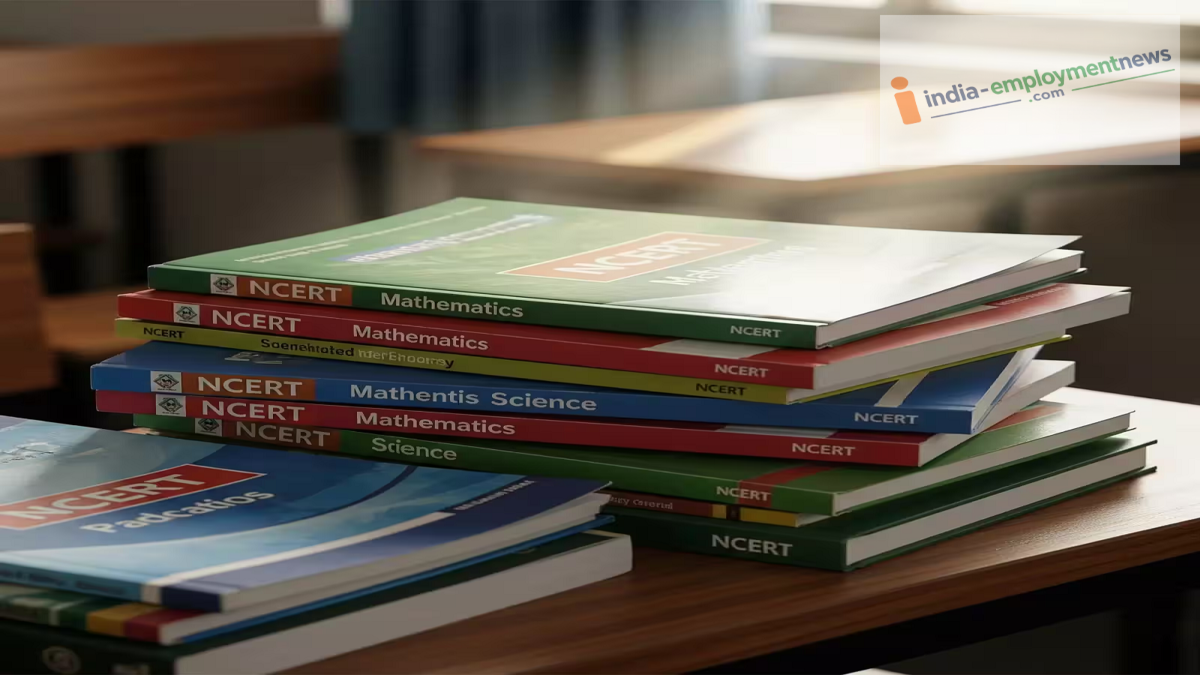
The NCERT has introduced changes to the Class 9 Social Science curriculum. Students will now go beyond traditional theories and learn the fundamentals of personal finance and entrepreneurship.
NCERT Books: The NCERT has added two significant new chapters to the Economics section (Part 2) of the Class 9 Social Science textbook. Students will now learn not only traditional theories but also the essentials of personal finance and entrepreneurship. Sanjeev Sanyal, a renowned economist and member of the Economic Advisory Council to the Prime Minister, shared details about this major update on the social media platform X. He noted that the new textbooks present concepts like risk-taking, innovation, and business activity in a highly positive light, equipping students with skills that are practical for real-life scenarios.
Students to learn money management
The new chapter on personal finance will teach students the art of managing money and making financial decisions from a young age. It covers topics such as fixed deposits, government savings schemes, mutual funds, bonds, and shares. Furthermore, students will learn that investments with lower risk typically offer lower returns, while those with higher risk carry the potential for higher returns. The concepts of inflation and the effects of compounding are also explained.
Students to learn about income tax and loans
The new chapter also covers EMIs—used for loan repayment—and the credit card system. It explains the distinction between direct and indirect taxes. Additionally, it provides simple examples for calculating personal income tax slabs and tax liabilities under the new tax regime.
Learning about business from their school days
The chapter dedicated to entrepreneurship will help students understand how a new business idea takes shape and how a startup functions. This chapter begins with a practical activity in which students are asked to imagine setting up a lemonade stall at a school fair as part of a 'Young Entrepreneurs Challenge.' They are taught to calculate the cost of materials, the selling price, and the final profit earned. Additionally, the concept of profit and loss is explained to students through the example of a bakery.
A shift from traditional approaches toward a modern perspective
Economist Sanjeev Sanyal noted that older textbooks often placed excessive emphasis on negative aspects of business activities, such as hoarding and black-marketing. In contrast, the new textbooks highlight risk-taking, innovation, and the role of business as a positive driver for the economy and job creation. This shift has been implemented in alignment with the National Education Policy 2020 and the National Curriculum Framework 2023. Its objective is to prepare students—both mentally and practically—for India’s rapidly growing landscape of financial awareness, SIP investments, the startup ecosystem, and the sector comprising micro, small, and medium enterprises (MSMEs).
