
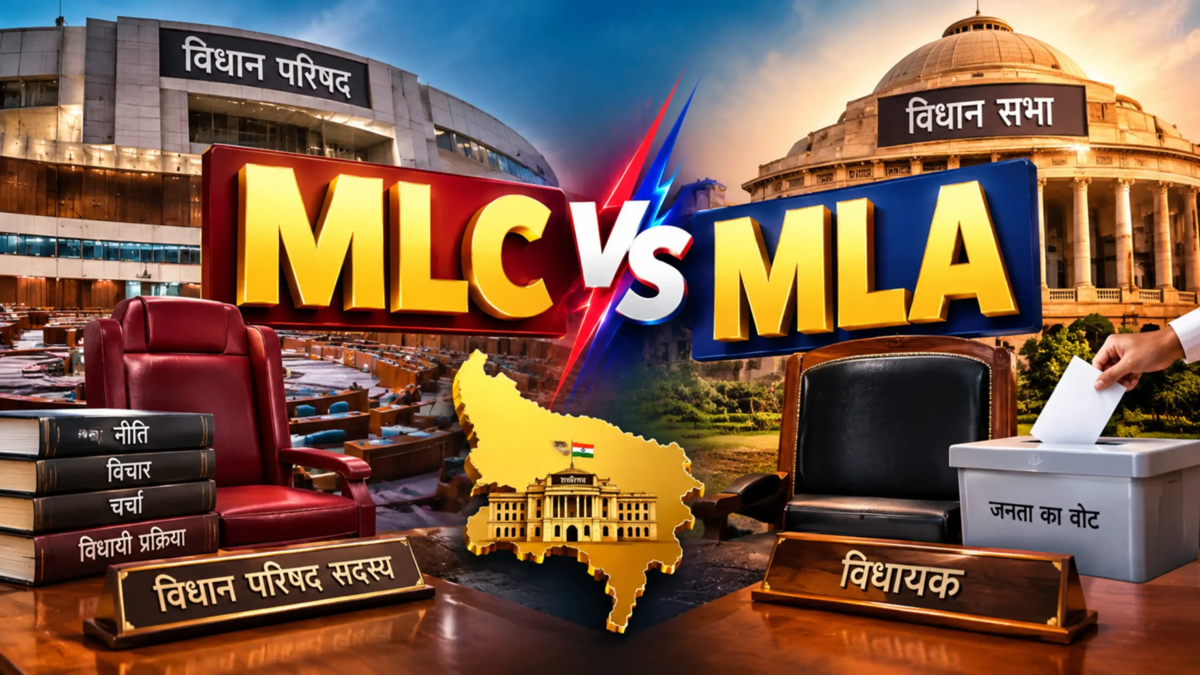
MLA vs MLC: Salary of over ₹2.66 lakh in UP and ₹1.60 lakh in Bihar—what perks do MLCs receive?
MLC Election Results 2026: Votes are being counted today, Tuesday, October 27, 2026, for 28 Legislative Council (MLC) seats across the states of Uttar Pradesh, Bihar, Maharashtra, and Karnataka. The counting process began at 8:00 AM. Polling for these seats took place on October 23. All eyes are on the results for 11 seats in UP, 8 in Bihar, 5 in Maharashtra, and 4 in Karnataka—with the contest for the 19 seats in Uttar Pradesh and Bihar drawing particular attention. In Bihar, 150 candidates are in the fray, comprising 90 from the graduate constituencies and 60 from the teachers' constituencies.
Amidst these elections, a common question arises: what exactly is an MLC? Do they receive a salary equivalent to that of an MLA (Member of the Legislative Assembly)? What perks—such as government accommodation, vehicles, travel allowances, and medical facilities—are they entitled to upon election? Let us explore how MLCs are elected and the salaries they receive in various states.
Who is an MLC, and how do they differ from an MLA?
'MLC' stands for 'Member of the Legislative Council.' In states with a bicameral legislature—meaning two houses—the Legislative Assembly serves as the lower house, while the Legislative Council acts as the upper house. A member of the Legislative Assembly is known as an MLA, whereas a member of the Legislative Council is called an MLC. Both participate in the state's legislative process; however, there are significant differences regarding their election, tenure, and powers. While MLAs are elected directly by the public, most members of the Legislative Council are elected through specific electoral colleges. Additionally, some members are nominated by the Governor.
In which six states of the country does a Legislative Council exist? All states in India have a Legislative Assembly (Vidhan Sabha), but only six states have a Legislative Council (Vidhan Parishad). These states are Uttar Pradesh, Bihar, Maharashtra, Karnataka, Andhra Pradesh, and Telangana. In these states, both a Legislative Assembly and a Legislative Council function. Most other states have a unicameral legislature (a single-house system). The functions of a Legislative Council include discussing and reviewing bills, as well as questioning government policies.
What is the age requirement to become an MLA or an MLC?
There are different minimum age requirements for contesting elections to the Legislative Assembly and the Legislative Council. To become an MLA (member of the Legislative Assembly), a candidate must be at least 25 years old, while a candidate for the Legislative Council (MLC) must be at least 30 years old. To vote in a Legislative Assembly election, an Indian citizen must be at least 18 years old and have their name registered on the relevant electoral roll; however, there are different eligibility criteria for voting in the 'teachers' and 'graduates' constituencies of the Legislative Council.
Six-year term for an MLC
A major difference between the Legislative Assembly and the Legislative Council lies in their tenure. The Legislative Assembly has a standard term of five years and can be dissolved before the completion of this period. In contrast, the Legislative Council is a permanent house and cannot be dissolved like the Legislative Assembly. The term of a member of the Legislative Council is six years. Approximately one-third of its members retire every two years, and new members are elected to replace them. This is why elections for all seats in the Legislative Council do not take place simultaneously.
There are 75 seats in the Bihar Legislative Council; how are its members elected? The Bihar Legislative Council has a total of 75 seats. Article 171 of the Constitution provides for the formation of the Legislative Council and the election of its members. In Bihar, 27 members of the Legislative Council are elected by the elected members of the Legislative Assembly (MLAs). Additionally, 24 members are elected from local authority constituencies, six from teachers' constituencies, and six from graduates' constituencies. The remaining 12 members are nominated by the Governor. Thus, a total of 75 members constitute the Legislative Council.
How are MLCs elected under the MLA quota?
There are 27 seats in the Bihar Legislative Council reserved for the Legislative Assembly quota. General voters do not vote directly for these seats; instead, they are elected by the elected members of the Legislative Assembly. According to the prescribed electoral procedures, a candidate for this quota must have at least 10 MLAs as proposers. The strength of political parties in the Legislative Assembly and the support of their MLAs play a crucial role in such elections.
Who votes under the local authority quota?
There are 24 seats in the Bihar Legislative Council allocated to local authority constituencies. Voting for these seats is conducted by the elected representatives of the local bodies included in the respective electoral college. This includes eligible representatives from panchayats and urban local bodies. As per the relevant rules, ward members, *mukhiyas* (village heads), members of *panchayat samitis*, members of *zilla parishads* (district councils), and representatives of urban local bodies are eligible to participate in the voting. An ordinary citizen can also contest elections from this category, provided they meet the specified eligibility criteria; it is not mandatory in all cases to be a member of a local body to contest.
How are MLCs elected under the teachers' quota? There are six seats for teachers' constituencies in the Bihar Legislative Council. To cast a vote for these seats, a teacher's name must be included in the electoral roll for teachers in the relevant constituency. Regarding eligibility, a teacher must have at least three years of teaching experience at the secondary level or above in a recognized educational institution. This includes eligible teachers from high schools, colleges, and universities. Form 19 is used to register a name in the electoral roll for a teachers' constituency.
Disclaimer: This content has been sourced and edited from News18 Hindi. While we have made modifications for clarity and presentation, the original content belongs to its respective authors and website. We do not claim ownership of the content.
