
JMI: SWAYAM course now included in Jamia's curriculum; all semester-end exams and entrance tests completed..
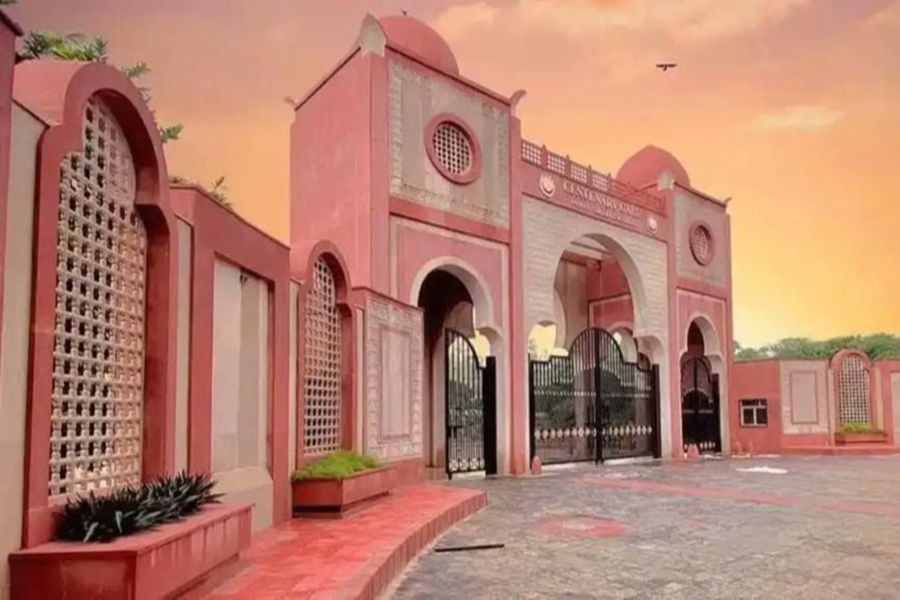
JMI: Jamia Millia Islamia University has, for the first time, incorporated SWAYAM courses into its curriculum and examination system under the New Education Policy (NEP 2020). SWAYAM is an online education platform of the Government of India where students can pursue courses across various subjects.
According to university officials, Jamia has also completed end-semester examinations and entrance tests for over 280 academic programs within the scheduled timeframe.
**Exams for 20,000 students concluded on time**
The university stated that integrating SWAYAM courses into the curriculum is a significant change implemented under the New Education Policy. This will provide students with greater freedom and convenience to choose subjects based on their interests and requirements.
The university also reported that semester examinations for more than 280 Undergraduate (UG), Postgraduate (PG), diploma, and certificate courses were conducted between May 2 and May 25. Approximately 20,000 students participated in these examinations.
The Office of the Controller of Examinations issued necessary guidelines (SOPs) for students and faculty, ensuring the timely evaluation and submission of answer scripts. Consequently, around 800 examination results were declared within the stipulated timeframe. According to the university, the timely issuance of results, grade sheets, and provisional degrees ensured that students faced no delays in applying for higher education or employment.
**Over one lakh applications; entrance exams held in 16 cities**
The university has completed the entrance examination process for over 280 academic programs for the academic session 2026-27.
Entrance examinations were also conducted for PhD programs and the Civil Services coaching program offered by the Residential Coaching Academy.
More than 1 lakh applications were received for admission to Undergraduate (UG), Postgraduate (PG), diploma, and certificate programs.
Entrance examinations were held in 16 cities, including Delhi, Lucknow, Patna, Srinagar, Jammu, Jaipur, Guwahati, Kolkata, Mumbai, Bhopal, Dehradun, Bengaluru, Hyderabad, and Ranchi. Admission to 25 programs will be granted based on CUET-UG scores.
Admission to B.Tech programs will be based on JEE (Main) 2026 rankings, while admission to B.Arch programs will be based on NATA 2026 rankings.
Admissions to the Integrated Teacher Education Program (ITEP B.Ed) will be conducted based on NCET 2026 results.
The university announced that the process of declaring admission results has commenced.
Entrance examinations were also conducted across five cities for admission to Classes 6, 9, and 11 in the university's schools.
More than 53,500 applications were received for the school entrance examinations.
Controller of Examinations Ehteshamul Haque stated that the university conducted end-semester examinations and admission tests almost simultaneously through better planning and the optimal use of resources. He noted that additional security measures—including the installation of metal detectors at all admission test centers—were implemented this year to prevent impersonation and other forms of malpractice. Vice-Chancellor Mazhar Asif remarked that the timely conduct of examinations and admissions, along with the prompt declaration of results, would significantly aid the university's academic planning and future development.
Disclaimer: This content has been sourced and edited from Amar Ujala. While we have made modifications for clarity and presentation, the original content belongs to its respective authors and website. We do not claim ownership of the content.
