
JEE Main: How to Prepare for JEE Main Session 2 in the Final Week? Experts Offer Tips for Scoring High Marks..
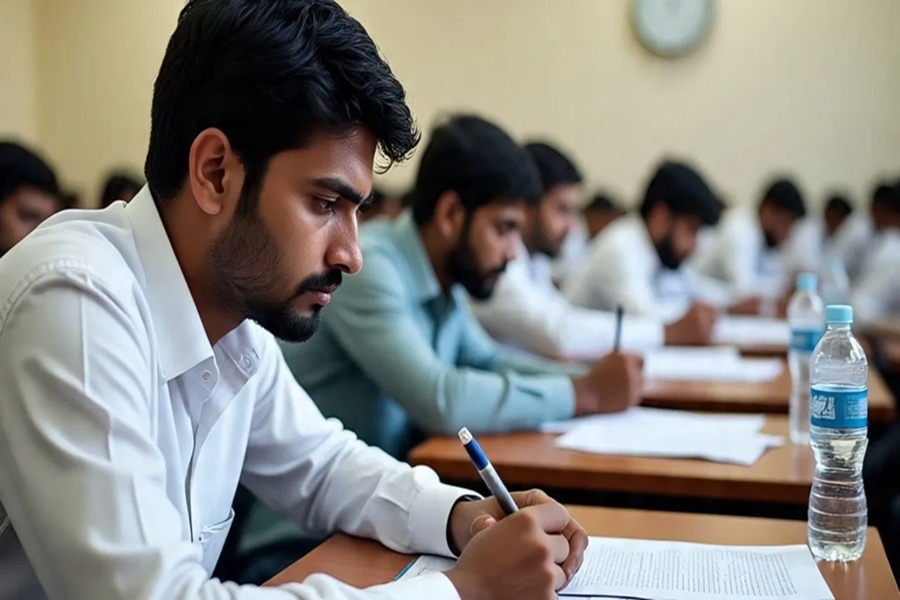
The April session of JEE Main 2026—one of the country's largest engineering entrance examinations—is now fast approaching. Consequently, students have only two weeks remaining to put the finishing touches on their preparation. This is not the time to start reading new books or tackling new topics; rather, it is the time to consolidate the subjects studied thus far. By adopting the right strategy, students can significantly enhance their performance.
We turn to Ramesh Batlish—who has been providing JEE coaching at a private coaching institute for several years—to learn the essential tips required for this crucial phase.
Why are the final two weeks the most critical?
It is often observed that many students panic right before the exam and begin reading new books or exploring new topics. This can complicate their preparation and even erode their self-confidence. According to experts, the final 14 days leading up to the exam are meant for organizing one's preparation and reinforcing subjects that have already been studied. If this time is utilized effectively, months of hard work can be translated into excellent results. During this period, students should focus primarily on revision, taking mock tests, and identifying their areas of weakness. This ensures mental clarity during the exam and facilitates ease in solving questions.
Make Mock Tests a Core Part of Your Preparation
Taking mock tests during the days preceding the exam is considered essential. It provides students with a realistic experience of the actual examination environment. Experts advise students to attempt at least 4–5 full-length mock tests per week. It is best to take these tests at the same time slot as the actual examination; this helps condition both the body and the mind to function optimally during that specific time. Analyzing the mock tests after attempting them is equally important. Students should strive to understand *why* a particular mistake occurred.
**Some common reasons for errors may include:**
A lack of conceptual clarity.
Calculation errors.
Misinterpreting the question.
Ineffective time management.
If students identify these underlying causes and rectify them, their performance is bound to improve in subsequent attempts. **Maintain Control Over Resources During Revision**
The cardinal rule for the final two weeks is this: do not start any new topics or new books. During this period, students should utilize only those notes and books they have previously studied. Self-prepared notes prove particularly useful, as they already contain essential formulas and key points.
During the revision phase, students should focus on the following aspects:
* Revising important formulas.
* Practicing frequently asked questions.
* Memorizing shortcut tricks.
* Revisiting and re-understanding topics that seem difficult.
This approach to preparation enhances both the speed and accuracy with which questions are solved during the examination.
**Subject-Specific Preparation Strategies**
**Mathematics**
Mathematics is often considered the most time-consuming subject in the JEE examination. Many questions are lengthy and complex. Therefore, students must thoroughly practice all important formulas. When solving problems, it is also crucial to remember that it is not necessary to attempt every single question. It is advisable to tackle the questions that appear easy first; this saves time and boosts confidence.
Chemistry
To achieve high scores in Chemistry, textbooks published by the National Council of Educational Research and Training (NCERT) are considered the most reliable resources. In particular, many questions in Inorganic and Organic Chemistry are directly derived from the textbook content. Therefore, students should carefully study the lines, examples, and tables provided in the NCERT books. In the final days, revising key reactions and concepts—alongside theoretical principles—proves highly beneficial.
Physics
The cornerstone of success in Physics is a clear conceptual understanding. Often, questions are based less on the direct application of formulas and more on an understanding of fundamental principles. Students should pay special attention to critical topics such as Mechanics and Modern Physics. Additionally, it is essential to understand key formulas and their practical application. If one's concepts are clear, even difficult questions will begin to seem relatively easy.
Master the Strategy of Selecting the Right Questions
In an examination like the JEE, the selection of questions is just as critical as the process of solving them. Many students begin solving questions sequentially, which can lead to a waste of time. A better strategy is to tackle the questions in three stages:
First, solve the easy questions.
Next, move on to those questions that require a little more time or calculation.
Finally, attempt the difficult questions, provided there is time remaining.
This approach minimizes the likelihood of students missing out on easy marks.
Pay Special Attention to Health and Daily Routine
During the final days, many students study late into the night, resulting in insufficient sleep. This adversely affects both concentration and memory. Students should ensure they get at least 6 to 7 hours of quality sleep every day. Additionally, maintaining a balanced diet and drinking adequate water are essential. Experts also advise students against comparing their preparation levels with those of others, as this can lead to unnecessary stress.
Disclaimer: This content has been sourced and edited from TV9. While we have made modifications for clarity and presentation, the original content belongs to its respective authors and website. We do not claim ownership of the content.
