
ITI, Polytechnic, or B.Tech—which course is best for employment after Class 12?
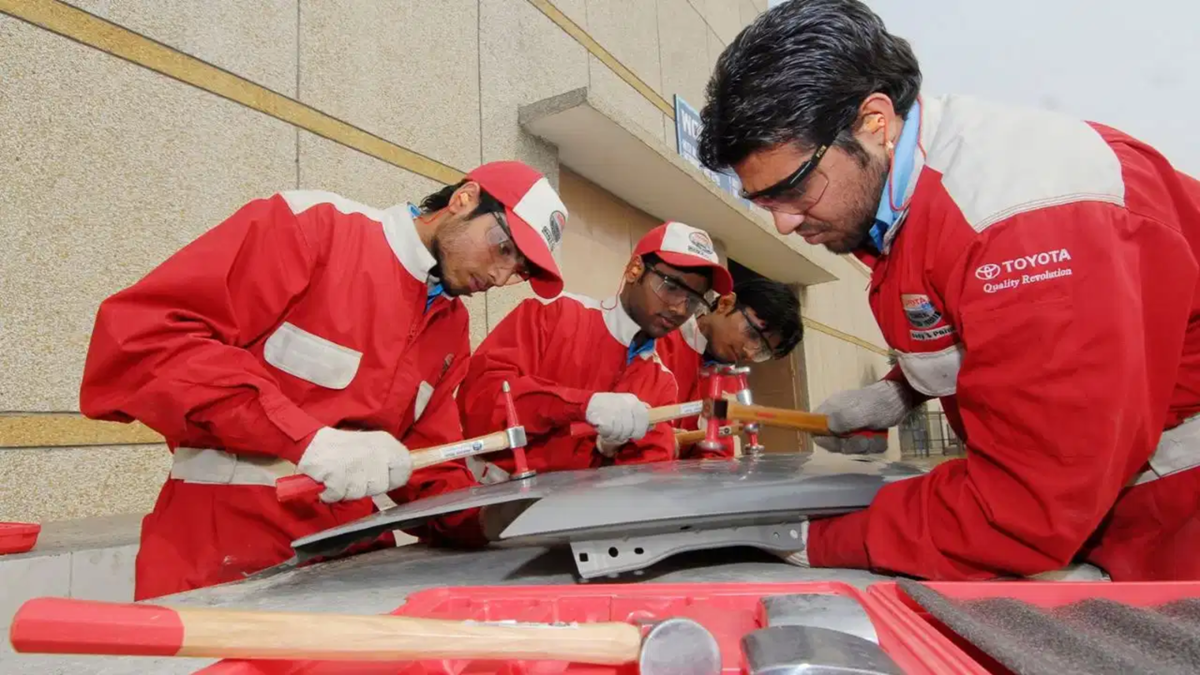
After Class 12, the process of shaping one's career begins. Many students opt for technical education at this stage. While pursuing a B.Tech is often considered the best choice for technical education after Class 12, ITI and Polytechnic programs are also excellent alternatives in many respects. For instance, many government job openings invite applications from candidates holding technical certificates or diplomas. In short, B.Tech, Polytechnic, and ITI are the three primary pathways for pursuing technical education after Class 12.
Let us explore which of these—B.Tech, Polytechnic, or ITI—might be the most advantageous choice, and which one could lead to faster employment.
What is ITI?
Industrial Training Institutes (ITI) are key technical training centers in the country, managed by the Directorate General of Training under the Ministry of Skill Development and Entrepreneurship, Government of India. The objective of ITI is to equip youth with practical and technical skills aligned with industry demands, enabling them to secure employment. ITI offers training across various trades, with programs ranging from six months to two years in duration. Admission to some ITI trades is possible after Class 8, while others require the completion of Class 10 or Class 12.
Job Opportunities with an ITI Certificate: After completing a certificate course in a specific trade at an ITI, individuals can pursue self-employment. Additionally, depending on the trade, opportunities may arise in sectors such as the Railways, electricity departments, the defense sector, and private companies. Starting salaries can range from approximately ₹12,000 to ₹35,000 per month.
What is a Polytechnic?
A Polytechnic program is a diploma-level course in technical education. A Polytechnic program spans three years, consisting of six semesters. The curriculum focuses primarily on practical, workshop-based, and skill-oriented knowledge rather than just theory. A key advantage is that, upon completing a Polytechnic diploma, one can gain direct entry into the second year of a B.Tech program.
**Becoming a Junior Engineer through Polytechnic**
Polytechnic is highly beneficial for young individuals aspiring to build a career in the engineering and technical sectors. It combines theoretical study with practical training. After completing the diploma, students can apply for various technical roles, including that of a Junior Engineer (JE). The starting annual salary can range from approximately ₹1.2 lakh to ₹4.2 lakh, depending on the specific position, the company, and the individual's experience.
**What is B.Tech?**
B.Tech, or Bachelor of Technology, is primarily an engineering degree program. It is a four-year course that offers engineering qualifications across various specializations. Admission to a B.Tech program typically requires qualifying for the JEE (Joint Entrance Examination).
**High-Value Job Packages with a B.Tech Degree**
Graduates with a B.Tech degree can easily secure high-paying jobs—often with annual packages worth lakhs of rupees. As a recognized engineering qualification, a B.Tech degree is a prerequisite for many engineering-related roles. Furthermore, multinational corporations frequently recruit B.Tech graduates from various specializations, offering lucrative packages.
**Which is better: ITI, B.Tech, or Polytechnic?**
Regarding whether B.Tech or Polytechnic is a better choice after Class 12, TV9 consulted Manoj Varghese, a former Media Advisor for the Department of Technical Education in Delhi, who possesses extensive practical experience in the field of technical education. According to Manoj Varghese, B.Tech and Polytechnic cannot be directly compared. A B.Tech degree has its own value, while a Polytechnic diploma has its own distinct foundation. It is worth noting that the government is currently promoting Polytechnic education to enhance the skill sets of the workforce in the country.
**Polytechnic leads to quicker employment**
When asked whether a B.Tech degree or a Polytechnic diploma offers better job prospects, Manoj Varghese, former Media Advisor for Technical Education in Delhi, favors the Polytechnic route. He explains that Polytechnic diploma holders tend to secure employment more quickly, whereas a B.Tech degree typically leads to "white-collar" (professional/office-based) roles. He further notes that in recent years, B.Tech graduates have faced a challenging job market, while those with Polytechnic diplomas continue to find employment with relative ease.
**Four diploma holders for every one degree holder**
Manoj Varghese points out that while job opportunities for B.Tech graduates have declined, Polytechnic diploma holders often find work much faster. Explaining the underlying structure, he notes that in a typical project, a B.Tech graduate often serves as the team leader, supported by a team of four diploma holders—a ratio that generally defines how such teams are organized. He adds that a B.Tech degree can lead to an annual salary package of at least ₹5–6 lakh, while a Polytechnic diploma can secure a job with an annual package of at least ₹3 lakh—positions that are readily available in the market. Furthermore, diploma holders have the potential for career growth based on their individual capabilities.
Pursuing a B.Tech after a Polytechnic Diploma
Experts suggest that if a student wishes to gain practical experience early on, they can begin their career by pursuing a Polytechnic diploma. This is because it is possible to pursue a B.Tech degree after completing a Polytechnic program. Such students can qualify for state-level lateral entry engineering entrance examinations to gain direct admission into the second year of a B.Tech course.
The Significance of ITI for Foundational Knowledge
Technical education expert Pramod Sharma notes that ITI certificate courses also hold distinct value. He explains that for young individuals looking to establish their own self-employment or business, an ITI certificate course is an excellent choice. Furthermore, an ITI certificate is specifically required for many government job positions. In this sense, an ITI certificate holds its own unique importance, much like a Polytechnic diploma or a B.Tech degree.
Disclaimer: This content has been sourced and edited from TV9. While we have made modifications for clarity and presentation, the original content belongs to its respective authors and website. We do not claim ownership of the content.
