
IPS Training: How is an IPS Officer Trained? The Command of a District is Entrusted Only After a Trial by Fire..
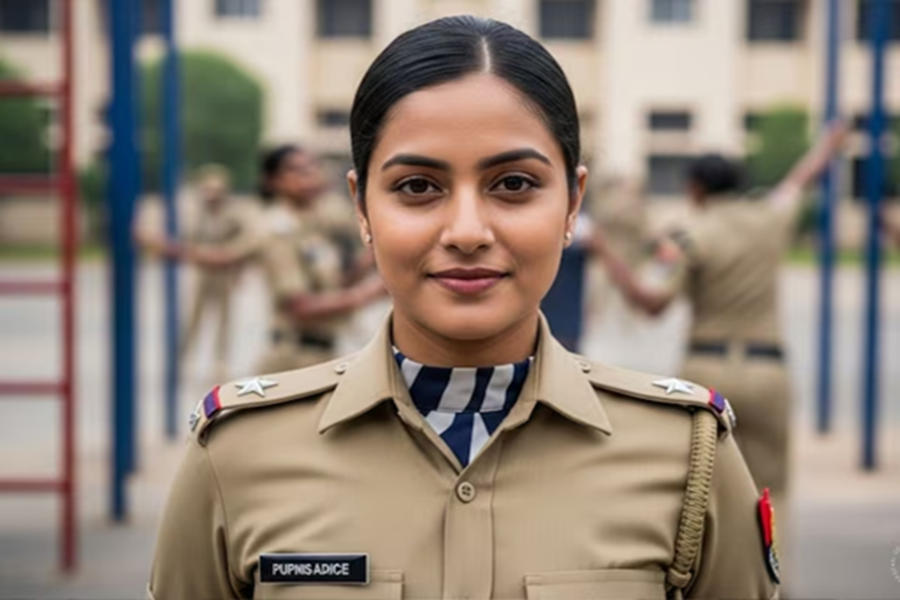
IPS Training Process: Millions of young people across the country dream of becoming a part of the Indian Police Service. For this, clearing the UPSC Civil Services Examination is merely the beginning. The real challenge—and the true thrill—lies within the rigorous training that follows. This journey, transforming an ordinary citizen into a disciplined police officer, is physically and mentally demanding. IPS training is not limited merely to teaching the law; rather, it serves as a true test of patience, courage, and leadership capabilities.
Before earning the privilege of donning the khaki uniform, every cadet must be forged in the crucible of sweat and discipline, thereby preparing them to shoulder the immense responsibility of safeguarding society. IPS training commences at the Lal Bahadur Shastri National Academy of Administration (LBSNAA) in Mussoorie. Here, all civil servants undergo a common Foundation Course together. Subsequently, the specialized IPS training begins at the Sardar Vallabhbhai Patel National Police Academy (SVPNPA), located in Hyderabad.
What is the daily routine of a trainee IPS officer?
The daily routine at the Sardar Vallabhbhai Patel National Police Academy is extremely rigorous. An IPS officer's training begins even before the sun rises in the morning. From horse riding and weapons handling to survival skills in challenging terrains, trainee IPS officers are taught everything required to transform them into fearless officers ready for field duty. Here is a comprehensive roadmap of the IPS training process, along with an insight into the dynamics of the first posting.
IPS Training: The Complete Journey from Mussoorie to the First Posting
If you aspire to become an IPS officer after clearing the UPSC examination, it is essential to be fully acquainted with the entire journey—from your time in Mussoorie to your first official posting.
Duration of Training: How long does the training last?
The total training period for an IPS officer spans approximately two years (estimated at 100–105 weeks). This training is structured into distinct phases:
Foundation Course (3 months): Conducted in Mussoorie, alongside trainees from the IAS and other allied services.
Phase I (11 months): Basic training undertaken at the Police Academy in Hyderabad.
District Practical Training (6 months): On-field training conducted within a specific district of the cadet's allotted cadre (state). Phase 2 (1 Month): Returning to the academy to share experiences and acquire advanced skills.
What is Taught During IPS Training?
IPS training is divided into two components: Indoor and Outdoor.
Outdoor: This includes activities such as PT (Physical Training), parades, drills, weapons handling (AK-47, pistols), horse riding, swimming, jungle survival, and rock climbing.
Indoor: This involves in-depth instruction on subjects such as the Indian Penal Code (IPC), CrPC, the Evidence Act, Human Rights, Cyber Crime, and Forensic Science.
A Rigorous Routine Beginning at 5:00 AM
An IPS cadet's day typically begins at 4:30 or 5:00 AM. The morning starts with PT or a run, followed by drills and parades. After breakfast, indoor classes continue until noon. In the evening, outdoor activities (such as sports or horse riding) resume. The day concludes after dinner with self-study and preparation for the following day.
The Next Stop After Mussoorie
After spending three months at the Lal Bahadur Shastri National Academy of Administration (LBSNAA) in Mussoorie, IPS officers proceed to Hyderabad. The Sardar Vallabhbhai Patel National Police Academy (SVPNPA) is the institution where they are taught the intricacies of policing. Following the Passing Out Parade held here, they are assigned to their designated state (cadre).
The First IPS Posting: When, Where, and How?
IPS officers are allotted their respective states (cadres) during the training period itself. Upon the completion of Phase-1 training, they are sent to a district within their allotted cadre state to serve as probationers. Here, they typically receive their first posting at the rank of ASP (Assistant Superintendent of Police). During this period, they gain a firsthand understanding of everything—from the day-to-day operations of a police station to the overall security management of the district. After completing the probation period (which typically lasts two years), they are entrusted with independent charge.
Disclaimer: This content has been sourced and edited from News18 Hindi. While we have made modifications for clarity and presentation, the original content belongs to its respective authors and website. We do not claim ownership of the content.
