
How Were Board Exams Conducted Before CBSE? Discover Its History
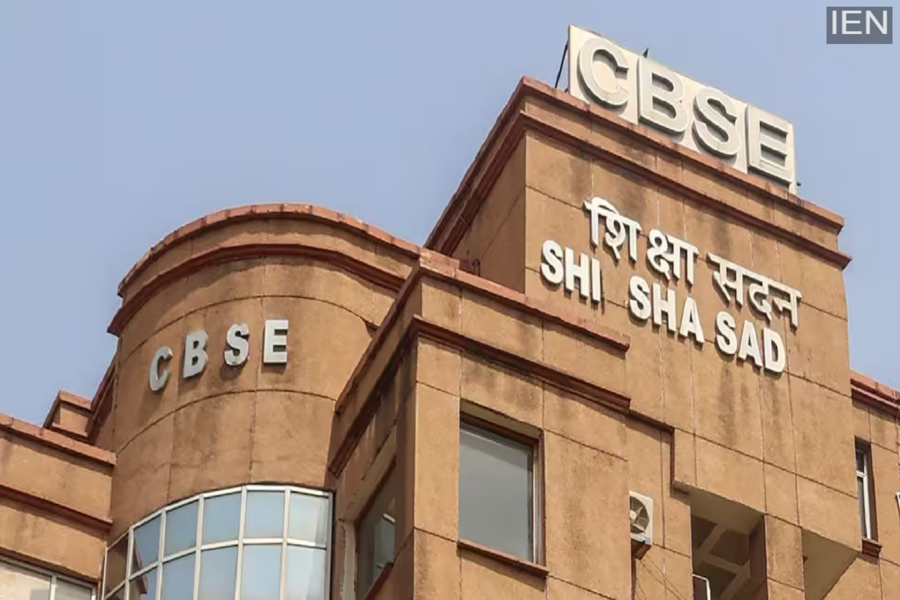
Before the establishment of CBSE, Class 10 and 12 examinations in India were organized by provincial universities and regional education boards. Let's delve into the details...
Currently, if there is one education board dominating the conversation, it is CBSE. However, do you know how board examinations were conducted in the country before CBSE came into existence? Furthermore, who was responsible for evaluating students, and how did the education system function? Let's find out...
In fact, prior to the establishment of CBSE, the responsibility for school education and board examinations in the country rested with various provincial universities and regional education boards. At that time, there was no single central education board governing the entire nation; instead, each region conducted examinations in accordance with its own specific educational framework.
When Was the First Board Established?
The very first education board in India was established in the year 1921 in Uttar Pradesh. It was named the 'UP Board of High School and Intermediate Education.' This was the country's first board to systematically organize and conduct examinations at both the secondary and higher secondary levels. During that era, the UP Board possessed a vast jurisdiction and administered examinations for students across numerous regions.
Subsequently, in response to the expanding scope of education and the diverse needs of various regions, the 'Board of High School and Intermediate Education, Rajputana' was established in 1929. This board was created to cater to students in regions such as the erstwhile Rajputana, Ajmer-Merwara, Central India, and Gwalior. Its primary objective was to develop a uniform examination system across these diverse regions.
When Did CBSE Arrive?
The story behind the formation of CBSE is quite fascinating. The board, originally established in 1929, was further developed following independence to align with new educational policies and national requirements. Ultimately, in 1952, it was renamed the 'Central Board of Secondary Education'—or CBSE. With this, a central institution was introduced in the country that began providing direction to secondary education at a national level.
However, CBSE gained widespread national recognition only after its reorganization in 1962. At that time, employees of the Central Government were subject to frequent transfers across various states. Consequently, a need was felt for a uniform curriculum and examination system to ensure that their children's education remained unaffected.
As for board examinations, in the early stages, the Class 10 and Class 12 examinations were conducted directly by universities or regional education boards. Students were required to take these examinations in accordance with the rules and curriculum prescribed by the universities. At that time, the examination system was significantly more limited compared to what it is today.
