
How to choose the best school for your child? These mistakes during the admission process can prove costly..
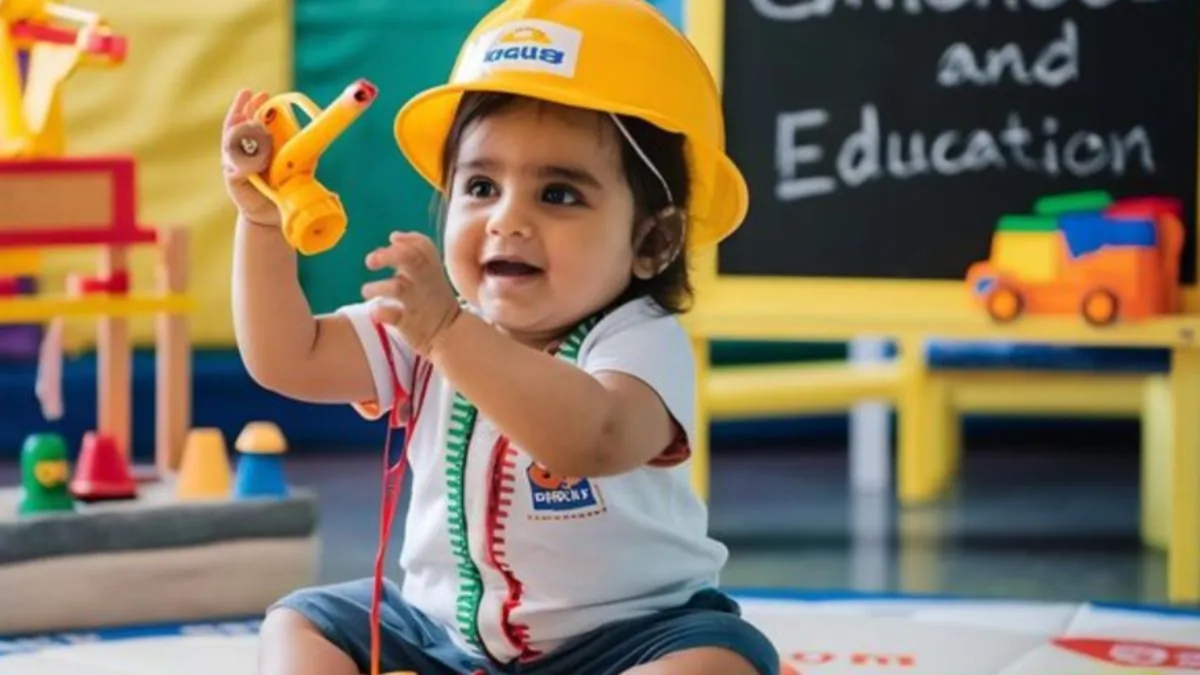
How to Choose a Good School: As the admission season begins, parents find themselves in a flurry of activity—flipping through brochures, comparing fee structures, and scrutinizing board exam results. During school visits, they are often shown swimming pools, gleaming laboratories, and digital boards. At first glance, everything appears highly attractive. Yet, amidst all this glitz and glamour, a crucial question is often overlooked: beyond the admission season, what does a typical Tuesday morning look like inside the classroom?
Siddharth Rajgarhia, co-founder of Equanimity Learning and director of DPS schools in Varanasi, Nashik, Lava (Nagpur), and Hinjewadi (Pune), asserts that a school’s true identity is defined not by its infrastructure or expensive amenities, but by its pedagogical approach. Are children merely memorizing information, or are they truly understanding it? Do they have the freedom to ask questions, or are they inhibited by fear? In today’s world, children should not just be burdened with heavy textbooks; they must learn to think for themselves and discern right from wrong. Here are some tips for choosing the best school.
How to choose the best school for your child?
Consider a scenario where the topic "Why do plants need sunlight?" is being taught in two different classrooms. In one, the teacher dictates definitions, which the students then memorize. In the other, students set up an experiment with two potted plants—one placed in sunlight and the other in the dark. A week later, they observe the results, record their findings, and discuss the underlying reasons. While the syllabus is covered in both instances, it is the second approach that fosters critical thinking. Therefore, when evaluating a school, ask for permission to sit in on a class for at least 15 minutes. Observe who does most of the talking—the teacher or the students? Learning thrives where questions are encouraged and heard.
Look beyond the report card.
A school’s 95 percent pass rate often reflects only the success of its top performers, failing to account for those students who may be falling behind. Suppose a child finds mathematics difficult. One type of school might simply mark the work with red ink and consider its job done. In contrast, a better school would recognize that the issue isn't the subject of mathematics itself, but rather the challenge of reading and comprehending the questions—and they would focus their efforts on addressing that. In a good school, tests are not used to assign rankings, but rather as a tool to support the child’s learning.
An environment built on trust, not fear.
If a child knows the answer but hesitates to raise their hand for fear of being mocked, it is a sign that the learning environment is inadequate. Discipline should not be about instilling fear; rather, it should aim to foster a sense of personal responsibility in the child. Observe how teachers speak to students in the hallways, and note how instances of teasing or bullying are handled. Furthermore, determine whether the child has a trusted teacher to whom they can turn to express their thoughts.
Sports, arts, and practical experience
Activities like dance, music, sports, and theater are far more than just ways to pass the time. A child who is usually hesitant to speak up may often find their voice when on stage. Even a lost match teaches children how to accept defeat and the value of teamwork. When students conduct a survey on water wastage in their own community, subjects like mathematics, science, and civics come together in a meaningful way. As parents, you might ask the school: Do they help children understand the modern world while keeping them connected to their own roots?
Disclaimer: This content has been sourced and edited from News18 Hindi. While we have made modifications for clarity and presentation, the original content belongs to its respective authors and website. We do not claim ownership of the content.
