
Homeschooling Guide: Freedom from Heavy Bags and Homework—A Child Can Become a Doctor or Engineer Without Ever Attending School..
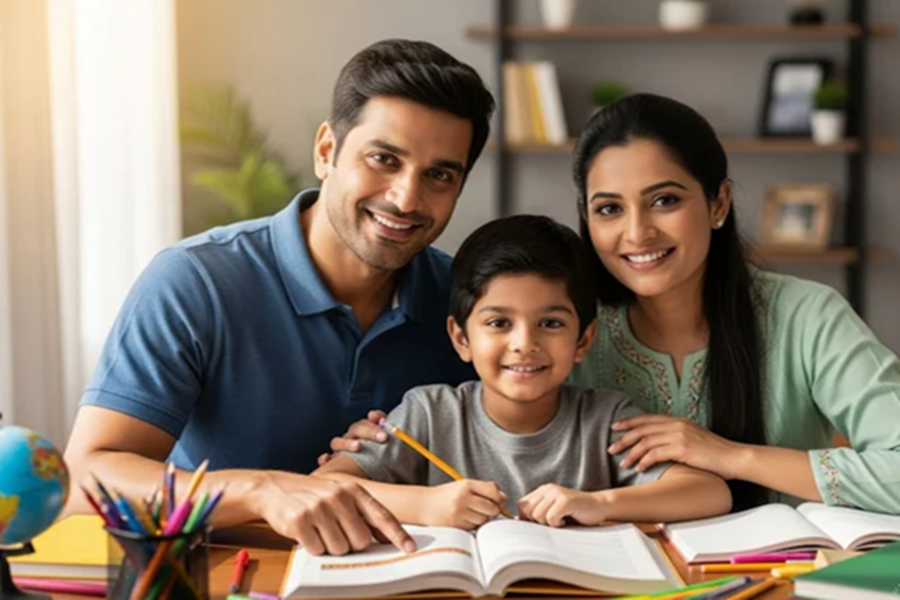
Homeschooling in India Guide: For years, a single pattern has prevailed in India: the moment a child turns 2.5 or 3 years old, a massive school bag is hoisted onto their shoulders. However, in recent years—particularly since the COVID-19 era—there has been a significant shift in the mindset of Indian parents. Many parents are now opting for homeschooling rather than sending their children to traditional schools. While this concept may sound novel, it is proving to be a boon for parents who wish to nurture their children's creativity and skills rather than merely turning them into "bookworms."
Homeschooling entails more than just studying at home; it represents an educational freedom where a child learns at their own pace. Here, there is neither the anxiety of missing the 7:00 AM school bus nor the burden of excessive homework. But in a country like India—where a university degree is often considered the ultimate measure of success—can homeschooling truly guarantee a secure future? In this explainer, we will decode every aspect of homeschooling that might be weighing on your mind as a parent. Discover the pros and cons of homeschooling, its legal status, and the global trends associated with it.
Homeschooling in India: An Age-Old Tradition or a New Trend?
For Indians, receiving an education at home is nothing new. In ancient times, learning while living at home was an integral part of the 'Gurukul' tradition. However, the modern homeschooling trend in India only began to take root during the late 1990s. It gained real momentum in 2020, in the wake of the COVID-19 pandemic. Today, in major metropolitan areas such as Bengaluru, Pune, Mumbai, and Delhi, thousands of families have bid farewell to mainstream schooling. Organizations like 'Swashikshan' are actively supporting homeschooling families across India.
Where is the Homeschooling Trend Prevalent Globally?
Homeschooling has its strongest foundation in the United States (USA), where over 3 million children are educated at home. Furthermore, this trend is also highly popular in Canada, Australia, and the United Kingdom. In these countries, a formal legal framework and support system exist specifically for homeschooling. Conversely, in certain nations like Germany and Brazil, there are strict restrictions on homeschooling. In India, it falls within a ‘grey area’; while the Right to Education (RTE) Act mandates school attendance, there is no direct legal prohibition against homeschooling.
**Benefits of Homeschooling: A Unique Blend of Freedom and Skill Development**
If pursued with complete dedication, homeschooling can help a child develop into a well-rounded individual. It offers numerous advantages:
**Personalized Learning:** Every child is unique. In a traditional school setting, keeping pace with 40 other students at the same speed can be challenging; however, at home, a child can devote more time to subjects that interest them most.
**Stress-Free Environment:** With no fear of examinations, no anxiety regarding bullying, and no pressure from unnecessary competition, the child enjoys greater mental well-being.
**Family Bonding:** The bond between parents and children deepens significantly as they become active partners in the learning process.
**Creativity:** A child can pursue music, coding, painting, or sports not merely as ‘extracurricular activities,’ but as core academic subjects.
**Disadvantages and Challenges of Homeschooling: The Other Side of the Coin**
While homeschooling offers many benefits, this does not imply that it is the absolute "best" form of education or learning. Homeschooling also entails certain drawbacks—information about which is essential for you to possess:
**Lack of Social Interaction:** In a school environment, children interact with peers of diverse temperaments, which fosters their social development. This aspect may be noticeably lacking in a homeschooling setting.
**Heavy Responsibility on Parents:** This is not a ‘part-time’ undertaking. Parents are required to simultaneously fulfill the roles of teacher, mentor, and curriculum planner.
**Limited Resources:** Providing access to facilities such as a science laboratory, a sports ground, or an extensive library within the home environment is not a feasible option for everyone. Degrees and College: Board examinations can be taken through NIOS (National Institute of Open Schooling); however, certain formalities may present challenges during the college admission process.
At What Age Should Homeschooling Be Pursued, and What Should Be Taught?
There is no fixed age limit for homeschooling, though experts generally consider the age range of 5 to 14 years to be the most suitable.
What to Teach? Begin with foundational language and mathematics, but gradually observe and identify the child's specific interests. If the child has an affinity for nature, for instance, teach subjects like science by taking them out into a garden.
How to Teach? The internet offers excellent resources such as Khan Academy, Coursera, and YouTube. Additionally, form "co-ops" (cooperatives) with homeschooling communities, where different parents can take turns teaching various subjects.
How can homeschooled children take examinations?
In India, children pursuing homeschooling can appear for their Class 10 and 12 examinations as private candidates through the NIOS (National Institute of Open Schooling) or IGCSE (Cambridge) boards. These certificates hold the same value as those obtained through regular schooling and serve as a basis for securing admission to IITs, medical colleges, or institutions abroad.
Disclaimer: This content has been sourced and edited from News18 Hindi. While we have made modifications for clarity and presentation, the original content belongs to its respective authors and website. We do not claim ownership of the content.
