
From a ₹1.09 crore scholarship to the ₹80,000 PMRF fellowship—what initiatives were taken for education?
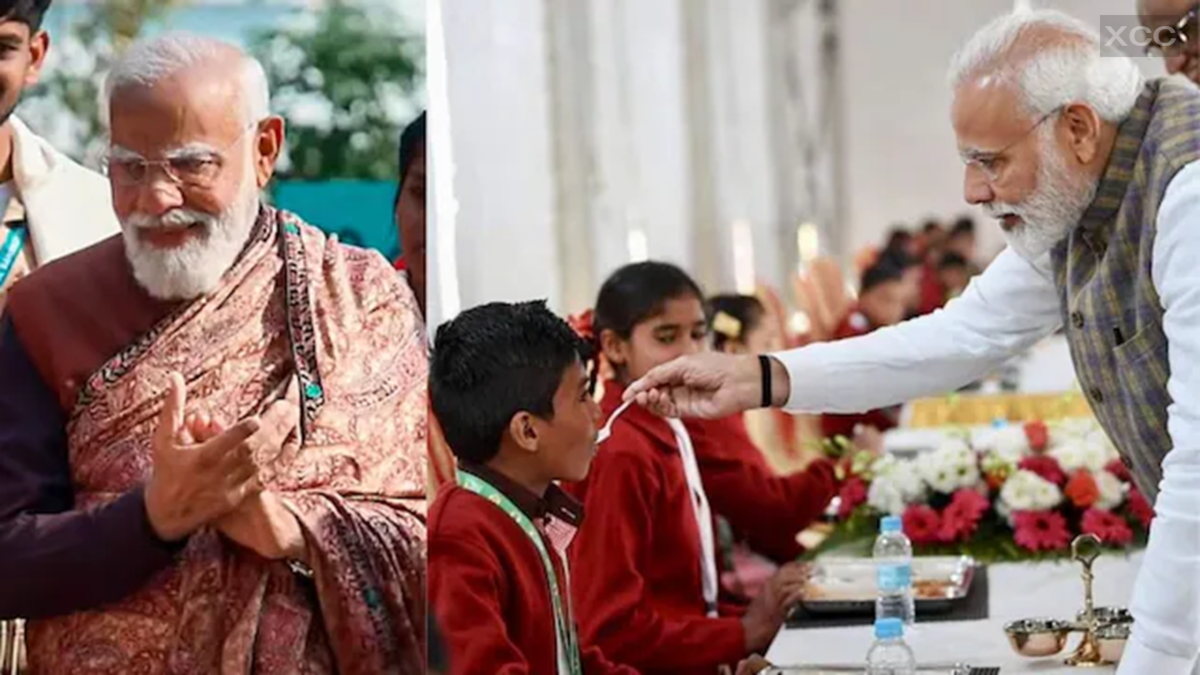
PM Modi's 25 Years: Narendra Modi took the oath as the Chief Minister of Gujarat for the first time on October 7, 2001. October 7, 2026, marks the completion of his 25 years as a head of government. During this period, his political and administrative journey took him from being the Chief Minister of Gujarat to the Prime Minister of the country. Significant policies, schemes, and digital initiatives were launched or expanded in the education sector during this time as well. These span various areas, including school and higher education, scholarships, research, digital learning, teacher training, and education loans.
One of the most significant changes among these initiatives is the National Education Policy (NEP) 2020. Additionally, schemes such as PM SHRI Schools, Samagra Shiksha, PM POSHAN, PM e-VIDYA, DIKSHA, PM YASASVI, PM Research Fellowship, Malaviya Mission for teacher training, and PM VidyaLakshmi have targeted different facets of education; however, as these schemes vary in nature and objective, it would be incorrect to view them all as the same type of scheme.
NEP 2020 Changed the Direction of Education
The National Education Policy (NEP) 2020 stands out as one of the Modi government's major policy decisions regarding the education sector. The Union Cabinet approved the new education policy on July 29, 2020. It is the country's third national education policy—following the 1986 policy (which was revised in 1992)—and the first of the 21st century. NEP 2020 outlined a roadmap for changes at multiple levels, ranging from school education to higher education. It emphasizes understanding over rote learning, critical thinking, experiential and application-based learning, skill development, multidisciplinary education, and greater flexibility within the education system. The policy also integrates early childhood education into the broader framework of school education. Systems such as the Academic Bank of Credits (ABC) and multiple entry-exit options in higher education are part of this comprehensive reform process. The UGC issued specific regulations for the Academic Bank of Credits in 2021. Its objective is to facilitate the storage of academic credits earned by students and to simplify their transfer and utilization under a prescribed framework.
**Plan to Transform Over 14,500 Schools into PM SHRI Schools**
The PM SHRI (Pradhan Mantri Schools for Rising India) scheme is a major initiative at the school education level. These schools are envisioned as model schools under the NEP 2020 framework. The government aims to develop more than 14,500 existing government schools into PM SHRI schools. The scheme is designed for five years, spanning from 2022-23 to 2026-27. These schools emphasize superior physical infrastructure, modern resources, ICT and digital facilities, sports, arts, and 21st-century skills. According to the official PM SHRI dashboard, 13,092 schools have been selected or registered so far, against the scheme's target of over 14,500 schools.
**Simultaneous Focus from Pre-school to Class 12**
'Samagra Shiksha' was formulated as an integrated program for school education, covering the spectrum from pre-school to Class 12. It consolidated previously existing schemes—namely Sarva Shiksha Abhiyan, Rashtriya Madhyamik Shiksha Abhiyan, and Teacher Education schemes. Its focus extends beyond merely increasing school enrollment; the scheme emphasizes equal opportunities, learning outcomes, school effectiveness, teacher education, and continuity across different levels of schooling. At the pre-school level, it also integrates Anganwadis, Balvatikas, and other early childhood education systems.
PM POSHAN: Linking Nutrition with Education
PM POSHAN—officially known as the *Pradhan Mantri Poshan Shakti Nirman* scheme—was formerly known as the Mid-Day Meal Scheme. It was renamed PM POSHAN in 2021–22, and the Central Government approved its continuation until 2025–26. Its scope extends to children in Classes 1 through 8 in government and government-aided schools. Subsequent provisions expanded coverage to include children in *Balvatika* (preschool) or preparatory classes within primary schools. The scheme aims to improve children's nutritional status while fostering regular school attendance and classroom concentration. According to official data, the scheme was designed to cover approximately 11.80 crore children and 11.20 lakh schools.
PM e-VIDYA and DIKSHA for Digital Learning
The need for digital education emerged rapidly during the COVID-19 pandemic. It was during this period that PM e-VIDYA was developed as a comprehensive initiative to consolidate efforts related to digital, online, and on-air education. Under this initiative, television, radio, and other media were utilized alongside online education. According to the government, the goal was to deliver multi-modal education to approximately 25 crore schoolchildren.
Support for OBC and EBC Students through PM-YASASVI
PM-YASASVI (Prime Minister Young Achievers Scholarship Award Scheme for Vibrant India) is a key initiative for the education of students belonging to economically and socially backward classes. It is an umbrella scheme covering OBC, EBC, and DNT students. Provisions under this scheme include pre-matric and post-matric scholarships, top-class education at school and college levels, and hostel-related support for OBC boys and girls. In September 2026, the government reported that between 2014-15 and 2025-26, assistance was provided to over 106.9 million (1,069 lakh) beneficiaries across various components of PM-YASASVI, with ₹15,555.53 crore released. According to the government, more than 45,000 students received support for top-class school education, and approximately 38,000 students received support at the college level.
Approximately 10.9 Million Scholarships in 2025-26
In the 2025-26 financial year, the central government provided approximately 10.9 million (1.09 crore) scholarships for post-matric and higher education. These included scholarships for around 4.8 million SC students, 2.4 million ST students, and 3.6 million OBC, EBC, and DNT students.
PM-Vidyalaxmi for Higher Education
The PM-Vidyalaxmi scheme was approved in November 2024 to address challenges related to higher education fees and education loans. Its objective is to enable students who secure admission to quality higher education institutions based on merit to continue their studies despite financial constraints. The scheme provides for collateral-free and guarantor-free education loans for eligible students and features a digitized application process. According to the official PM-VidyaLakshmi portal, eligible students with an annual family income of up to ₹8 lakh are entitled to a 3% interest subsidy on loans of up to ₹10 lakh. Additionally, for students with a family income of up to ₹4.5 lakh, a full interest subsidy is provided on loans of up to ₹10 lakh during the moratorium period. The scheme also includes a provision for a credit guarantee of up to 75% on education loans of up to ₹7.5 lakh.
