
Forensic Science Expert: How Does One Become a Forensic Expert? Which Courses Are Essential?
The Ministry of Home Affairs has directed the Chief Secretaries of all States and Union Territories to strengthen Forensic Science Laboratories (FSLs), fill vacant positions, and clear pending cases within three months. Furthermore, the Ministry has requested a review of recruitment rules to ensure that specialized forensic degrees—obtained from institutions such as the National Forensic Sciences University (NFSU)—are duly recognized and distinguished from traditional science qualifications. Additionally, instructions have been issued to fill vacant posts on an immediate basis, including through contractual appointments.
Indeed, in today's times, forensic science is rapidly emerging as a promising career option. The demand for forensic experts is constantly on the rise due to the increasing application of scientific methods in criminal investigations. If you, too, aspire to build a career in this field, you must understand how one becomes a forensic expert, which courses are required, and where opportunities for government jobs exist after completing such courses.
**What Do Forensic Experts Do?**
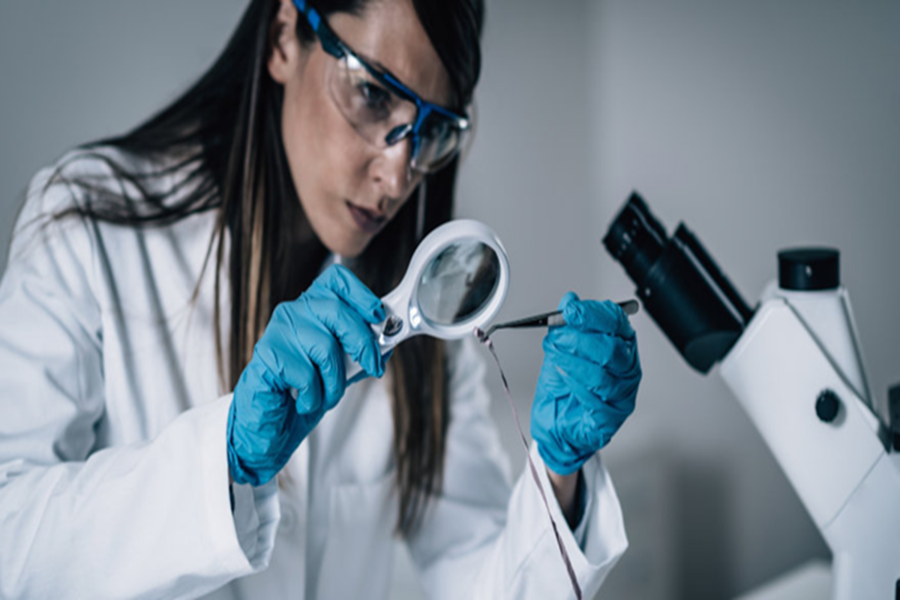
Forensic experts scientifically examine evidence collected from crime scenes; this involves analyzing a wide range of items—from blood samples and fingerprints to DNA, weapons, and documents. Their reports are presented in court as crucial evidence, thereby aiding in the conviction of criminals.
**Which Course is Required?**
To become a forensic expert, it is mandatory to have a background in Science (Physics, Chemistry, Biology, and Biology/Mathematics) at the 10+2 (12th grade) level. Subsequently, you may pursue a B.Sc. in Forensic Science, an M.Sc. in Forensic Science, a B.Sc. in Criminology, or a bachelor's degree in a related discipline. Some universities also offer diploma and certificate courses in this field. Prominent colleges and institutions that offer courses in forensic science include the National Forensic Sciences University, Sri Guru Teg Bahadur Khalsa College (Delhi), Christ University (Bangalore), St. Xavier's College (Mumbai), and Chandigarh University, among others.
**Where Can One Find Government Jobs?**
After completing a course in Forensic Science, excellent opportunities for government jobs become available within Forensic Science Laboratories (FSLs). These laboratories operate at both the state and central levels, recruiting for positions such as Scientific Officers, Lab Assistants, and Technical Staff. Furthermore, Forensic Experts are also in demand within the Police Department, the CBI, the NIA, and other investigative agencies. To secure recruitment for these positions, candidates must successfully clear both a written examination and an interview.
What is the Salary?
Recruitment drives for Forensic Experts in Forensic Science Laboratories (FSLs) are conducted periodically. These recruitment processes cover various fields of forensic science, including Biology, Chemistry, Cyber Forensics, and others. Candidates selected through the recruitment examination and interview process receive a monthly salary of approximately ₹68,000 for the position of Junior Scientific Officer.
Disclaimer: This content has been sourced and edited from TV9. While we have made modifications for clarity and presentation, the original content belongs to its respective authors and website. We do not claim ownership of the content.
